
Council and Housing Partnerships in Greater London
Land to Homes is open to partnerships with councils, housing associations and other registered providers in Greater London and across the UK, to add to the supply of affordable and social homes. We bring land, planning and construction; our partners bring local knowledge, housing management and, where available, public grant. The aim is a scheme that meets local need and the landlord's standards.
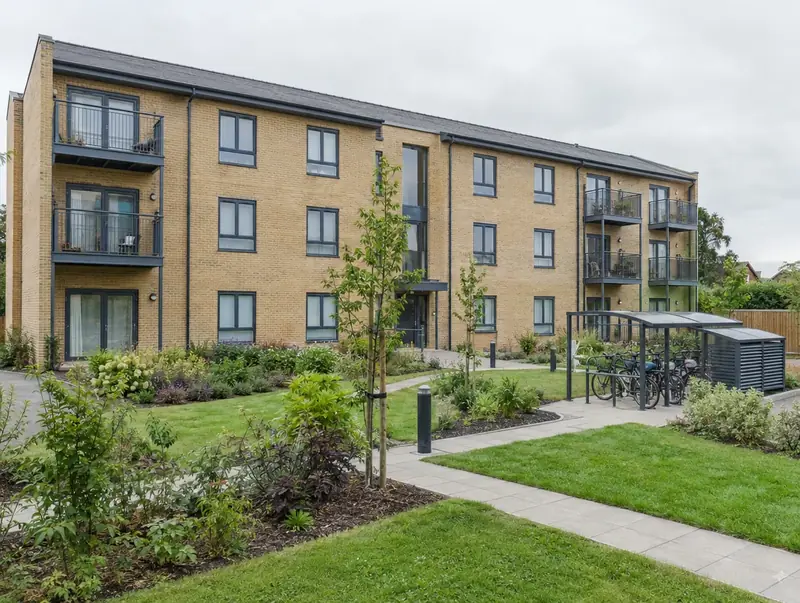 Greater London
Talk to us about a partnership
Tell us about your organisation and the homes you need.
Prefer to talk? Call 0800 088 6248.
- Private conversationsEvery arrangement documented
- Land to homesLand, planning and construction
- Housing partnersCouncils and housing associations
- No public offerNothing here is an offer to invest
- UK-wideEngland, Wales, Scotland and NI
Homes we plan around Greater London
Across Greater London, we cover London and 81 other towns, among them Heston, Wood Green and Hanworth. Neighbouring areas we also cover include Surrey, Hertfordshire and Buckinghamshire.
People registering interest around Greater London can tell us whether they want one- and two-bedroom apartments, homes for shared ownership or two- and three-bedroom family homes. Because Greater London is in England, land titles are registered with HM Land Registry and transfers attract Stamp Duty Land Tax (SDLT).
Register for Greater London and we will contact you if we bring homes forward nearby.
What we offer in Greater London
Funding conditions in mind
We plan schemes around the conditions of the relevant funding programme, although grant is applied for and held by the council or provider.
Land-led schemes
We bring forward land for a scheme the provider will own, which can be fully affordable where planning policy and funding allow.
Clear agreements
Every partnership is set out in a written agreement covering the programme, specification, payment stages and handover.
Planning obligation homes
The affordable homes required by a Section 106, Section 75 or Section 76 agreement, designed with a provider and transferred on completion.
Rules that apply in Greater London
In England, affordable housing on market developments in Greater London is normally secured through a Section 106 agreement, which sets the number, tenure and transfer of homes to a registered provider. Grant from Homes England can add further homes, and the 2026 to 2036 programme expects at least 60% of funded homes to be Social Rent. Land to Homes can supply land, design and build homes, or deliver completed homes for councils and housing associations.
In England, registered providers, including housing associations and for-profit providers, are regulated by the Regulator of Social Housing. Affordable homes are usually secured through Section 106 agreements, and grant is channelled through Homes England, or the Greater London Authority in London. Councils follow procurement rules and their legal duties on value when disposing of land or appointing partners.
| National planning policy | National Planning Policy Framework (NPPF), revised August 2026, with national planning practice guidance |
|---|---|
| Local planning document | Local Plan |
| Who decides applications | The local planning authority, usually the district, borough, city or unitary council (or a national park authority) |
| In-principle consent | Outline planning permission, with reserved matters approved later |
| Land transaction tax (paid by the buyer) | Stamp Duty Land Tax (SDLT) |
| Land registration | HM Land Registry |
| How a sale becomes binding | A land sale becomes legally binding on exchange of contracts and finishes on completion, after which the buyer registers the title with HM Land Registry. |
| Developer contributions | Section 106 planning obligations, plus the Community Infrastructure Levy (CIL) where the council charges it |
Common questions in Greater London
Do you talk to for-profit registered providers?
Yes. In England, both not-for-profit housing associations and for-profit registered providers can own affordable homes, and both are regulated by the Regulator of Social Housing. We discuss affordable homes with any appropriately registered provider, subject to the council's requirements on who can take on the homes.
How do council land disposals work?
When a council sells or leases land for housing, it usually has legal duties around obtaining value and must follow its own disposal and procurement rules. Disposals may be marketed openly, offered through a development partner process or tendered. Land to Homes responds to opportunities where the terms suit, following the process the council sets.
Can you build on land a council or housing association already owns?
Yes. Under a design and build arrangement, we design and construct homes on land the council or provider owns, to its specification and standards. Contracts follow the client's procurement rules, which may mean a framework, a tender or another compliant route. We discuss the approach early so the scheme fits the client's governance.
Who applies for grant funding for affordable homes?
Usually the housing association or council, because public grant for affordable housing is normally paid to them under programmes run by Homes England, the Greater London Authority, the Welsh Government, the Scottish Government or, in Northern Ireland, the Housing Executive's Social Housing Development Programme. We plan schemes with the relevant funding conditions in mind.
Are there new homes available in Greater London now?
Not yet. Land to Homes has no homes available in Greater London at the moment. You can register your interest for Greater London, and we will contact you if we bring homes forward there or nearby.
Read more: Council and Housing Association Partnerships · Guide: How affordable and social homes are delivered across the UK