
Land Promotion Agreements in Chatham
Promotion agreements are often used for larger sites in Chatham that need a plan allocation or a major planning application. The agreement sets a term, a minimum price, the promoter's fee and how costs are recovered. Land to Homes explains each term in plain English and pays your reasonable legal fees, agreed up front in the heads of terms.
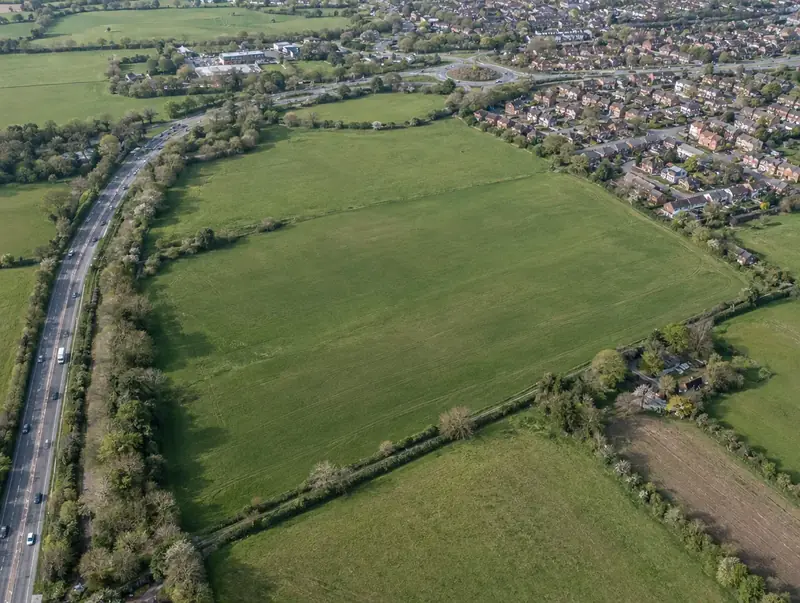 Chatham · ME4
Free site appraisal
Tell us about your land and we will call you back. No cost, no obligation.
Prefer to talk? Call 0800 088 6248.
- Free site appraisalNo cost, no obligation
- Legal fees coveredReasonable fees, on options and promotion
- Nothing to pay upfrontOn promotion: we fund planning
- Direct purchaseSuitable sites, with or without planning
- UK-wideEngland, Wales, Scotland and NI
Land we look at around Chatham
Chatham sits about 8 miles north of Maidstone in Kent, in the ME4 postcode district. Gillingham is the closest neighbouring place we cover, at about 1 mile, followed by Rochester and Strood. Within England, Chatham falls in the South East region.
Typical sites we review near Chatham include former garage blocks and yards, redundant commercial buildings and infill gaps along existing streets. Planning in Chatham follows England’s rules: the National Planning Policy Framework sets national policy and the council’s Local Plan sets local policy.
If you own land near Chatham, the first step is a free, no-obligation appraisal.
What you get in Chatham
Clear fee and cost rules
The heads of terms state the fee, which costs can be recovered and whether any cap applies, so you can see what will come out of the proceeds before you sign.
Strategic planning work
Larger sites often need representations to the development plan, studies on transport, drainage and ecology, and engagement with the local community. We manage that work and report progress to you.
Interests aligned on price
The promoter's fee is linked to the sale price, so we only do well if you do. That is the main difference from an option, where the buyer benefits from a lower valuation.
Retained land protected
If you keep neighbouring land, the agreement can secure access and services to it, so the new scheme does not cut off the rest of your holding or limit its future use.
Planning and land rules in Chatham
If your land near Chatham lies in the Green Belt, national policy still protects it, but England's planning framework now recognises grey belt: Green Belt land that is previously developed or does not strongly contribute to certain Green Belt purposes. Where there is evidenced unmet need and the location is sustainable, grey belt housing can be acceptable, with major schemes meeting the Golden Rules on affordable housing, infrastructure and green space. Planning is never guaranteed, so we check policy, access and constraints first.
In England, promotion usually focuses on getting land allocated in a Local Plan, or permitted where the council cannot show enough land for housing. Larger schemes often go in as outline applications, and the heads of terms should explain how Section 106 obligations, the Community Infrastructure Levy and biodiversity net gain costs affect the net proceeds.
| National planning policy | National Planning Policy Framework (NPPF), revised August 2026, with national planning practice guidance |
|---|---|
| Local planning document | Local Plan |
| Land registration | HM Land Registry |
| How a sale becomes binding | A land sale becomes legally binding on exchange of contracts and finishes on completion, after which the buyer registers the title with HM Land Registry. |
Common questions in Chatham
Can a promotion agreement cover land owned by several people?
Yes. Neighbours, family members or trustees can sign one agreement, or linked agreements, often with a separate arrangement for sharing proceeds between them. This makes it easier to bring forward a larger site with a single planning strategy. Our land assembly page explains how sharing usually works.
How does a land promotion agreement work?
The landowner and promoter sign an agreement for a set term. The promoter funds and runs the planning process. If permission is granted, the land is sold on the open market, provided offers meet an agreed minimum price. From the proceeds, the promoter recovers its costs and takes an agreed fee, and the landowner receives the balance.
Will I have a say over who buys the land?
Usually, yes. Promotion agreements typically involve the landowner in agreeing the marketing approach and the choice of buyer, subject to the minimum price. Where several bids meet the minimum, the agreement sets out how the preferred bid is chosen and what happens if the parties disagree.
What fee does a land promoter take?
The fee is usually a share of the sale proceeds, sometimes calculated after costs are deducted and sometimes capped. There is no standard rate: it depends on the size of the site, the planning risk and the costs involved. Ask for the fee and the cost rules to be set out clearly in the heads of terms.
Do you work with landowners in Chatham?
We do. We work with landowners in Chatham and elsewhere in Kent, including Canterbury, Faversham and Dover. Send us a postcode and we will start with a free, no-obligation appraisal of what the land could take.
Read more: Land Promotion Agreements · Guide: Landowner joint ventures explained: sharing in the development