
Planning Permission and Strategy in Chatham
If you own land in Chatham and want to know whether homes could get planning permission, the answer starts with policy, not plans. We look at what the development plan says, what has been approved or refused nearby and what surveys the site needs. On promotion agreements we fund that work, and we never promise an outcome we cannot control.
 Chatham · ME4
Free site appraisal
Tell us about your land and we will call you back. No cost, no obligation.
Prefer to talk? Call 0800 088 6248.
- Free site appraisalNo cost, no obligation
- Legal fees coveredReasonable fees, on options and promotion
- Nothing to pay upfrontOn promotion: we fund planning
- Direct purchaseSuitable sites, with or without planning
- UK-wideEngland, Wales, Scotland and NI
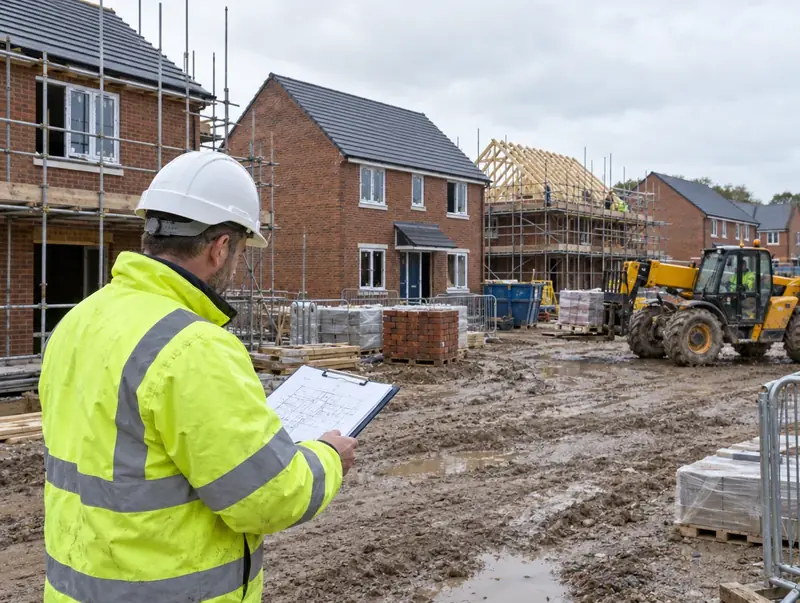
Planning and building around Chatham
We cover Chatham as part of Kent. It is about 8 miles north of Maidstone, around postcode district ME4. Gillingham is the closest neighbouring place we cover, at about 1 mile, followed by Rochester and Strood. Chatham is in the South East region of England.
Near Chatham, we look at in-principle consents that still need detailed approval, land where self-build plots could suit the market and fields that need a masterplan before an application. Because Chatham is in England, land titles are registered with HM Land Registry and transfers attract Stamp Duty Land Tax (SDLT).
If you have a site near Chatham that is stuck, a short call is the best place to start.
Our approach in Chatham
Early engagement
We seek pre-application advice from the council where it is offered, and talk to neighbours and community groups before submitting, so concerns are dealt with early.
Policy first
We start with the development plan, national policy and the planning history of the site, so the strategy rests on what the council will actually test the application against.
The right application route
Outline, full or another route the rules allow in that nation. We explain why we chose it and what each route means for timing, cost and risk.
Honest about risk
No one can guarantee planning permission. We tell you plainly where the risks sit, what could be done about them and when a site is unlikely to succeed.
Rules that apply in Chatham
Selling development land in Chatham usually starts with heads of terms, a short written summary of price, conditions and fees, before solicitors draft the contract. In England the sale becomes binding on exchange of contracts and finishes on completion, with the title then registered at HM Land Registry. The buyer normally pays Stamp Duty Land Tax. On option and promotion agreements with Land to Homes, your reasonable legal fees are covered, with the amount agreed in the heads of terms.
In England, applications are judged against the National Planning Policy Framework and the council's Local Plan. Most applications must also deliver biodiversity net gain, and larger schemes usually involve a Section 106 agreement and, where a council charges it, the Community Infrastructure Levy. Permission in principle is an extra route available only in England.
| National planning policy | National Planning Policy Framework (NPPF), revised August 2026, with national planning practice guidance |
|---|---|
| Land transaction tax (paid by the buyer) | Stamp Duty Land Tax (SDLT) |
| Land registration | HM Land Registry |
| Developer contributions | Section 106 planning obligations, plus the Community Infrastructure Levy (CIL) where the council charges it |
Common questions in Chatham
How long does it take to get planning permission?
It varies with the size of the scheme, the council's workload and whether a legal agreement is needed. Small schemes usually move faster than major applications, which have longer statutory periods and often need a planning obligation. Pre-application advice and good survey work add time at the start but often save time later. We give you a realistic view for your site.
What is the difference between outline and full planning permission?
Outline permission establishes whether development is acceptable in principle, with some or all of the details, known as reserved matters, left for a later application. Full permission approves the detailed scheme in one go. Outline is often used to secure the principle on land before it is sold. In Scotland the equivalent of outline is planning permission in principle.
Can you guarantee planning permission?
No. Nobody can guarantee planning permission, because the decision rests with the planning authority or, on appeal, an independent appeal body. What we can do is choose sites with genuine prospects, prepare a thorough application and deal with likely objections before they arise. If we think a site is unlikely to succeed, we will tell you.
Who pays for a planning application?
Normally whoever makes the application pays the council fee and the cost of the surveys and reports. Under a promotion agreement with Land to Homes, we fund the planning work, and those costs are only recovered from the sale proceeds if the land sells with planning permission. On a direct purchase without planning, the planning cost and risk become ours.
Do you take on planning and building work in Chatham?
Yes, on sites we buy, option, promote or develop in partnership in Chatham and elsewhere in Kent, including Maidstone, Dover and Dartford. We do not take on planning or building work for third parties as a consultancy.
Read more: Planning Permission and Strategy · Guide: Biodiversity net gain for landowners: what it means for your land