
Land Assembly and Access in Peterhead
Land assembly in Peterhead means bringing several pieces of land under one plan so they can be developed together. It might combine neighbouring gardens, separate fields, or a main site and the strip needed to reach the road. Land to Homes negotiates with each owner and sets up a fair, written way of sharing value.
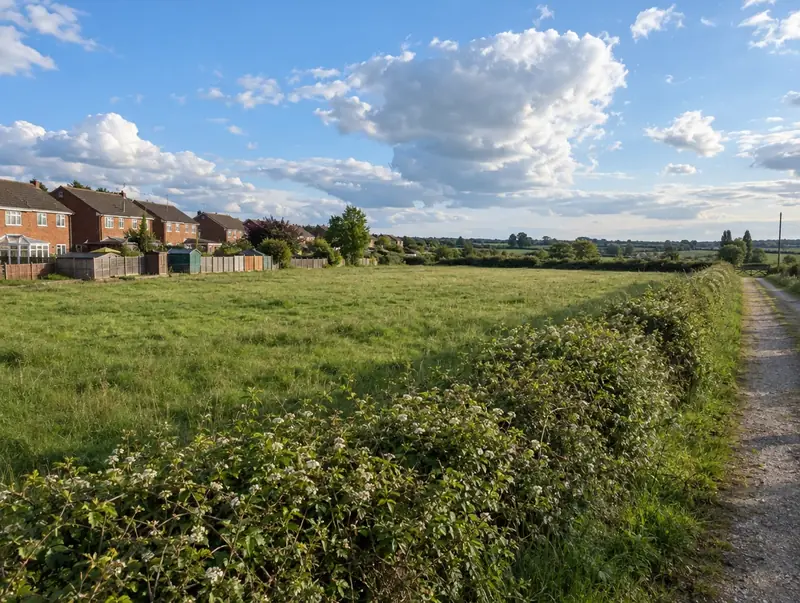 Peterhead · AB42
Free site appraisal
Tell us about your land and we will call you back. No cost, no obligation.
Prefer to talk? Call 0800 088 6248.
- Free site appraisalNo cost, no obligation
- Legal fees coveredReasonable fees, on options and promotion
- Nothing to pay upfrontOn promotion: we fund planning
- Direct purchaseSuitable sites, with or without planning
- UK-wideEngland, Wales, Scotland and NI
Land we look at around Peterhead
We cover Peterhead as part of Aberdeen & Aberdeenshire. It is about 27 miles north-east of Aberdeen, around postcode district AB42. If your land sits between towns, Fraserburgh, Inverurie and Aberdeen are the closest neighbouring places on our list.
Sites worth a conversation around Peterhead: former garage blocks and yards, corner plots and side gardens and farmland next to the settlement boundary. In Scotland, where Peterhead sits, planning decisions are made by the council as planning authority (or a national park authority in its area).
Tell us where your land is around Peterhead and we will explain the routes open to you.
What you get in Peterhead
Equalisation between owners
A collaboration or equalisation agreement shares proceeds by area or agreed proportion, so it does not matter whose land ends up as roads, open space or homes in the final layout.
One planning strategy
A single application covering the whole area usually produces a better layout than piecemeal schemes, and councils often expect it where their plans call for comprehensive development.
Ransom strips identified
A ransom strip is land that controls access to a development site. We check titles and highway records to establish who owns every piece of land between your site and the public road.
Visibility splays secured
A new junction needs clear sightlines across land on either side. If any of that land is in other ownership, rights or a purchase are needed before the access can work.
Rules that apply in Peterhead
Scottish land deals differ from the rest of the UK in a few ways: contracts are concluded by missives, consent in principle is called planning permission in principle, and developer contributions use Section 75 agreements. Land to Homes works within those rules around Peterhead, whether buying a suitable site directly with no onward chain, subject to survey, title and contract, or promoting it through planning with nothing to pay upfront. Planning permission is never guaranteed, so we explain the risks plainly.
In Scotland, access rights over another person's land are servitudes rather than easements, and new roads need roads construction consent from the council under the Roads (Scotland) Act 1984. Titles may be on the Land Register or the older Register of Sasines, both kept by Registers of Scotland. Missives and LBTT apply to each purchase.
| Local planning document | Local Development Plan (LDP) |
|---|---|
| In-principle consent | Planning permission in principle (PPP), followed by approval of matters specified in conditions |
| Land transaction tax (paid by the buyer) | Land and Buildings Transaction Tax (LBTT) |
| How a sale becomes binding | Land sales are concluded through missives, formal letters exchanged between solicitors that become a binding contract once concluded, followed by settlement on the date of entry and registration in the Land Register of Scotland. |
Land Assembly and Access in Peterhead: questions
Should neighbours sell their land together or separately?
Together usually produces a stronger planning case and a more efficient layout, especially where one access can serve everyone. It needs trust and clear documents. Selling separately can work for a plot with its own access, but may limit what the wider area can achieve.
Can the council force a neighbour to sell land for my development?
Generally no, for a private housing scheme. Councils have compulsory purchase powers for certain public purposes, but they are not a routine tool for individual developments. Most land assembly is achieved by agreement, which is why early, fair and well-documented negotiation matters so much.
What is an equalisation agreement?
It is an agreement between landowners whose land will be developed together. It shares proceeds and costs by an agreed formula, usually by area, regardless of where homes, roads or open space end up. Without one, owners may compete for the most valuable parts of the layout and stall the whole scheme.
What is a visibility splay?
A visibility splay is the area of land either side of a junction that must be kept clear so drivers can see approaching traffic. Its size depends on road speeds and the highway authority's standards. If part of the splay is owned by someone else, the scheme needs their agreement before the access can work.
Is Peterhead an area you cover for land?
Yes, we cover land in Peterhead and elsewhere in Aberdeen & Aberdeenshire, including Fraserburgh, Stonehaven and Inverurie. Where a site suits us we can buy it directly, or set up an option or promotion agreement. On promotion there is nothing to pay upfront.
Read more: Land Assembly and Access · Guide: How affordable and social homes are delivered across the UK