
Land Assembly and Access in Aberdeen
When several owners in Aberdeen each hold part of a developable area, nobody wants their land to become the road while a neighbour gets the houses. An equalisation agreement solves that by sharing proceeds by area, not by layout. Land to Homes can coordinate the owners, the planning strategy and the access as one package.
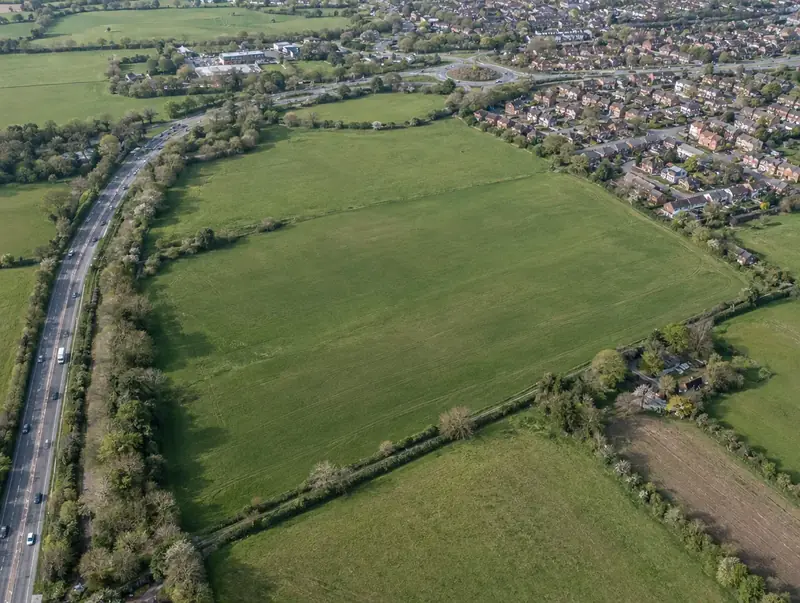 Aberdeen · AB10
Free site appraisal
Tell us about your land and we will call you back. No cost, no obligation.
Prefer to talk? Call 0800 088 6248.
- Free site appraisalNo cost, no obligation
- Legal fees coveredReasonable fees, on options and promotion
- Nothing to pay upfrontOn promotion: we fund planning
- Direct purchaseSuitable sites, with or without planning
- UK-wideEngland, Wales, Scotland and NI
Land we look at around Aberdeen
Aberdeen is the main town we cover in Aberdeen & Aberdeenshire, centred on postcode district AB10. Close by, our coverage also takes in Stonehaven, Inverurie and Peterhead.
Around Aberdeen we look at land that already has planning permission, former garage blocks and yards and brownfield land in and around Aberdeen. In Scotland, where Aberdeen sits, planning decisions are made by the council as planning authority (or a national park authority in its area).
If you own land near Aberdeen, the first step is a free, no-obligation appraisal.
How we work in Aberdeen
Ransom strips identified
A ransom strip is land that controls access to a development site. We check titles and highway records to establish who owns every piece of land between your site and the public road.
Visibility splays secured
A new junction needs clear sightlines across land on either side. If any of that land is in other ownership, rights or a purchase are needed before the access can work.
Rights of way and easements
Public footpaths, drainage easements and private rights can affect a layout. We map them early and plan around them, or seek diversions, where the scheme requires it.
Deals to suit each owner
Different owners may want different routes: some prefer to sell outright, others an option or promotion. The structure can combine these within one plan for the whole area.
Planning and land rules in Aberdeen
Scottish land deals differ from the rest of the UK in a few ways: contracts are concluded by missives, consent in principle is called planning permission in principle, and developer contributions use Section 75 agreements. Land to Homes works within those rules around Aberdeen, whether buying a suitable site directly with no onward chain, subject to survey, title and contract, or promoting it through planning with nothing to pay upfront. Planning permission is never guaranteed, so we explain the risks plainly.
In Scotland, access rights over another person's land are servitudes rather than easements, and new roads need roads construction consent from the council under the Roads (Scotland) Act 1984. Titles may be on the Land Register or the older Register of Sasines, both kept by Registers of Scotland. Missives and LBTT apply to each purchase.
| National planning policy | National Planning Framework 4 (NPF4), which forms part of the statutory development plan |
|---|---|
| Who decides applications | The council as planning authority (or a national park authority in its area) |
| In-principle consent | Planning permission in principle (PPP), followed by approval of matters specified in conditions |
| How a sale becomes binding | Land sales are concluded through missives, formal letters exchanged between solicitors that become a binding contract once concluded, followed by settlement on the date of entry and registration in the Land Register of Scotland. |
Your questions answered for Aberdeen
Should neighbours sell their land together or separately?
Together usually produces a stronger planning case and a more efficient layout, especially where one access can serve everyone. It needs trust and clear documents. Selling separately can work for a plot with its own access, but may limit what the wider area can achieve.
What if my access crosses a public footpath?
A footpath crossing does not usually prevent access, but the design must keep the path safe and usable. If the layout needs the path to move, a formal diversion order is required, which is a separate legal process that members of the public can object to.
Who pays the legal costs in a land assembly?
It depends on the structure. On option and promotion agreements with Land to Homes, we pay your reasonable legal fees, with the amount agreed up front in the heads of terms. For direct purchases and collaboration agreements, cost arrangements are agreed case by case and set out in writing.
What is an equalisation agreement?
It is an agreement between landowners whose land will be developed together. It shares proceeds and costs by an agreed formula, usually by area, regardless of where homes, roads or open space end up. Without one, owners may compete for the most valuable parts of the layout and stall the whole scheme.
Do you buy land in Aberdeen?
Yes. Land to Homes looks at land in Aberdeen and elsewhere in Aberdeen & Aberdeenshire, including Peterhead, Fraserburgh and Stonehaven. Every enquiry starts with a free site appraisal, and on option and promotion agreements we pay your reasonable legal fees.
Read more: Land Assembly and Access · Guide: Ransom strips and access: what landowners need to know