
Sell Farmland and Paddocks in Stirling
Selling farmland or paddocks in Stirling for development usually means land on the edge of a town or village that could take new homes once planning policy allows. Value depends heavily on planning prospects, so many deals are options or promotion agreements that let you keep farming until permission is granted and the land is sold.
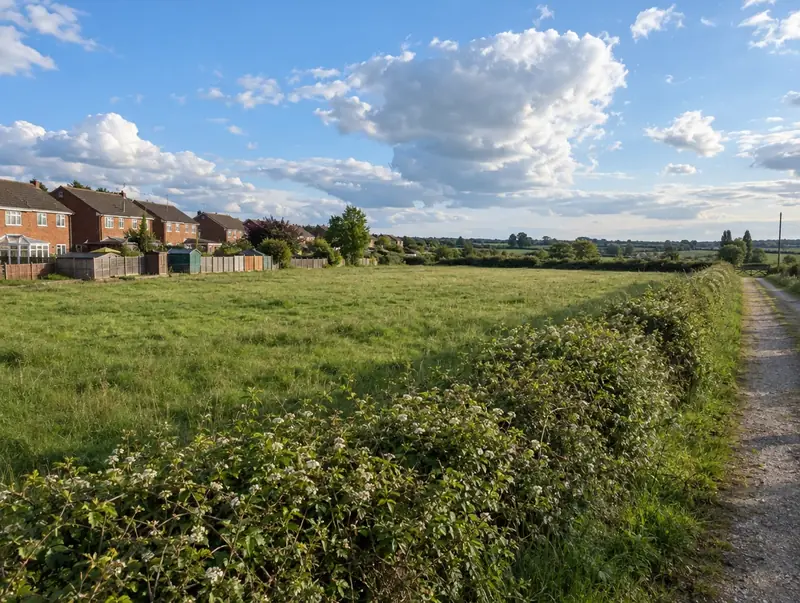 Stirling · FK8
Free site appraisal
Tell us about your land and we will call you back. No cost, no obligation.
Prefer to talk? Call 0800 088 6248.
- Free site appraisalNo cost, no obligation
- Legal fees coveredReasonable fees, on options and promotion
- Nothing to pay upfrontOn promotion: we fund planning
- Direct purchaseSuitable sites, with or without planning
- UK-wideEngland, Wales, Scotland and NI
Land we look at around Stirling
Stirling is the main town we cover in Forth Valley, centred on postcode district FK8. If your land sits between towns, Alloa, Falkirk and Grangemouth are the closest neighbouring places on our list.
Sites worth a conversation around Stirling: farmland next to the settlement boundary, fields put forward or allocated in the local plan and land behind street frontages. Because Stirling is in Scotland, land titles are registered with Registers of Scotland (Land Register of Scotland) and transfers attract Land and Buildings Transaction Tax (LBTT).
Send us a postcode in or near FK8 and we will start with a free desktop appraisal.
Why work with Land to Homes in Stirling
Tenancies handled carefully
If the land is let, the type of tenancy decides how and when vacant possession can be obtained. We look at the tenancy before proposing any deal and recommend specialist agricultural advice.
Fees covered on options
On option and promotion agreements we pay your reasonable legal fees, with the amount agreed up front in the heads of terms, so specialist rural legal advice is within reach.
Keep farming meanwhile
Under an option or promotion agreement, you normally stay in possession and keep farming or grazing until the land is sold, subject to access for surveys and agreed notice periods.
Edge-of-settlement focus
Fields that adjoin existing homes, roads and services have the strongest planning prospects. Isolated fields deep in open countryside rarely suit housing, and if that applies to yours, we will say so.
Planning and land rules in Stirling
In Scotland, planning applications for land around Stirling are decided by the council as planning authority, using National Planning Framework 4 and the Local Development Plan, which together form the statutory development plan. Instead of outline permission, Scotland uses planning permission in principle, followed by approval of matters specified in conditions. Land to Homes can buy suitable sites directly or promote land through planning, and every conversation starts with a free site appraisal.
In Scotland, NPF4 limits development on prime agricultural land, and rural housing is guided by its rural homes policy and the Local Development Plan. Croft land usually needs a decrofting direction from the Crofting Commission before it can be developed. Scottish agricultural tenancies carry their own statutory rights, so take specialist advice early.
| National planning policy | National Planning Framework 4 (NPF4), which forms part of the statutory development plan |
|---|---|
| Local planning document | Local Development Plan (LDP) |
| In-principle consent | Planning permission in principle (PPP), followed by approval of matters specified in conditions |
| How a sale becomes binding | Land sales are concluded through missives, formal letters exchanged between solicitors that become a binding contract once concluded, followed by settlement on the date of entry and registration in the Land Register of Scotland. |
Your questions answered for Stirling
Is agricultural land worth more with planning permission?
Usually much more, because residential land values are generally far higher than farming values. Even without permission, land with realistic prospects can attract hope value. The gap depends on location, how many homes could be built and the costs a builder faces. Our free appraisal explains the factors for your field.
How do I keep access to the rest of my farm?
Through rights reserved in the agreement and the eventual transfer. These can include a right of way through the new estate road, service connections and drainage routes for retained land. Plan them early, because once a layout is approved it is much harder to add access later.
Can I sell a paddock for housing?
Often, if it sits within or next to a settlement and has safe road access. Paddocks behind existing homes are common development sites. Those in open countryside, or with poor access, rarely get permission. We check the development plan and site constraints before suggesting any route or deal structure.
What happens to my tenant farmer if I sell for development?
It depends on the tenancy. Some older agricultural tenancies give tenants strong security, while newer tenancies and grazing licences are usually more flexible. Planning permission for a non-agricultural use can sometimes support ending a tenancy, but the rules are technical and specialist advice is essential. We factor the tenancy into any deal.
Is Stirling an area you cover for land?
Yes, we cover land in Stirling and elsewhere in Forth Valley, including Falkirk, Alloa and Grangemouth. Where a site suits us we can buy it directly, or set up an option or promotion agreement. On promotion there is nothing to pay upfront.
Read more: Sell Farmland and Paddocks · Guide: Green Belt and grey belt land explained