
Sell Brownfield Land in Scottish Borders
If you own a redundant commercial site in Scottish Borders, selling it for housing can turn an ongoing cost into a sale. Buyers will ask about past uses, contamination reports, asbestos in buildings and drainage. Land to Homes can buy suitable sites directly, subject to survey, title and contract, and builds clearance and remediation into a clear offer.
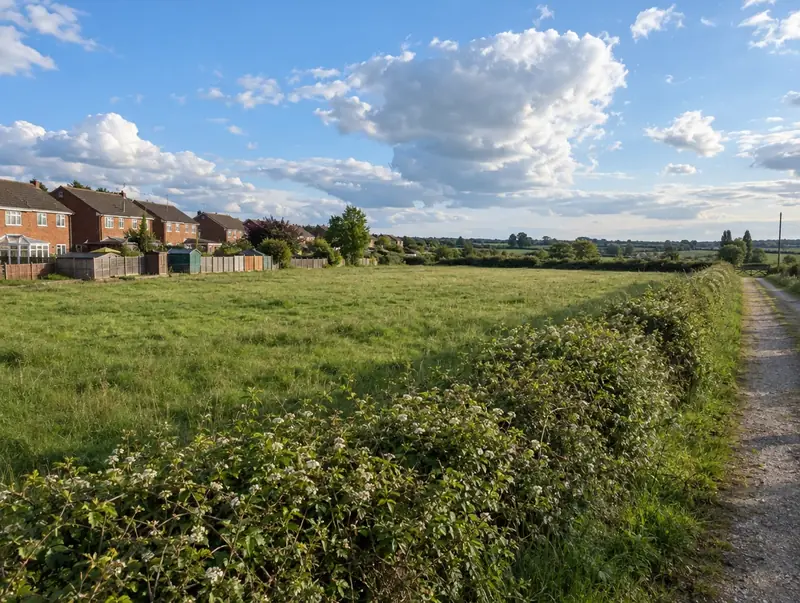 Scottish Borders
Free site appraisal
Tell us about your land and we will call you back. No cost, no obligation.
Prefer to talk? Call 0800 088 6248.
- Free site appraisalNo cost, no obligation
- Legal fees coveredReasonable fees, on options and promotion
- Nothing to pay upfrontOn promotion: we fund planning
- Direct purchaseSuitable sites, with or without planning
- UK-wideEngland, Wales, Scotland and NI
Land and sites near Scottish Borders
Across Scottish Borders, we cover Galashiels and 3 other towns, among them Hawick, Peebles and Kelso. Neighbouring areas we also cover include Edinburgh & the Lothians, Fife and Forth Valley.
In and around Scottish Borders, the land we appraise ranges from land that already has planning permission to redundant commercial buildings, including corner plots and side gardens. Because Scottish Borders is in Scotland, land titles are registered with Registers of Scotland (Land Register of Scotland) and transfers attract Land and Buildings Transaction Tax (LBTT).
If you own land near Scottish Borders, the first step is a free, no-obligation appraisal.
Our approach in Scottish Borders
Neighbouring uses considered
New homes next to workshops, busy roads or late-night venues need protection from noise and smells. In England and Wales, the agent of change principle can put the cost of mitigation on the new development.
Contamination assessed in stages
Ground investigation is usually staged: a desk study of past uses, intrusive sampling if needed, then a remediation strategy and verification. Existing reports save time and cost, so share any you hold.
VAT on commercial sites
If you have opted to tax the property, VAT may be chargeable on the sale, which affects what a buyer pays. Your accountant should confirm the position before a price is agreed.
Loss of employment land
Councils may resist losing business land to housing. Policies vary, so we check whether marketing evidence or a viability case is likely to be needed before any application is made.
The Scottish system, as it applies in Scottish Borders
Planning obligations in Scotland are made under Section 75 of the Town and Country Planning (Scotland) Act 1997 and can cover affordable housing and infrastructure. Once registered against the title, they can bind future owners. Under NPF4, national and major developments must also leave biodiversity in a demonstrably better state. These costs shape what development land near Scottish Borders is worth, which is why our free appraisal explains them before any offer or promotion terms are agreed.
In Scotland, NPF4 supports the reuse of vacant and derelict land, and councils record such land in the Scottish Vacant and Derelict Land Survey. Flood risk is assessed against NPF4 and SEPA's flood maps. Former mining areas may need a Coal Authority report, and ground conditions affect the building warrant as well as planning.
| National planning policy | National Planning Framework 4 (NPF4), which forms part of the statutory development plan |
|---|---|
| Local planning document | Local Development Plan (LDP) |
| Who decides applications | The council as planning authority (or a national park authority in its area) |
| In-principle consent | Planning permission in principle (PPP), followed by approval of matters specified in conditions |
| Land transaction tax (paid by the buyer) | Land and Buildings Transaction Tax (LBTT) |
| Land registration | Registers of Scotland (Land Register of Scotland) |
| How a sale becomes binding | Land sales are concluded through missives, formal letters exchanged between solicitors that become a binding contract once concluded, followed by settlement on the date of entry and registration in the Land Register of Scotland. |
| Developer contributions | Section 75 planning obligations, with Section 69 agreements sometimes used for simple one-off payments |
Common questions in Scottish Borders
Who pays for contamination clean-up when I sell?
It is negotiated. Usually the buyer allows for remediation in the price it offers, so the cost is reflected in the land value. Contract terms can also deal with environmental liabilities after the sale. Where contamination is serious, environmental law can in some cases leave liability with whoever caused it, so take legal advice.
Will VAT apply when I sell my brownfield site?
It may. If you have opted to tax the land or buildings, VAT can apply to the sale price. Whether the option can be disapplied depends on what the buyer intends to do with the property, and the rules are technical. Ask your accountant before agreeing a price, because it affects what the buyer pays.
Can I sell a commercial site that still has tenants?
Yes. Many sites sell with tenants in place, and the buyer manages the leases coming to an end. Business tenants can have statutory rights to stay in some cases, so the lease terms and any notices matter. We review the leases and agree timing that works for you and, where possible, for the tenants.
Do I need a contamination report before selling?
Not necessarily, but it helps. A desk study of past uses is relatively inexpensive and gives buyers confidence. If you hold older reports, share them. Buyers will usually carry out their own investigations anyway, both as part of their due diligence and because planning conditions often require them.
Do you buy land in Scottish Borders?
Yes. Land to Homes looks at land across Scottish Borders, including Kelso, Peebles and Hawick. Every enquiry starts with a free site appraisal, and on option and promotion agreements we pay your reasonable legal fees.
Read more: Sell Brownfield Land · Guide: Green Belt and grey belt land explained