
Affordable Housing in Forth Valley
Land to Homes includes affordable housing in the schemes it plans in Forth Valley, usually delivered through a planning obligation and transferred to a registered housing provider. The types vary by nation and local policy, from social rent to shared ownership and discounted sale. You can register interest with us, but eligibility and allocation are always decided by the council or provider.
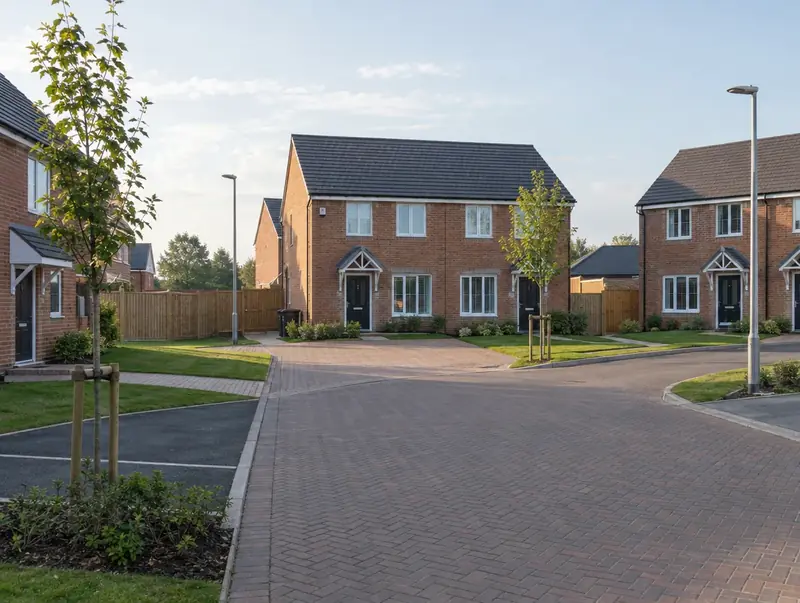 Forth Valley
Register your interest
Tell us where you want to live and what you need. Free, no obligation.
Registering interest is not a housing application. Social and affordable homes are allocated by councils and housing providers through their own lists.
Prefer to talk? Call 0800 088 6248.
- Free to registerNo fees, no deposit, no obligation
- Hear firstIf homes are released near you
- Affordable homesWith councils and housing associations
- Clear informationTenure, specification and warranty
- UK-wideEngland, Wales, Scotland and NI
Homes we plan around Forth Valley
Our Forth Valley coverage takes in 4 towns and cities, centred on Stirling and including Falkirk, Alloa and Grangemouth. If your land is near a boundary, we also cover Lanarkshire, Edinburgh & the Lothians and Fife.
People registering interest around Forth Valley can tell us whether they want homes for first-time buyers, homes for private rent or homes for affordable rent. Because Forth Valley is in Scotland, land titles are registered with Registers of Scotland (Land Register of Scotland) and transfers attract Land and Buildings Transaction Tax (LBTT).
Registering for Forth Valley is free and you can ask us to remove your details at any time.
What you get in Forth Valley
Help for landowners
We explain how affordable housing requirements affect what a site is worth, so landowners understand an offer rather than just receiving one.
Designed to fit in
We design affordable homes to sit alongside homes for sale and spread them through a scheme, so the tenures are hard to tell apart.
Delivered through planning
Affordable homes are usually secured by a planning obligation, such as a Section 106 or Section 75 agreement, agreed with the council at planning stage.
Nation-aware delivery
Affordable housing works differently in England, Wales, Scotland and Northern Ireland, and we follow the rules and funding routes of each.
How the rules work in Forth Valley
Affordable homes in Forth Valley are mainly funded through the Scottish Government's Affordable Housing Supply Programme, with councils and registered social landlords building them. Councils set local investment priorities in their Strategic Housing Investment Plans. On private developments, Local Development Plans often require an affordable housing contribution, secured through a Section 75 agreement. Land to Homes can bring forward land and deliver homes for councils and housing associations.
In Scotland, affordable homes are funded through the Scottish Government's Affordable Housing Supply Programme, guided by each council's Strategic Housing Investment Plan, and are often secured through Section 75 agreements. Registered social landlords are regulated by the Scottish Housing Regulator. Tenures include social rent, mid-market rent and shared equity.
| National planning policy | National Planning Framework 4 (NPF4), which forms part of the statutory development plan |
|---|---|
| Local planning document | Local Development Plan (LDP) |
| Who decides applications | The council as planning authority (or a national park authority in its area) |
| In-principle consent | Planning permission in principle (PPP), followed by approval of matters specified in conditions |
| Land transaction tax (paid by the buyer) | Land and Buildings Transaction Tax (LBTT) |
| Land registration | Registers of Scotland (Land Register of Scotland) |
| How a sale becomes binding | Land sales are concluded through missives, formal letters exchanged between solicitors that become a binding contract once concluded, followed by settlement on the date of entry and registration in the Land Register of Scotland. |
| Developer contributions | Section 75 planning obligations, with Section 69 agreements sometimes used for simple one-off payments |
Common questions in Forth Valley
Can I register interest in an affordable home with Land to Homes?
Yes, but registering with us is not an application and does not affect eligibility. If a site we bring forward includes affordable homes, we will tell you which council or housing provider is responsible so you can apply through them. You should also register directly with your council and with housing associations in the area.
What counts as affordable housing?
Affordable housing is housing for sale or rent for people whose needs are not met by the market, provided on terms set by planning policy. It typically includes social rent, affordable rent, shared ownership and discounted market sale. The exact definitions differ by nation: England's are in the National Planning Policy Framework, and Wales, Scotland and Northern Ireland set their own.
What is shared ownership?
Shared ownership lets you buy a share of a home, usually with a mortgage, and pay rent to the housing provider on the remaining share. You can normally buy further shares over time, which is known as staircasing. Schemes and rules differ by nation and by provider, so check the details and take independent legal and financial advice before committing.
Does affordable housing reduce what my land is worth?
It usually affects value, because affordable homes are transferred to a provider for less than open market homes would sell for. The council's affordable housing policy, and other planning obligations, are among the costs a buyer allows for when valuing land. Our free site appraisal explains how these factors apply to your site.
Are there new homes available in Forth Valley now?
Not yet. Land to Homes has no homes available in Forth Valley at the moment. You can register your interest for Forth Valley, and we will contact you if we bring homes forward there or nearby.
Read more: Affordable Housing · Guide: Section 106 and affordable housing: what landowners should know