
Social Housing in Cumbria
If you need a social rent home in Cumbria, apply to the council's housing register or to housing associations working in the area, not to a developer. They assess need and decide who is offered each home. Land to Homes builds new social homes for those landlords to own and manage, which adds to the supply they can allocate.
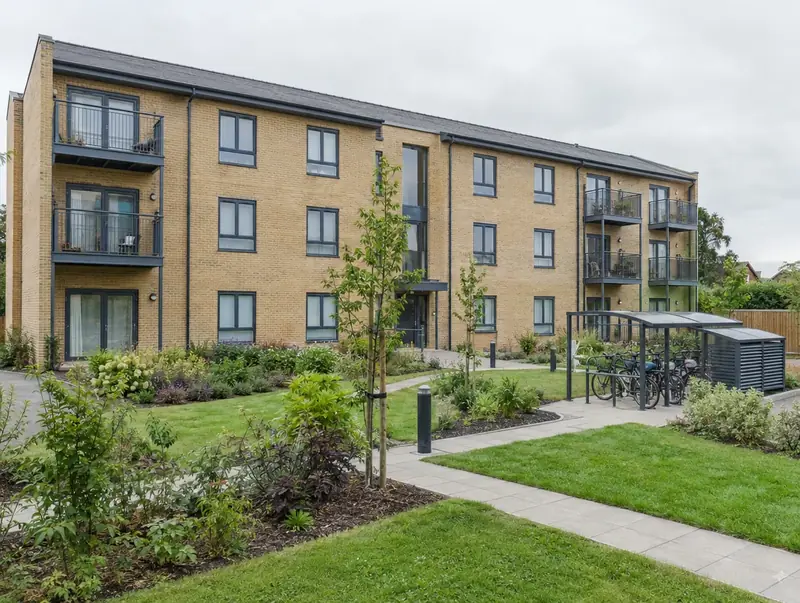 Cumbria
Register your interest
Tell us where you want to live and what you need. Free, no obligation.
Registering interest is not a housing application. Social and affordable homes are allocated by councils and housing providers through their own lists.
Prefer to talk? Call 0800 088 6248.
- Free to registerNo fees, no deposit, no obligation
- Hear firstIf homes are released near you
- Affordable homesWith councils and housing associations
- Clear informationTenure, specification and warranty
- UK-wideEngland, Wales, Scotland and NI
Registering for homes in Cumbria
Across Cumbria, we cover Carlisle and 5 other towns, among them Workington, Barrow-in-Furness and Kendal. Neighbouring areas we also cover include Lancashire, County Durham and Tyne and Wear.
Registrations for Cumbria cover homes for first-time buyers, homes for shared ownership and homes for affordable rent. Planning in Cumbria follows England’s rules: the National Planning Policy Framework sets national policy and the council’s Local Plan sets local policy.
Register for Cumbria and we will contact you if we bring homes forward nearby.
What you get in Cumbria
Whole-site schemes
We can also discuss schemes built entirely for a council or housing association, on land we bring forward or land the landlord already owns.
We do not allocate homes
Allocations are made by councils and housing providers through their own lists and policies. We cannot add anyone to a list or influence who is offered a home.
Built to landlord standards
Social landlords have their own design and quality standards, and we design to them from the outset so homes are ready to transfer.
Nation-aware
Social housing law, regulation and funding differ across England, Wales, Scotland and Northern Ireland, and we work within each system.
Planning and land rules in Cumbria
Affordable homes in Cumbria are usually funded through a mix of Section 106 contributions from market schemes and grant from Homes England's Social and Affordable Homes Programme 2026 to 2036, or from the Greater London Authority in London. Registered providers, regulated by the Regulator of Social Housing, own and manage most of them. Land to Homes can bring forward land and build homes for councils and housing associations, including homes for Social Rent.
In England, social rent homes are owned by councils and registered providers regulated by the Regulator of Social Housing, with rents set under the Rent Standard. Councils allocate homes under their published allocation schemes, often through choice-based lettings. New social homes are usually secured through Section 106 agreements or funded with grant through Homes England, or the Greater London Authority in London.
| National planning policy | National Planning Policy Framework (NPPF), revised August 2026, with national planning practice guidance |
|---|---|
| Local planning document | Local Plan |
| Who decides applications | The local planning authority, usually the district, borough, city or unitary council (or a national park authority) |
| In-principle consent | Outline planning permission, with reserved matters approved later |
| Land transaction tax (paid by the buyer) | Stamp Duty Land Tax (SDLT) |
| Land registration | HM Land Registry |
| How a sale becomes binding | A land sale becomes legally binding on exchange of contracts and finishes on completion, after which the buyer registers the title with HM Land Registry. |
| Developer contributions | Section 106 planning obligations, plus the Community Infrastructure Levy (CIL) where the council charges it |
Social Housing in Cumbria: questions
Can social housing be built on land I own?
Yes. Land can be sold to a developer who includes social homes in the scheme, or offered for a scheme built entirely for a council or housing association. Planning policy often requires affordable homes on larger sites anyway. Our free site appraisal looks at whether your land suits new homes and which route makes sense.
How is social housing allocated?
Councils and housing associations allocate social homes using published allocation policies that give priority to households in housing need, such as people who are homeless, overcrowded or living in unsuitable housing. Many areas use a shared register or choice-based lettings, where applicants bid for advertised homes. The details vary by council and by nation.
Who owns and manages new social homes?
A council or a housing association, often called a registered provider in England and a registered social landlord in Wales and Scotland. The landlord sets the rent within the rules that apply, handles repairs and manages tenancies. A developer such as Land to Homes builds the homes and transfers them, but does not manage them as a social landlord.
What tenancy do social housing tenants get?
It depends on the nation and the landlord. Council and housing association tenants in England usually have secure or assured tenancies, Wales uses secure occupation contracts, Scotland uses the Scottish secure tenancy and Northern Ireland has its own secure tenancy arrangements. Some landlords start new tenants on an introductory or starter tenancy first.
Can I register for new homes in Cumbria?
Yes. Registering for Cumbria is free and does not commit you to anything. There are no homes available yet; if we bring homes forward in or near Cumbria, we will contact you.
Read more: Social Housing · Guide: Renting a new-build home: tenancy rules in England, Wales, Scotland and NI