
Social Housing in County Durham
In County Durham, as across the UK, Land to Homes aims to bring forward new social rent homes with councils and housing associations, either within a mixed development or as a scheme built entirely for a social landlord. We handle land, planning and construction. The landlord owns and manages the homes, sets the rent within the rules and allocates them from its housing list.
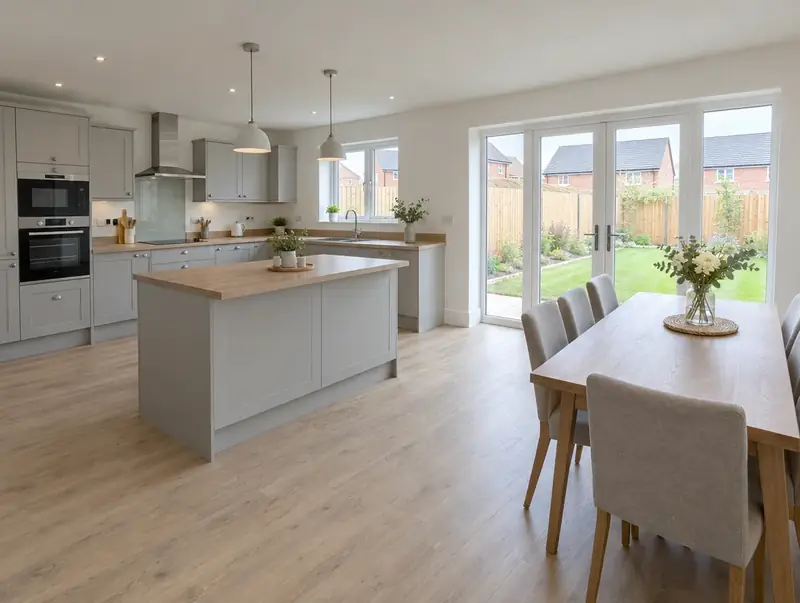 County Durham
Register your interest
Tell us where you want to live and what you need. Free, no obligation.
Registering interest is not a housing application. Social and affordable homes are allocated by councils and housing providers through their own lists.
Prefer to talk? Call 0800 088 6248.
- Free to registerNo fees, no deposit, no obligation
- Hear firstIf homes are released near you
- Affordable homesWith councils and housing associations
- Clear informationTenure, specification and warranty
- UK-wideEngland, Wales, Scotland and NI
New homes around County Durham
Our County Durham coverage takes in 12 towns and cities, centred on Darlington and including Stockton-on-Tees, Consett and Newton Aycliffe. If your land is near a boundary, we also cover Tyne and Wear, Northumberland and North Yorkshire.
People registering interest around County Durham can tell us whether they want homes for first-time buyers, homes for private rent or two- and three-bedroom family homes. Because County Durham is in England, land titles are registered with HM Land Registry and transfers attract Stamp Duty Land Tax (SDLT).
Registering for County Durham is free and you can ask us to remove your details at any time.
How we work in County Durham
Built to landlord standards
Social landlords have their own design and quality standards, and we design to them from the outset so homes are ready to transfer.
Part of mixed schemes
Social rent homes are often the affordable housing element of a larger development, secured through a planning obligation agreed with the council.
Whole-site schemes
We can also discuss schemes built entirely for a council or housing association, on land we bring forward or land the landlord already owns.
Clear signposting
If you need a home, we point you to your council's housing team or, in Northern Ireland, the Northern Ireland Housing Executive.
The English system, as it applies in County Durham
Councils and housing associations around County Durham can bid for grant through Homes England's Social and Affordable Homes Programme, which funds Social Rent, Affordable Rent at up to 80% of market rent, and shared ownership. Landlords of the rented homes must be registered with the Regulator of Social Housing. National policy also expects local plans to set a minimum Social Rent proportion for major development. Land to Homes is ready to discuss sites, partnership and delivery.
In England, social rent homes are owned by councils and registered providers regulated by the Regulator of Social Housing, with rents set under the Rent Standard. Councils allocate homes under their published allocation schemes, often through choice-based lettings. New social homes are usually secured through Section 106 agreements or funded with grant through Homes England, or the Greater London Authority in London.
| National planning policy | National Planning Policy Framework (NPPF), revised August 2026, with national planning practice guidance |
|---|---|
| Local planning document | Local Plan |
| Who decides applications | The local planning authority, usually the district, borough, city or unitary council (or a national park authority) |
| In-principle consent | Outline planning permission, with reserved matters approved later |
| Land transaction tax (paid by the buyer) | Stamp Duty Land Tax (SDLT) |
| Land registration | HM Land Registry |
| How a sale becomes binding | A land sale becomes legally binding on exchange of contracts and finishes on completion, after which the buyer registers the title with HM Land Registry. |
| Developer contributions | Section 106 planning obligations, plus the Community Infrastructure Levy (CIL) where the council charges it |
Questions about Social Housing in County Durham
Does building new social homes shorten waiting lists?
New social homes add to the supply that councils and housing associations can allocate, which helps, but waiting times depend on local demand, turnover of existing homes and allocation policies. We cannot say how any individual household would be affected. Your council's housing team can explain local waiting times and your position on the list.
What is the difference between social housing and affordable housing?
Social housing usually means low-cost rented homes let by councils and housing associations at social rents. Affordable housing is a wider term that also includes affordable rent, shared ownership, discounted sale and, in Scotland, mid-market rent. All social housing is affordable housing, but not all affordable housing is social housing.
Who owns and manages new social homes?
A council or a housing association, often called a registered provider in England and a registered social landlord in Wales and Scotland. The landlord sets the rent within the rules that apply, handles repairs and manages tenancies. A developer such as Land to Homes builds the homes and transfers them, but does not manage them as a social landlord.
How is social housing allocated?
Councils and housing associations allocate social homes using published allocation policies that give priority to households in housing need, such as people who are homeless, overcrowded or living in unsuitable housing. Many areas use a shared register or choice-based lettings, where applicants bid for advertised homes. The details vary by council and by nation.
Can I register for new homes in County Durham?
Yes. Registering for County Durham is free and does not commit you to anything. There are no homes available yet; if we bring homes forward in or near County Durham, we will contact you.
Read more: Social Housing · Guide: How affordable and social homes are delivered across the UK