
Land Option Agreements in South Yorkshire
Think of an option on land in South Yorkshire as a reservation with conditions attached. You agree not to sell to anyone else for a set term. In return, Land to Homes funds the planning work and pays your reasonable legal fees, agreed up front in the heads of terms. If permission is granted, we can buy at the formula price you agreed.
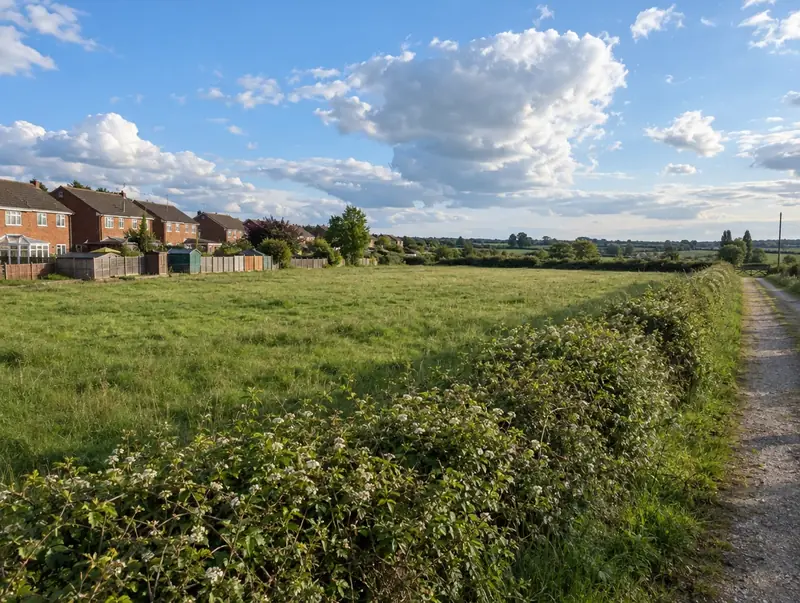 South Yorkshire
Free site appraisal
Tell us about your land and we will call you back. No cost, no obligation.
Prefer to talk? Call 0800 088 6248.
- Free site appraisalNo cost, no obligation
- Legal fees coveredReasonable fees, on options and promotion
- Nothing to pay upfrontOn promotion: we fund planning
- Direct purchaseSuitable sites, with or without planning
- UK-wideEngland, Wales, Scotland and NI
Land we look at around South Yorkshire
Across South Yorkshire, we cover Sheffield and 7 other towns, among them Burngreave, Darton and Bentley. Neighbouring areas we also cover include West Yorkshire, Nottinghamshire and Derbyshire. Our Great Barr head office in Birmingham is about 68 miles from the middle of South Yorkshire.
Sites worth a conversation around South Yorkshire: former garage blocks and yards, large and long rear gardens and redundant commercial buildings. Planning in South Yorkshire follows England’s rules: the National Planning Policy Framework sets national policy and the council’s Local Plan sets local policy.
If you own land near South Yorkshire, the first step is a free, no-obligation appraisal.
How we work in South Yorkshire
Planning funded by us
We commission the surveys, design work and planning application at our own cost, and keep you informed at each stage so you know how the planning case is progressing.
Right to buy, not obligation
The developer may buy if suitable planning is granted, but does not have to. You are bound not to sell elsewhere during the term, which is why its length and exit points matter so much.
Longstop dates and extensions
The option usually ends on a fixed date, sometimes with an extension if an application or appeal is still running. Clear limits stop your land being tied up for longer than you agreed.
Deductions agreed in advance
Costs such as planning obligations, abnormal ground works or infrastructure are often deducted from the price. The agreement should list exactly what can be deducted, so the price cannot be eroded later.
The English system, as it applies in South Yorkshire
Whether a field or large garden could take homes depends mostly on the council's Local Plan and national policy. Under the National Planning Policy Framework, plans define settlement boundaries, and land just outside South Yorkshire may still come forward if it is allocated, previously developed or meets evidenced unmet housing need. Smaller housing schemes can also use Permission in Principle, an England-only route that settles location, use and amount first. Our free appraisal explains which route suits your land.
In England, an option is usually protected by a notice on your title at HM Land Registry. Planning is pursued through the Local Plan or an application judged against the NPPF, and price deductions often cover Section 106 obligations, the Community Infrastructure Levy and, where it applies, the cost of meeting biodiversity net gain.
| National planning policy | National Planning Policy Framework (NPPF), revised August 2026, with national planning practice guidance |
|---|---|
| Local planning document | Local Plan |
| Who decides applications | The local planning authority, usually the district, borough, city or unitary council (or a national park authority) |
| In-principle consent | Outline planning permission, with reserved matters approved later |
| Land transaction tax (paid by the buyer) | Stamp Duty Land Tax (SDLT) |
| Land registration | HM Land Registry |
| How a sale becomes binding | A land sale becomes legally binding on exchange of contracts and finishes on completion, after which the buyer registers the title with HM Land Registry. |
| Developer contributions | Section 106 planning obligations, plus the Community Infrastructure Levy (CIL) where the council charges it |
Land Option Agreements in South Yorkshire: questions
What is an option premium?
It is a payment a developer may make when the option is signed, in return for exclusive rights over the land. The amount varies widely from site to site and is negotiated. Some agreements deduct it from the final purchase price, while others do not, so the heads of terms should say which applies.
What happens if planning is refused during an option?
The developer can usually appeal, submit a revised scheme or wait for a new local plan, as long as the option term allows. If no suitable permission is secured by the end date, the option lapses and you are free to deal with the land again, normally keeping any premium already paid.
What is the difference between an option and a promotion agreement?
Under an option, the developer buys the land itself at a formula price, so it benefits from a lower valuation. Under a promotion agreement, the promoter sells the land on the open market with you and takes a fee from the proceeds, so both sides want the highest price. Our guide compares the two in detail.
How long do land option agreements last?
The term is negotiated and depends on how much planning work is needed. Strategic sites waiting for a new local plan usually need longer terms than small sites with clear policy support. Look for a firm longstop date and sensible limits on any extensions, so the land cannot be tied up indefinitely.
Do you work with landowners in South Yorkshire?
We do. We work with landowners across South Yorkshire, including Rotherham, Sheffield and Darton. Send us a postcode and we will start with a free, no-obligation appraisal of what the land could take.
Read more: Land Option Agreements · Guide: Landowner joint ventures explained: sharing in the development