
Sell Garden Land and Backland in South Yorkshire
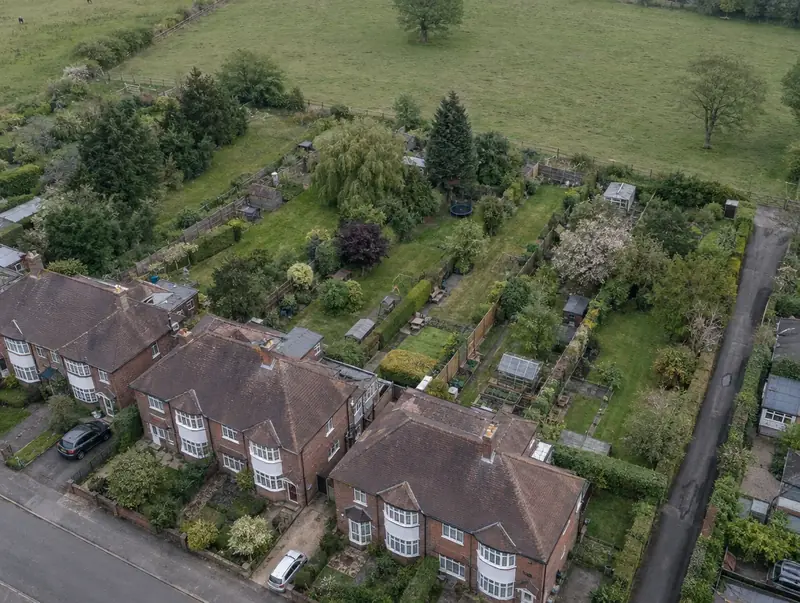
Selling part of your garden in South Yorkshire for a new home can work well, but the details decide it: the width and route of the access, overlooking, trees, drainage and any covenants on your title. Land to Homes gives a free, no-obligation appraisal and tells you plainly if the plot is unlikely to get permission.
 South Yorkshire
Free site appraisal
Tell us about your land and we will call you back. No cost, no obligation.
Prefer to talk? Call 0800 088 6248.
- Free site appraisalNo cost, no obligation
- Legal fees coveredReasonable fees, on options and promotion
- Nothing to pay upfrontOn promotion: we fund planning
- Direct purchaseSuitable sites, with or without planning
- UK-wideEngland, Wales, Scotland and NI
Selling land around South Yorkshire
Across South Yorkshire, we cover Sheffield and 7 other towns, among them Doncaster, Darton and Rotherham. If your land is near a boundary, we also cover West Yorkshire, Nottinghamshire and Derbyshire. Our Great Barr head office in Birmingham is about 68 miles from the middle of South Yorkshire.
Sites worth a conversation around South Yorkshire: backland plots with a workable access, redundant commercial buildings and infill gaps along existing streets. In England, where South Yorkshire sits, planning decisions are made by the local planning authority, usually the district, borough, city or unitary council (or a national park authority).
If you own land near South Yorkshire, the first step is a free, no-obligation appraisal.
What you get in South Yorkshire
Trees and ecology checked
Mature gardens can hold protected trees, bats in outbuildings or nesting birds. We check tree preservation orders and conservation area status, and plan any surveys for the right season.
Neighbours can combine
Where several gardens adjoin, a joint scheme with one shared access is often more workable than separate plots. A collaboration agreement can share proceeds fairly between the owners involved.
Your retained house matters
Selling part of a garden changes the house you keep: outside space, parking, privacy and value. We look at any scheme from your side as well as from the buyer's.
Access comes first
Most garden schemes stand or fall on access. The drive must be wide enough for cars, refuse collection and emergency vehicles, with safe visibility at the road, under the highway authority's design guidance.
The English system, as it applies in South Yorkshire
In England, most planning applications for new homes in South Yorkshire are decided by the local planning authority, usually the council, using its Local Plan and the National Planning Policy Framework. Many landowners sell without planning, either outright or through an option or promotion agreement that funds the application first. Land to Homes offers a free site appraisal, pays your reasonable legal fees on option and promotion agreements, and can buy suitable sites directly, subject to survey, title and contract.
In England, the NPPF excludes private residential gardens in built-up areas from its definition of previously developed land, and many Local Plans have specific garden development policies. Recent changes exempt many very small sites from biodiversity net gain, subject to conditions. Restrictive covenants can be modified or discharged by the Upper Tribunal (Lands Chamber).
| National planning policy | National Planning Policy Framework (NPPF), revised August 2026, with national planning practice guidance |
|---|---|
| Local planning document | Local Plan |
| Who decides applications | The local planning authority, usually the district, borough, city or unitary council (or a national park authority) |
| In-principle consent | Outline planning permission, with reserved matters approved later |
| Land transaction tax (paid by the buyer) | Stamp Duty Land Tax (SDLT) |
| Land registration | HM Land Registry |
| How a sale becomes binding | A land sale becomes legally binding on exchange of contracts and finishes on completion, after which the buyer registers the title with HM Land Registry. |
| Developer contributions | Section 106 planning obligations, plus the Community Infrastructure Levy (CIL) where the council charges it |
Sell Garden Land and Backland in South Yorkshire: questions
What is backland development?
Backland development means building homes on land behind an existing row of houses, usually reached by a new access running between them. Many councils have specific policy on it, focused on access, privacy, the character of the area and avoiding piecemeal schemes that would block a better-planned layout later.
Should I team up with my neighbours to sell garden land?
Often it helps. Several gardens together can support a better-planned scheme with one shared access, which councils tend to prefer to separate plots. A collaboration agreement sets out how proceeds are shared, usually by area, so no one loses out because of where the access road happens to go.
Do I pay Capital Gains Tax when I sell garden land?
Possibly. Private Residence Relief can cover part of a garden in some circumstances, but the size of the garden and the order and timing of sales can affect it. Selling the garden after you have sold the house, for example, may change the position. Speak to an accountant before agreeing terms.
What is tandem development?
Tandem development is a new house placed directly behind an existing one, sharing or running alongside the same access. Councils often resist it because of noise and disturbance from cars passing the front house and overlooking between the two. A wider plot with its own access is usually viewed more positively.
Do you work with landowners in South Yorkshire?
We do. We work with landowners across South Yorkshire, including Sheffield, Doncaster and Burngreave. Send us a postcode and we will start with a free, no-obligation appraisal of what the land could take.
Read more: Sell Garden Land and Backland · Guide: Selling part of your garden: what you need to know