
Land Option Agreements in Scottish Borders
A land option agreement in Scottish Borders gives a developer the right, but not the obligation, to buy your land within a fixed period, normally once planning permission is granted. The developer pays for the planning work. When the option is exercised, the price is usually market value with that permission, less an agreed discount and agreed costs.
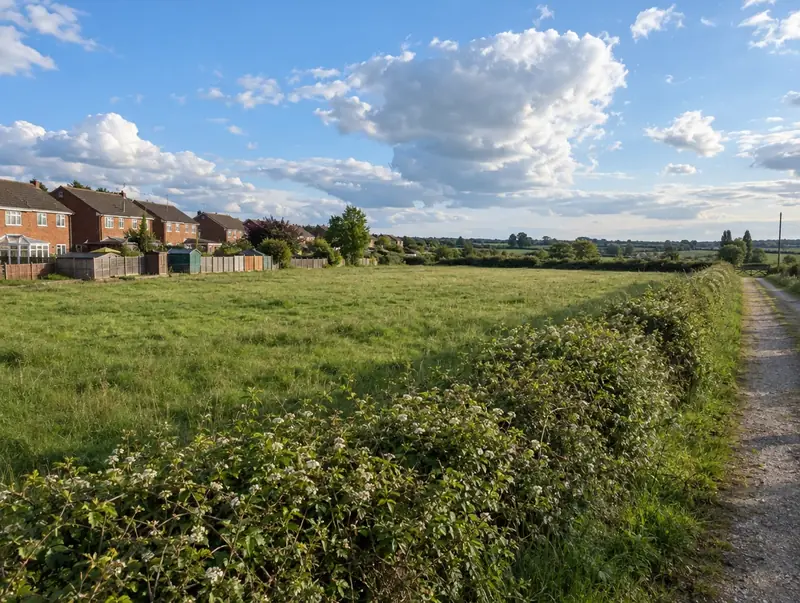 Scottish Borders
Free site appraisal
Tell us about your land and we will call you back. No cost, no obligation.
Prefer to talk? Call 0800 088 6248.
- Free site appraisalNo cost, no obligation
- Legal fees coveredReasonable fees, on options and promotion
- Nothing to pay upfrontOn promotion: we fund planning
- Direct purchaseSuitable sites, with or without planning
- UK-wideEngland, Wales, Scotland and NI
Our coverage in Scottish Borders
Our Scottish Borders coverage takes in 4 towns and cities, centred on Galashiels and including Peebles, Hawick and Kelso. Neighbouring areas we also cover include Edinburgh & the Lothians, Fife and Forth Valley.
Sites worth a conversation around Scottish Borders: farmland next to the settlement boundary, paddocks on the edge of Galashiels and infill gaps along existing streets. Planning in Scottish Borders follows Scotland’s rules: National Planning Framework 4 sets national policy and the council’s Local Development Plan sets local policy.
Tell us where your land is around Scottish Borders and we will explain the routes open to you.
Why work with Land to Homes in Scottish Borders
Deductions agreed in advance
Costs such as planning obligations, abnormal ground works or infrastructure are often deducted from the price. The agreement should list exactly what can be deducted, so the price cannot be eroded later.
Planning funded by us
We commission the surveys, design work and planning application at our own cost, and keep you informed at each stage so you know how the planning case is progressing.
Keep using your land
You normally stay in possession during the option. Farming, grazing or existing lettings can usually continue, subject to access for surveys and limits on granting new long-term tenancies.
Longstop dates and extensions
The option usually ends on a fixed date, sometimes with an extension if an application or appeal is still running. Clear limits stop your land being tied up for longer than you agreed.
Planning in Scottish Borders: the Scottish rules
In Scotland, planning applications for land around Scottish Borders are decided by the council as planning authority, using National Planning Framework 4 and the Local Development Plan, which together form the statutory development plan. Instead of outline permission, Scotland uses planning permission in principle, followed by approval of matters specified in conditions. Land to Homes can buy suitable sites directly or promote land through planning, and every conversation starts with a free site appraisal.
In Scotland, an option is a personal contract and cannot be registered as a right in the land itself. Developers usually protect their position with a standard security registered with Registers of Scotland. When the option is exercised, the sale is concluded by missives and the buyer pays Land and Buildings Transaction Tax.
| National planning policy | National Planning Framework 4 (NPF4), which forms part of the statutory development plan |
|---|---|
| Local planning document | Local Development Plan (LDP) |
| Who decides applications | The council as planning authority (or a national park authority in its area) |
| In-principle consent | Planning permission in principle (PPP), followed by approval of matters specified in conditions |
| Land transaction tax (paid by the buyer) | Land and Buildings Transaction Tax (LBTT) |
| Land registration | Registers of Scotland (Land Register of Scotland) |
| How a sale becomes binding | Land sales are concluded through missives, formal letters exchanged between solicitors that become a binding contract once concluded, followed by settlement on the date of entry and registration in the Land Register of Scotland. |
| Developer contributions | Section 75 planning obligations, with Section 69 agreements sometimes used for simple one-off payments |
Common questions in Scottish Borders
How does an option agreement work for land?
The landowner grants a developer the exclusive right to buy the land within a set term. The developer spends its own money seeking planning permission. If suitable permission is granted, the developer serves notice and buys at a price worked out under a formula in the agreement, usually market value less a discount and agreed costs.
What is the difference between an option and a promotion agreement?
Under an option, the developer buys the land itself at a formula price, so it benefits from a lower valuation. Under a promotion agreement, the promoter sells the land on the open market with you and takes a fee from the proceeds, so both sides want the highest price. Our guide compares the two in detail.
What discount do developers take on a land option?
Options usually include a discount from market value to reflect the developer's cost and risk in securing planning. The level is negotiated case by case and there is no standard figure. Compare it alongside the deductions, minimum price and term, because a modest discount can be undone by wide deductions.
Can I sell my land while it is under option?
Not without dealing with the option first. The developer's rights are normally protected against your title, so a buyer would take the land subject to them. Selling to the option holder or negotiating a release are the usual routes. Your solicitor will explain the effect where your land is.
Is Scottish Borders an area you cover for land?
Yes, we cover land across Scottish Borders, including Hawick, Galashiels and Peebles. Where a site suits us we can buy it directly, or set up an option or promotion agreement. On promotion there is nothing to pay upfront.
Read more: Land Option Agreements · Guide: Tax when selling land for development