
Sell Land with Planning Permission in Highlands & Islands
Land with planning permission in Highlands & Islands is a site where the council has already approved new homes, either in outline or in full. A buyer is paying for that consent as well as the ground, so the price depends on what the permission allows, the conditions attached and the planning obligations that come with it. Land to Homes reviews all three before making an offer.
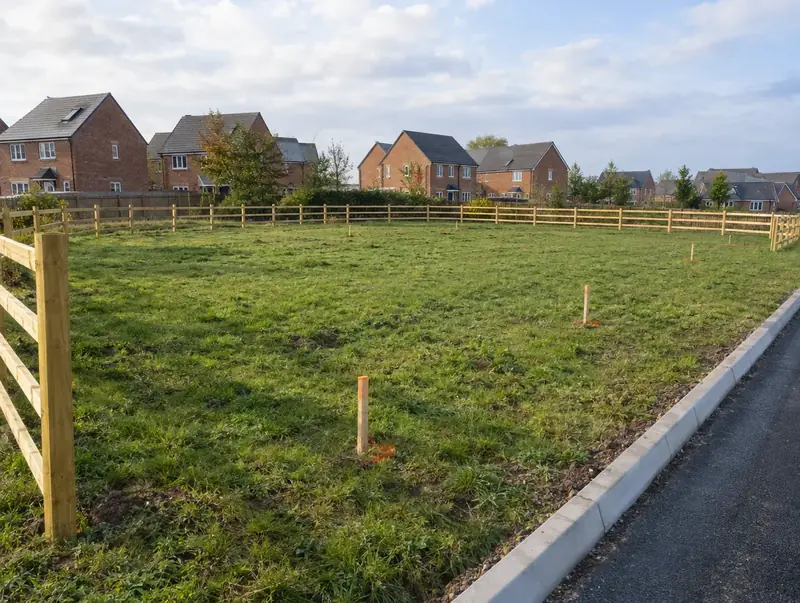 Highlands & Islands
Free site appraisal
Tell us about your land and we will call you back. No cost, no obligation.
Prefer to talk? Call 0800 088 6248.
- Free site appraisalNo cost, no obligation
- Legal fees coveredReasonable fees, on options and promotion
- Nothing to pay upfrontOn promotion: we fund planning
- Direct purchaseSuitable sites, with or without planning
- UK-wideEngland, Wales, Scotland and NI
Land and sites near Highlands & Islands
Across Highlands & Islands, we cover Inverness and 5 other towns, among them Lerwick, Stornoway and Kirkwall. If your land is near a boundary, we also cover Moray, Aberdeen & Aberdeenshire and Angus & Dundee.
Around Highlands & Islands we look at former garage blocks and yards, fields put forward or allocated in the local plan and infill gaps along existing streets. In Scotland, where Highlands & Islands sits, planning decisions are made by the council as planning authority (or a national park authority in its area).
Tell us where your land is around Highlands & Islands and we will explain the routes open to you.
How we work in Highlands & Islands
Buildability tested
As part of the S&K Group, a construction and property group, we test whether the approved homes can be built for a sensible cost, not just whether the drawings look right.
Expiry dates checked
Most permissions lapse if development does not lawfully begin within the period set in the decision. We check the deadline, and whether a lawful start has already been made, before discussing any deal.
Permission read in full
We read the decision notice, the approved plans and every condition, so any offer reflects what the consent actually allows rather than the headline number of homes on the application form.
Honest view on redesign
If a revised scheme could make the site work better, we explain that openly, including the planning risk a fresh application would carry, so you can judge any offer that depends on it.
How the rules work in Highlands & Islands
If you own land on the edge of Highlands & Islands, its prospects in Scotland depend largely on the Local Development Plan, which allocates sites for housing, and on NPF4 policies such as those on local living, infrastructure and quality homes. An option or promotion agreement lets a partner fund the planning case while you keep ownership until a sale. With Land to Homes, your reasonable legal fees on these agreements are covered, with the amount agreed in the heads of terms.
In Scotland, a site may hold full planning permission or planning permission in principle, with matters specified in conditions still to be approved. Any Section 75 agreement is registered against the title and binds the buyer. The sale is concluded through missives, the buyer pays Land and Buildings Transaction Tax, and a building warrant is needed separately before construction.
| National planning policy | National Planning Framework 4 (NPF4), which forms part of the statutory development plan |
|---|---|
| Local planning document | Local Development Plan (LDP) |
| Who decides applications | The council as planning authority (or a national park authority in its area) |
| In-principle consent | Planning permission in principle (PPP), followed by approval of matters specified in conditions |
| Land transaction tax (paid by the buyer) | Land and Buildings Transaction Tax (LBTT) |
| Land registration | Registers of Scotland (Land Register of Scotland) |
| How a sale becomes binding | Land sales are concluded through missives, formal letters exchanged between solicitors that become a binding contract once concluded, followed by settlement on the date of entry and registration in the Land Register of Scotland. |
| Developer contributions | Section 75 planning obligations, with Section 69 agreements sometimes used for simple one-off payments |
Common questions in Highlands & Islands
Does planning permission go with the land when I sell?
Yes. In most cases planning permission runs with the land, not the owner, so it passes to the buyer automatically. Personal permissions are rare exceptions. Planning agreements tied to the consent, such as a Section 106 agreement in England and Wales, also bind the land, so the buyer takes on those obligations as well.
Can a buyer change the approved scheme?
Yes, through a minor amendment, a variation of conditions or a fresh application, depending on the size of the change. Each route carries its own planning risk and cost. If a buyer's offer depends on a different scheme being approved, the deal is usually conditional on that new permission rather than a straight purchase.
What happens if my planning permission is about to expire?
If development has not lawfully begun by the deadline, the permission usually lapses and a new application is needed, which may be judged against newer policy. The usual choices are to sell to a buyer able to make a lawful start, to apply again, or to make a start yourself after discharging pre-commencement conditions. Take planning advice early.
Is outline planning permission worth less than full permission?
Usually, because more approvals are still needed. Outline permission sets the principle and sometimes the access, while reserved matters such as layout, scale, appearance and landscaping come later. A buyer allows for the cost and risk of that remaining work. In Scotland the closest equivalent is planning permission in principle.
Do you work with landowners in Highlands & Islands?
We do. We work with landowners across Highlands & Islands, including Fort William, Thurso and Kirkwall. Send us a postcode and we will start with a free, no-obligation appraisal of what the land could take.
Read more: Sell Land with Planning Permission · Guide: How is development land valued?