
Land Assembly and Access in Rhondda
When several owners in Rhondda each hold part of a developable area, nobody wants their land to become the road while a neighbour gets the houses. An equalisation agreement solves that by sharing proceeds by area, not by layout. Land to Homes can coordinate the owners, the planning strategy and the access as one package.
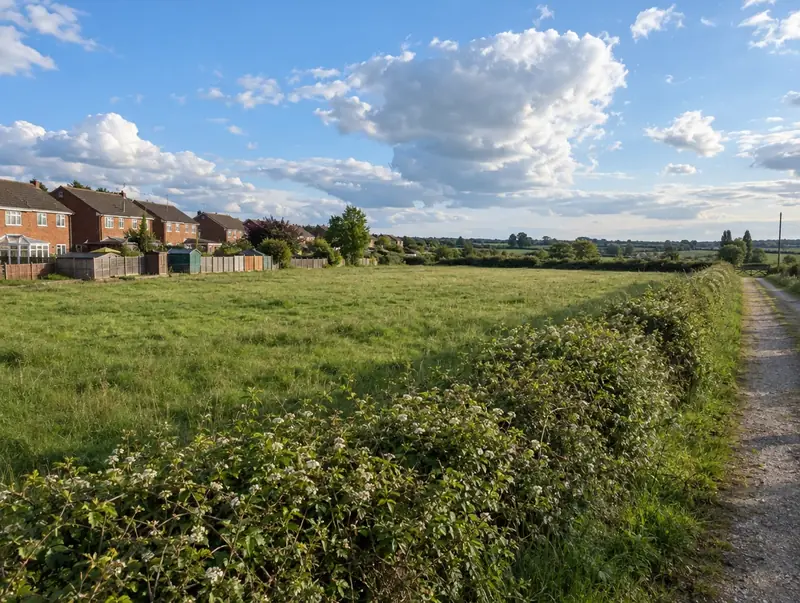 Rhondda · CF42
Free site appraisal
Tell us about your land and we will call you back. No cost, no obligation.
Prefer to talk? Call 0800 088 6248.
- Free site appraisalNo cost, no obligation
- Legal fees coveredReasonable fees, on options and promotion
- Nothing to pay upfrontOn promotion: we fund planning
- Direct purchaseSuitable sites, with or without planning
- UK-wideEngland, Wales, Scotland and NI
Land we look at around Rhondda
Rhondda (CF42) is one of the Mid Glamorgan towns we cover, about 12 miles north-east of Bridgend. The nearest other places we cover are Tonypandy (3 miles), Aberdare (4 miles) and Pontypridd (6 miles).
In and around Rhondda, the land we appraise ranges from small holdings and pony paddocks to large and long rear gardens, including former garage blocks and yards. In Wales, where Rhondda sits, planning decisions are made by the local planning authority, usually the county or county borough council (or a national park authority).
If you own land near Rhondda, the first step is a free, no-obligation appraisal.
Our approach in Rhondda
Highway boundaries checked
The adopted highway does not always reach your boundary. We ask the highway authority for its records, because a narrow unadopted verge can change the access position completely.
One planning strategy
A single application covering the whole area usually produces a better layout than piecemeal schemes, and councils often expect it where their plans call for comprehensive development.
Deals to suit each owner
Different owners may want different routes: some prefer to sell outright, others an option or promotion. The structure can combine these within one plan for the whole area.
Rights of way and easements
Public footpaths, drainage easements and private rights can affect a layout. We map them early and plan around them, or seek diversions, where the scheme requires it.
The Welsh system, as it applies in Rhondda
In Wales, planning applications for new homes in Rhondda are decided by the local planning authority, usually the county or county borough council, using its Local Development Plan, Planning Policy Wales and Future Wales: the National Plan 2040. Landowners can sell outright or through an option or promotion agreement in which the planning work is funded for them and recovered only from a sale with planning. Land to Homes offers a free site appraisal and covers your reasonable legal fees on option and promotion agreements.
In Wales, road adoption also uses Section 38 and Section 278 agreements under the Highways Act 1980, and sustainable drainage serving several properties is normally adopted by the SuDS approving body, so drainage routes across ownerships need agreeing. Larger Local Development Plan allocations often expect a single masterplan, and buyers pay Land Transaction Tax.
| Who decides applications | The local planning authority, usually the county or county borough council (or a national park authority) |
|---|---|
| In-principle consent | Outline planning permission, with reserved matters approved later |
| Land transaction tax (paid by the buyer) | Land Transaction Tax (LTT) |
| Land registration | HM Land Registry |
Land Assembly and Access in Rhondda: questions
What is an equalisation agreement?
It is an agreement between landowners whose land will be developed together. It shares proceeds and costs by an agreed formula, usually by area, regardless of where homes, roads or open space end up. Without one, owners may compete for the most valuable parts of the layout and stall the whole scheme.
Should neighbours sell their land together or separately?
Together usually produces a stronger planning case and a more efficient layout, especially where one access can serve everyone. It needs trust and clear documents. Selling separately can work for a plot with its own access, but may limit what the wider area can achieve.
Can the council force a neighbour to sell land for my development?
Generally no, for a private housing scheme. Councils have compulsory purchase powers for certain public purposes, but they are not a routine tool for individual developments. Most land assembly is achieved by agreement, which is why early, fair and well-documented negotiation matters so much.
What if my access crosses a public footpath?
A footpath crossing does not usually prevent access, but the design must keep the path safe and usable. If the layout needs the path to move, a formal diversion order is required, which is a separate legal process that members of the public can object to.
Do you buy land in Rhondda?
Yes. Land to Homes looks at land in Rhondda and elsewhere in Mid Glamorgan, including Tonypandy, Pontypridd and Aberdare. Every enquiry starts with a free site appraisal, and on option and promotion agreements we pay your reasonable legal fees.
Read more: Land Assembly and Access · Guide: How affordable and social homes are delivered across the UK