
Land Assembly and Access in Caerphilly
Some sites in Caerphilly cannot be developed alone because another owner controls the way in. That might be a ransom strip, a verge, land needed for visibility at a junction, or a private lane. Land to Homes investigates title and highway records, then works with each party to agree access on fair, written terms.
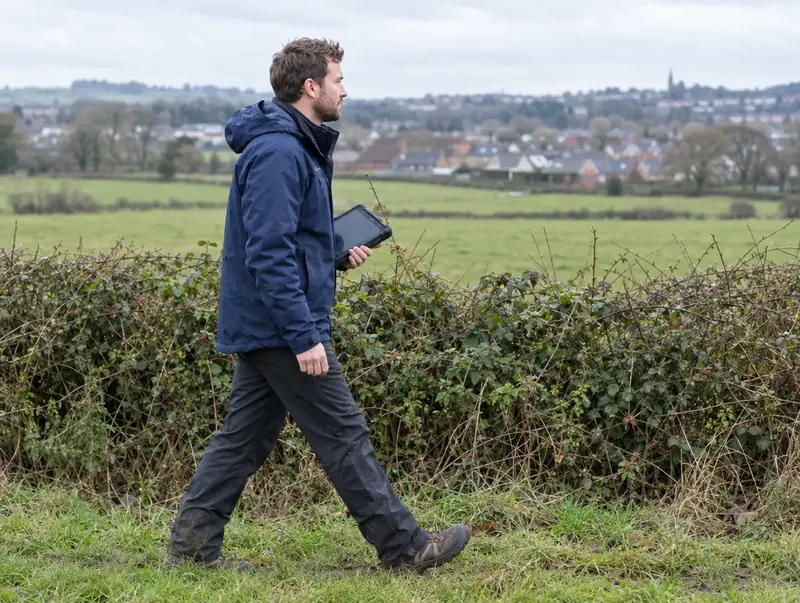 Caerphilly · CF83
Free site appraisal
Tell us about your land and we will call you back. No cost, no obligation.
Prefer to talk? Call 0800 088 6248.
- Free site appraisalNo cost, no obligation
- Legal fees coveredReasonable fees, on options and promotion
- Nothing to pay upfrontOn promotion: we fund planning
- Direct purchaseSuitable sites, with or without planning
- UK-wideEngland, Wales, Scotland and NI
Land we look at around Caerphilly
Caerphilly (CF83) is one of the Gwent towns we cover, about 9 miles west of Newport. Close by, our coverage also takes in Risca, Pontypridd and Cardiff.
Typical sites we review near Caerphilly include redundant agricultural buildings, land that already has planning permission and infill gaps along existing streets. In Wales, where Caerphilly sits, planning decisions are made by the local planning authority, usually the county or county borough council (or a national park authority).
A postcode and a rough boundary are enough for us to start a free appraisal of land near Caerphilly.
Why work with Land to Homes in Caerphilly
Ransom strips identified
A ransom strip is land that controls access to a development site. We check titles and highway records to establish who owns every piece of land between your site and the public road.
Rights of way and easements
Public footpaths, drainage easements and private rights can affect a layout. We map them early and plan around them, or seek diversions, where the scheme requires it.
Equalisation between owners
A collaboration or equalisation agreement shares proceeds by area or agreed proportion, so it does not matter whose land ends up as roads, open space or homes in the final layout.
Deals to suit each owner
Different owners may want different routes: some prefer to sell outright, others an option or promotion. The structure can combine these within one plan for the whole area.
How the rules work in Caerphilly
Selling land in Caerphilly follows the same legal steps as in England: heads of terms, then exchange of contracts, which makes the deal binding, and completion. Titles are registered with HM Land Registry, but the buyer pays Land Transaction Tax to the Welsh Revenue Authority rather than Stamp Duty Land Tax. Planning obligations are usually secured through a Section 106 agreement, with the Community Infrastructure Levy charged only where the council has adopted it.
In Wales, road adoption also uses Section 38 and Section 278 agreements under the Highways Act 1980, and sustainable drainage serving several properties is normally adopted by the SuDS approving body, so drainage routes across ownerships need agreeing. Larger Local Development Plan allocations often expect a single masterplan, and buyers pay Land Transaction Tax.
| National planning policy | Planning Policy Wales (Edition 12) and Future Wales: the National Plan 2040, supported by Technical Advice Notes |
|---|---|
| Local planning document | Local Development Plan (LDP) |
| In-principle consent | Outline planning permission, with reserved matters approved later |
| Land registration | HM Land Registry |
Land Assembly and Access in Caerphilly: questions
What is a ransom strip?
A ransom strip is a piece of land, sometimes very narrow, that sits between a development site and the road or services it needs. Whoever owns it can block access or ask for a share of the value it unlocks. The amount is negotiated case by case. Our guide to ransom strips and access explains more.
What is a visibility splay?
A visibility splay is the area of land either side of a junction that must be kept clear so drivers can see approaching traffic. Its size depends on road speeds and the highway authority's standards. If part of the splay is owned by someone else, the scheme needs their agreement before the access can work.
Should neighbours sell their land together or separately?
Together usually produces a stronger planning case and a more efficient layout, especially where one access can serve everyone. It needs trust and clear documents. Selling separately can work for a plot with its own access, but may limit what the wider area can achieve.
What is an equalisation agreement?
It is an agreement between landowners whose land will be developed together. It shares proceeds and costs by an agreed formula, usually by area, regardless of where homes, roads or open space end up. Without one, owners may compete for the most valuable parts of the layout and stall the whole scheme.
Do you buy land in Caerphilly?
Yes. Land to Homes looks at land in Caerphilly and elsewhere in Gwent, including Newport, Pontypool and Cwmbran. Every enquiry starts with a free site appraisal, and on option and promotion agreements we pay your reasonable legal fees.
Read more: Land Assembly and Access · Guide: Ransom strips and access: what landowners need to know