
Free Site Appraisal in Scottish Borders
Think of a free site appraisal in Scottish Borders as the first honest conversation about your land. It will not set a price or promise planning permission. It will tell you which constraints matter, whether access works, what the planning policy says, and which kind of deal, if any, makes sense to pursue.
 Scottish Borders
Free site appraisal
Tell us about your land and we will call you back. No cost, no obligation.
Prefer to talk? Call 0800 088 6248.
- Free site appraisalNo cost, no obligation
- Legal fees coveredReasonable fees, on options and promotion
- Nothing to pay upfrontOn promotion: we fund planning
- Direct purchaseSuitable sites, with or without planning
- UK-wideEngland, Wales, Scotland and NI
Land we look at around Scottish Borders
We cover 4 places across Scottish Borders: Galashiels is the main one, alongside Hawick, Peebles and Kelso. Next door, we also cover Edinburgh & the Lothians, Fife and Forth Valley.
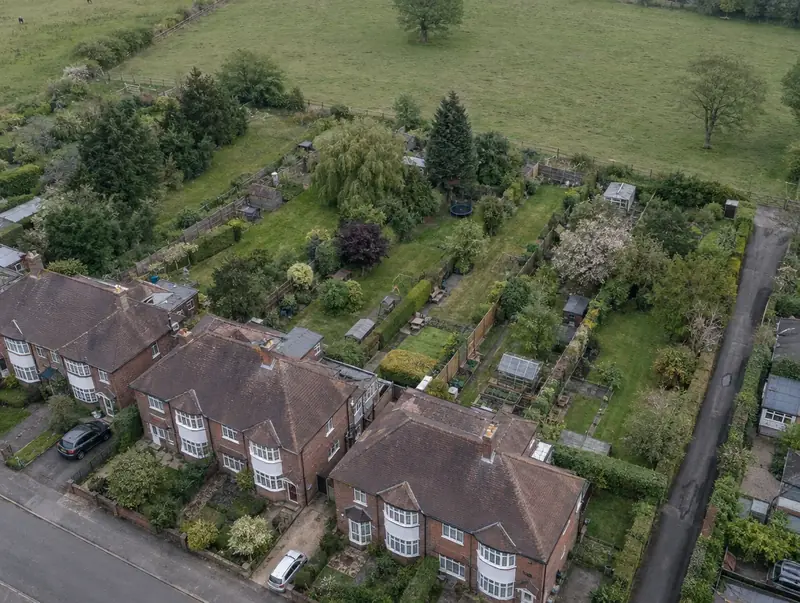
Sites worth a conversation around Scottish Borders: land behind street frontages, backland plots with a workable access and large and long rear gardens. Planning in Scottish Borders follows Scotland’s rules: National Planning Framework 4 sets national policy and the council’s Local Development Plan sets local policy.
Tell us where your land is around Scottish Borders and we will explain the routes open to you.
Our approach in Scottish Borders
Services and drainage
We check where sewers, water mains and power run, and flag where limited capacity, long connections or drainage design could add significant cost to a scheme.
Constraints mapped
Flood zones, conservation areas, listed buildings, protected trees, ecological designations and landscape protections are all checked against your boundary using official mapping and published public records.
Indicative scheme
Where prospects look reasonable, we outline what might fit as a broad indication rather than a design, so you can understand the likely scale and form of development.
Planning policy reviewed
We read the adopted development plan, its policies map and any emerging plan, and note how your land is treated: within a settlement boundary, allocated, protected or open countryside.
The Scottish system, as it applies in Scottish Borders
If you own land on the edge of Scottish Borders, its prospects in Scotland depend largely on the Local Development Plan, which allocates sites for housing, and on NPF4 policies such as those on local living, infrastructure and quality homes. An option or promotion agreement lets a partner fund the planning case while you keep ownership until a sale. With Land to Homes, your reasonable legal fees on these agreements are covered, with the amount agreed in the heads of terms.
In Scotland, we check the Local Development Plan and NPF4, SEPA's flood maps, Historic Environment Scotland designations, and whether the land is croft land. Title is read from the Land Register or, for older titles, the Register of Sasines kept by Registers of Scotland. Former coalfield areas may need a Coal Authority check.
| National planning policy | National Planning Framework 4 (NPF4), which forms part of the statutory development plan |
|---|---|
| Local planning document | Local Development Plan (LDP) |
| Who decides applications | The council as planning authority (or a national park authority in its area) |
| In-principle consent | Planning permission in principle (PPP), followed by approval of matters specified in conditions |
| Land transaction tax (paid by the buyer) | Land and Buildings Transaction Tax (LBTT) |
| Land registration | Registers of Scotland (Land Register of Scotland) |
| How a sale becomes binding | Land sales are concluded through missives, formal letters exchanged between solicitors that become a binding contract once concluded, followed by settlement on the date of entry and registration in the Land Register of Scotland. |
| Developer contributions | Section 75 planning obligations, with Section 69 agreements sometimes used for simple one-off payments |
Your questions answered for Scottish Borders
What does a free site appraisal include?
It covers local planning policy, constraints such as flood risk and heritage, access to the road, title issues, services, and an indication of the kind of scheme that might fit. It ends with a view on the realistic routes for your land. It is not a formal valuation, and it is not legal advice.
What information do I need to provide for a site appraisal?
A postcode or rough boundary is enough to start. It helps to add the title number if you know it, the current use, any planning history, any tenancies, and known issues such as drainage or access disputes. Photos and existing reports are useful but not essential.
Will the appraisal tell me what my land is worth?
Not as a formal valuation. We explain the factors that drive development land value for your site, such as the likely number of homes, local sale values and build costs. If we make an offer later, it will be in writing. For a formal valuation, instruct a chartered surveyor.
Will you contact my neighbours or the council?
Not without your agreement. We use what you share to assess your land and discuss it with you. Our desktop review relies on published records and mapping. If talking to a neighbour or the council would help, we will ask you first and explain why.
Do you buy land in Scottish Borders?
Yes. Land to Homes looks at land across Scottish Borders, including Peebles, Hawick and Galashiels. Every enquiry starts with a free site appraisal, and on option and promotion agreements we pay your reasonable legal fees.
Read more: Free Site Appraisal · Guide: Tax when selling land for development