
Free Site Appraisal in Lincolnshire
Before you spend money on surveys or advisers, find out whether your land in Lincolnshire has realistic potential for new homes. Our free appraisal starts with a desktop review of official planning documents, maps and title records, and may lead to a site visit. You get a plain-English view on prospects, risks and next steps.
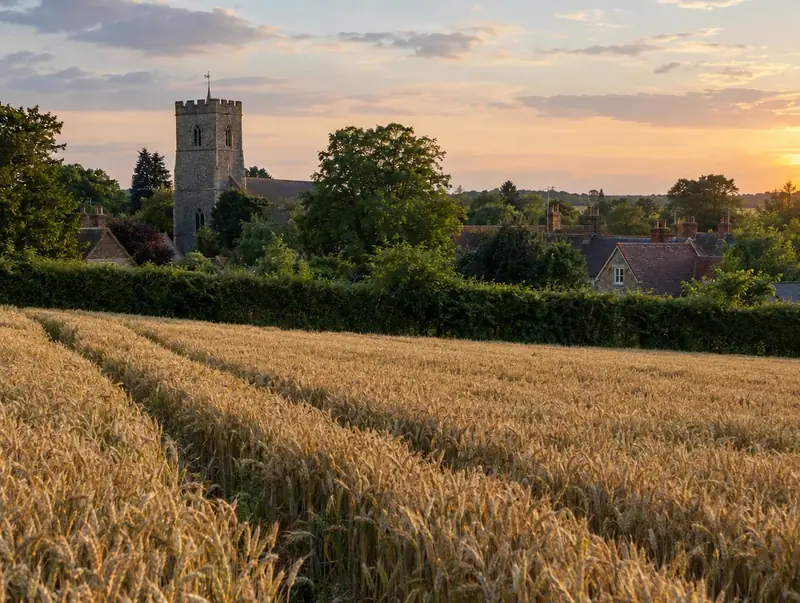 Lincolnshire
Free site appraisal
Tell us about your land and we will call you back. No cost, no obligation.
Prefer to talk? Call 0800 088 6248.
- Free site appraisalNo cost, no obligation
- Legal fees coveredReasonable fees, on options and promotion
- Nothing to pay upfrontOn promotion: we fund planning
- Direct purchaseSuitable sites, with or without planning
- UK-wideEngland, Wales, Scotland and NI
Land we look at around Lincolnshire
Across Lincolnshire, we cover Lincoln and 9 other towns, among them Cleethorpes, Boston and Scunthorpe. Next door, we also cover Nottinghamshire, Rutland and East Riding of Yorkshire.
Sites worth a conversation around Lincolnshire: corner plots and side gardens, infill gaps along existing streets and small holdings and pony paddocks. Because Lincolnshire is in England, land titles are registered with HM Land Registry and transfers attract Stamp Duty Land Tax (SDLT).
Send us a postcode in or near LN2 and we will start with a free desktop appraisal.
What you get in Lincolnshire
No obligation, no cost
The appraisal is free and there is no obligation to go any further. If your land is unlikely to suit new homes, we will tell you plainly and explain why.
Routes explained
We set out which deals could suit your land, from direct purchase and conditional contracts to options, promotion agreements and joint ventures, with the trade-offs of each.
Planning policy reviewed
We read the adopted development plan, its policies map and any emerging plan, and note how your land is treated: within a settlement boundary, allocated, protected or open countryside.
Services and drainage
We check where sewers, water mains and power run, and flag where limited capacity, long connections or drainage design could add significant cost to a scheme.
Rules that apply in Lincolnshire
Selling development land in Lincolnshire usually starts with heads of terms, a short written summary of price, conditions and fees, before solicitors draft the contract. In England the sale becomes binding on exchange of contracts and finishes on completion, with the title then registered at HM Land Registry. The buyer normally pays Stamp Duty Land Tax. On option and promotion agreements with Land to Homes, your reasonable legal fees are covered, with the amount agreed in the heads of terms.
In England, we check the Local Plan and policies map, the Environment Agency's flood map for planning, Green Belt boundaries, designations shown on Defra's MAGIC map, and whether the site appears on the council's brownfield land register. Title comes from HM Land Registry. We also consider whether biodiversity net gain would apply to the likely scheme.
| National planning policy | National Planning Policy Framework (NPPF), revised August 2026, with national planning practice guidance |
|---|---|
| Local planning document | Local Plan |
| Who decides applications | The local planning authority, usually the district, borough, city or unitary council (or a national park authority) |
| In-principle consent | Outline planning permission, with reserved matters approved later |
| Land transaction tax (paid by the buyer) | Stamp Duty Land Tax (SDLT) |
| Land registration | HM Land Registry |
| How a sale becomes binding | A land sale becomes legally binding on exchange of contracts and finishes on completion, after which the buyer registers the title with HM Land Registry. |
| Developer contributions | Section 106 planning obligations, plus the Community Infrastructure Levy (CIL) where the council charges it |
Free Site Appraisal in Lincolnshire: questions
What information do I need to provide for a site appraisal?
A postcode or rough boundary is enough to start. It helps to add the title number if you know it, the current use, any planning history, any tenancies, and known issues such as drainage or access disputes. Photos and existing reports are useful but not essential.
Can I ask for an appraisal on land I am selling for someone else?
Yes, if you are acting for the owner, for example as an executor, trustee, attorney or land agent. We will need to understand your authority before discussing terms. If you are a buyer looking at land, a planning consultant or surveyor can advise you independently.
Will you contact my neighbours or the council?
Not without your agreement. We use what you share to assess your land and discuss it with you. Our desktop review relies on published records and mapping. If talking to a neighbour or the council would help, we will ask you first and explain why.
Will the appraisal tell me what my land is worth?
Not as a formal valuation. We explain the factors that drive development land value for your site, such as the likely number of homes, local sale values and build costs. If we make an offer later, it will be in writing. For a formal valuation, instruct a chartered surveyor.
Do you work with landowners in Lincolnshire?
We do. We work with landowners across Lincolnshire, including Cleethorpes, Spalding and Stamford. Send us a postcode and we will start with a free, no-obligation appraisal of what the land could take.
Read more: Free Site Appraisal · Guide: Selling part of your garden: what you need to know