
Sell Farmland and Paddocks in Winchester
A paddock in Winchester used for grazing or horses can be worth far more as housing land, but only if planning is realistic. Land to Homes looks at the settlement boundary, access from the road, flood risk and the development plan, then tells you which route gives you the clearest outcome for that field.
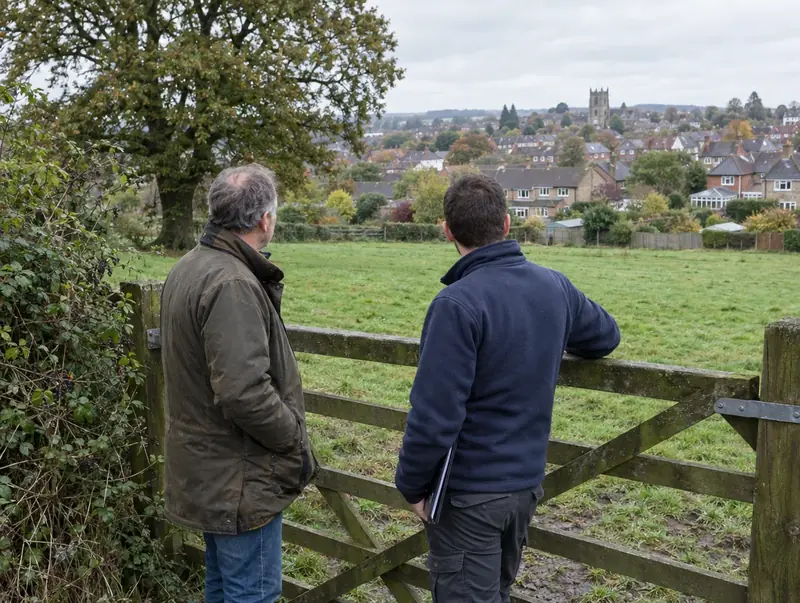 Winchester · SO23
Free site appraisal
Tell us about your land and we will call you back. No cost, no obligation.
Prefer to talk? Call 0800 088 6248.
- Free site appraisalNo cost, no obligation
- Legal fees coveredReasonable fees, on options and promotion
- Nothing to pay upfrontOn promotion: we fund planning
- Direct purchaseSuitable sites, with or without planning
- UK-wideEngland, Wales, Scotland and NI
Selling land around Winchester
Winchester sits about 12 miles north of Southampton in Hampshire, in the SO23 postcode district. Nearby, we also cover Eastleigh, Southampton and Totton, all within 13 miles. Winchester is part of England’s South East region.
In and around Winchester, the land we appraise ranges from infill gaps along existing streets to former garage blocks and yards, including corner plots and side gardens. Planning in Winchester follows England’s rules: the National Planning Policy Framework sets national policy and the council’s Local Plan sets local policy.
Tell us where your land is around Winchester and we will explain the routes open to you.
Why work with Land to Homes in Winchester
Keep farming meanwhile
Under an option or promotion agreement, you normally stay in possession and keep farming or grazing until the land is sold, subject to access for surveys and agreed notice periods.
Tenancies handled carefully
If the land is let, the type of tenancy decides how and when vacant possession can be obtained. We look at the tenancy before proposing any deal and recommend specialist agricultural advice.
Land quality and flood risk
Planning policy tends to protect higher-grade farmland, and flood zones can rule land out entirely. We check agricultural land quality mapping and flood maps early, before any detailed discussion of terms.
Fees covered on options
On option and promotion agreements we pay your reasonable legal fees, with the amount agreed up front in the heads of terms, so specialist rural legal advice is within reach.
How the rules work in Winchester
Whether a field or large garden could take homes depends mostly on the council's Local Plan and national policy. Under the National Planning Policy Framework, plans define settlement boundaries, and land just outside Winchester may still come forward if it is allocated, previously developed or meets evidenced unmet housing need. Smaller housing schemes can also use Permission in Principle, an England-only route that settles location, use and amount first. Our free appraisal explains which route suits your land.
In England, the NPPF asks councils to take account of the value of higher-quality farmland, and Local Plans set settlement boundaries. Agricultural tenancies may fall under the Agricultural Holdings Act 1986 or be farm business tenancies, each with its own rules. Land in Environmental Land Management or Countryside Stewardship agreements needs checking before it is taken out.
| Local planning document | Local Plan |
|---|---|
| In-principle consent | Outline planning permission, with reserved matters approved later |
| Land transaction tax (paid by the buyer) | Stamp Duty Land Tax (SDLT) |
| Developer contributions | Section 106 planning obligations, plus the Community Infrastructure Levy (CIL) where the council charges it |
Your questions answered for Winchester
What is an overage clause on farmland?
Overage is a promise by the buyer to make a further payment if a defined event happens after the sale, typically planning permission for a more valuable use. It is common when farmland sells at agricultural value. The key terms are the trigger, the share payable, the duration and how the promise is secured.
Can I sell a paddock for housing?
Often, if it sits within or next to a settlement and has safe road access. Paddocks behind existing homes are common development sites. Those in open countryside, or with poor access, rarely get permission. We check the development plan and site constraints before suggesting any route or deal structure.
How do I keep access to the rest of my farm?
Through rights reserved in the agreement and the eventual transfer. These can include a right of way through the new estate road, service connections and drainage routes for retained land. Plan them early, because once a layout is approved it is much harder to add access later.
How long does it take to get planning on farmland?
There is no set timescale. A field allocated in a development plan can move to an application relatively directly, while unallocated land may need to wait for the next plan review. That is why options and promotion agreements on farmland usually run over a defined term with a longstop date.
Is Winchester an area you cover for land?
Yes, we cover land in Winchester and elsewhere in Hampshire, including Yateley, Southampton and Totton. Where a site suits us we can buy it directly, or set up an option or promotion agreement. On promotion there is nothing to pay upfront.
Read more: Sell Farmland and Paddocks · Guide: Biodiversity net gain for landowners: what it means for your land