
Sell Brownfield Land in County Down
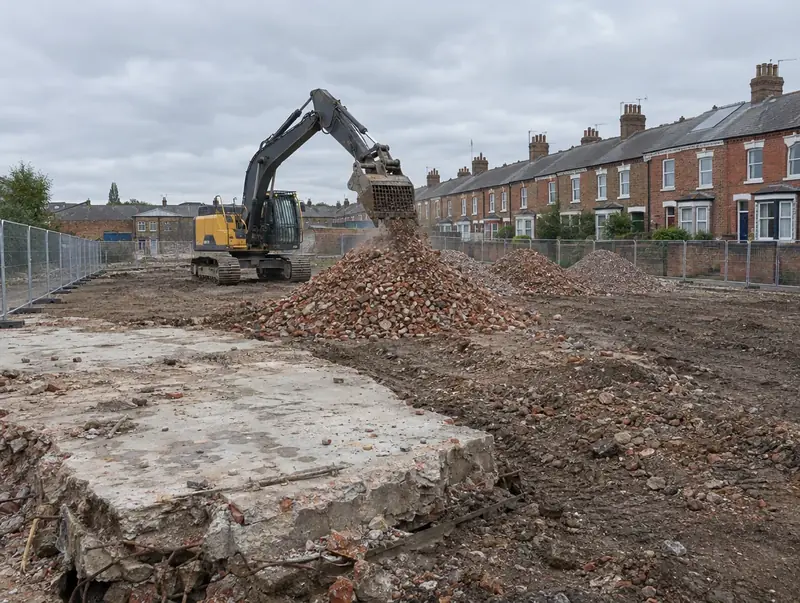
If you own a redundant commercial site in County Down, selling it for housing can turn an ongoing cost into a sale. Buyers will ask about past uses, contamination reports, asbestos in buildings and drainage. Land to Homes can buy suitable sites directly, subject to survey, title and contract, and builds clearance and remediation into a clear offer.
 County Down
Free site appraisal
Tell us about your land and we will call you back. No cost, no obligation.
Prefer to talk? Call 0800 088 6248.
- Free site appraisalNo cost, no obligation
- Legal fees coveredReasonable fees, on options and promotion
- Nothing to pay upfrontOn promotion: we fund planning
- Direct purchaseSuitable sites, with or without planning
- UK-wideEngland, Wales, Scotland and NI
Selling land around County Down
We cover 6 places across County Down: Bangor (County Down) is the main one, alongside Banbridge, Castlereagh and Newtownards. If your land is near a boundary, we also cover County Antrim, County Armagh and County Tyrone.
Sites worth a conversation around County Down: farmland next to the settlement boundary, infill gaps along existing streets and redundant agricultural buildings. Because County Down is in Northern Ireland, land titles are registered with Land & Property Services (Land Registry and Registry of Deeds) and transfers attract Stamp Duty Land Tax (SDLT).
A postcode and a rough boundary are enough for us to start a free appraisal of land near County Down.
How we work in County Down
Flood risk and drainage
Some brownfield sites sit in flood zones or rely on old drainage. Flood policy may require a sequential test, showing that no suitable sites at lower risk are reasonably available.
Direct purchase of brownfield sites
Where a brownfield site suits us, we can buy it ourselves, with or without planning and with no onward chain, subject to survey, title and contract.
Tenants and leases
If business tenants remain, their lease terms and any statutory protection affect when the site can be cleared. We review the leases before agreeing timing with you.
Demolition and asbestos
Older buildings often contain asbestos, which must be surveyed and removed by licensed specialists where required before demolition. These costs feed into the price, so an early survey supports a firmer offer.
Planning in County Down: the Northern Irish rules
Permission in Principle, an English route, does not apply in Northern Ireland. Instead, landowners near County Down usually seek outline or full planning permission from the council. Developer contributions are agreed under Section 76 of the Planning Act (Northern Ireland) 2011, and there is no Community Infrastructure Levy. Land to Homes can take on that process through an option or promotion agreement, or buy a suitable site directly, subject to survey, title and contract.
In Northern Ireland, the SPPS encourages the reuse of brownfield land within settlements. Contamination is usually dealt with through planning conditions, with the Northern Ireland Environment Agency consulted, and flood risk is checked against the Department for Infrastructure's flood maps. Councils may want evidence before releasing land zoned for economic use. Stamp Duty Land Tax applies.
| National planning policy | Strategic Planning Policy Statement (SPPS, Edition 2), applied with retained Planning Policy Statements until each council adopts its Plan Strategy |
|---|---|
| Local planning document | Local Development Plan (LDP), made up of a Plan Strategy and a Local Policies Plan |
| Who decides applications | The 11 district councils, with the Department for Infrastructure deciding regionally significant applications |
| In-principle consent | Outline planning permission, with reserved matters approved later |
| Land transaction tax (paid by the buyer) | Stamp Duty Land Tax (SDLT) |
| Land registration | Land & Property Services (Land Registry and Registry of Deeds) |
| How a sale becomes binding | A land sale becomes legally binding when contracts signed by both parties are exchanged and finishes on completion, with the title registered in the Land Registry at Land & Property Services. |
| Developer contributions | Section 76 planning agreements under the Planning Act (Northern Ireland) 2011 (there is no Community Infrastructure Levy) |
Common questions in County Down
Who pays for contamination clean-up when I sell?
It is negotiated. Usually the buyer allows for remediation in the price it offers, so the cost is reflected in the land value. Contract terms can also deal with environmental liabilities after the sale. Where contamination is serious, environmental law can in some cases leave liability with whoever caused it, so take legal advice.
What counts as brownfield land?
Brownfield, or previously developed land, is land that is or was occupied by a permanent structure, including the land around it. Former yards, depots, garage blocks and commercial buildings usually qualify. Definitions vary by nation, and some exclude private gardens, agricultural buildings or sites where earlier remains have blended into the landscape.
Do I need a contamination report before selling?
Not necessarily, but it helps. A desk study of past uses is relatively inexpensive and gives buyers confidence. If you hold older reports, share them. Buyers will usually carry out their own investigations anyway, both as part of their due diligence and because planning conditions often require them.
Will VAT apply when I sell my brownfield site?
It may. If you have opted to tax the land or buildings, VAT can apply to the sale price. Whether the option can be disapplied depends on what the buyer intends to do with the property, and the rules are technical. Ask your accountant before agreeing a price, because it affects what the buyer pays.
Do you buy land in County Down?
Yes. Land to Homes looks at land across County Down, including Downpatrick, Banbridge and Castlereagh. Every enquiry starts with a free site appraisal, and on option and promotion agreements we pay your reasonable legal fees.
Read more: Sell Brownfield Land · Guide: Green Belt and grey belt land explained