
Serviced Plots for Self-Build in Glasgow & the Clyde
Land to Homes brings forward serviced plots as well as finished homes, and Glasgow & the Clyde is one of the areas where self-builders can register interest. On larger sites, a share of plots can be set aside for self-build and custom build, each with access, services and a plot passport setting out what can be built. Landowners with land suited to plots can also talk to us.
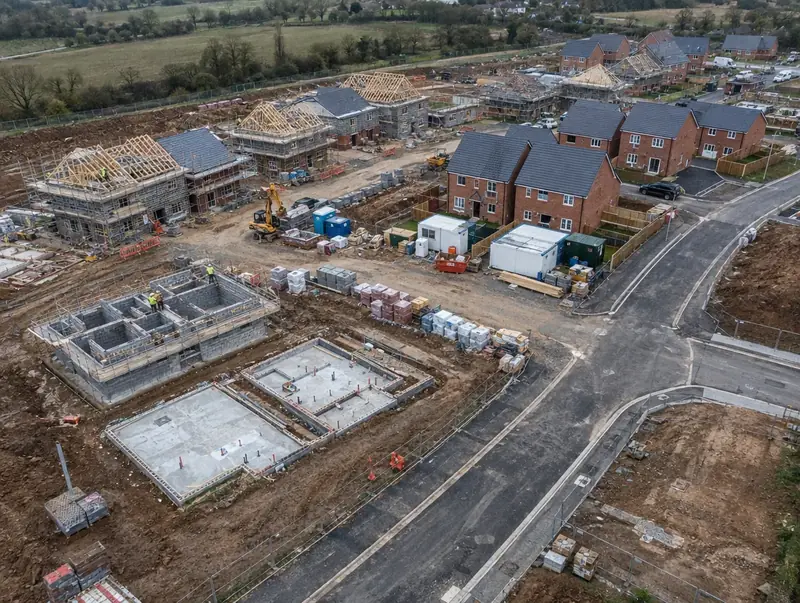 Glasgow & the Clyde
Free site appraisal
Tell us about your land and we will call you back. No cost, no obligation.
Prefer to talk? Call 0800 088 6248.
- Free site appraisalNo cost, no obligation
- Legal fees coveredReasonable fees, on options and promotion
- Nothing to pay upfrontOn promotion: we fund planning
- Direct purchaseSuitable sites, with or without planning
- UK-wideEngland, Wales, Scotland and NI
Our work around Glasgow & the Clyde
Across Glasgow & the Clyde, we cover Glasgow and 7 other towns, among them Bishopbriggs, Renfrew and Greenock. If your land is near a boundary, we also cover Lanarkshire, Ayrshire and Forth Valley.
Typical work around Glasgow & the Clyde: sites where the layout needs to change, fields that need a masterplan before an application and land with an expired or ageing consent. Because Glasgow & the Clyde is in Scotland, land titles are registered with Registers of Scotland (Land Register of Scotland) and transfers attract Land and Buildings Transaction Tax (LBTT).
Tell us about the site near Glasgow & the Clyde and we will explain how we would take it forward.
Why work with Land to Homes in Glasgow & the Clyde
Planning made clear
We aim to bring plots forward with planning permission in place, or with a clear set of rules, often called a plot passport, describing what can be built.
Services at the boundary
Plots are planned with road access and connections for water, drainage and electricity, so you are not left negotiating with utility companies on your own.
Register interest now
No plots are available yet. Registering interest tells us where people want plots and what they need, which helps shape the sites we bring forward.
Self-build or custom build
Build the home yourself with your own builder and architect, or choose a more complete custom build package where one is offered on the site.
Planning and land rules in Glasgow & the Clyde
Planning obligations in Scotland are made under Section 75 of the Town and Country Planning (Scotland) Act 1997 and can cover affordable housing and infrastructure. Once registered against the title, they can bind future owners. Under NPF4, national and major developments must also leave biodiversity in a demonstrably better state. These costs shape what development land near Glasgow & the Clyde is worth, which is why our free appraisal explains them before any offer or promotion terms are agreed.
In Scotland, planning authorities keep self-build lists recording people who want to build their own home, and National Planning Framework 4 and the Local Development Plan guide where new homes can go. Plots need a building warrant before work starts, land is bought through missives, and Land and Buildings Transaction Tax may be payable. Planning permission in principle can establish whether plots are acceptable.
| National planning policy | National Planning Framework 4 (NPF4), which forms part of the statutory development plan |
|---|---|
| Local planning document | Local Development Plan (LDP) |
| Who decides applications | The council as planning authority (or a national park authority in its area) |
| In-principle consent | Planning permission in principle (PPP), followed by approval of matters specified in conditions |
| Land transaction tax (paid by the buyer) | Land and Buildings Transaction Tax (LBTT) |
| Land registration | Registers of Scotland (Land Register of Scotland) |
| How a sale becomes binding | Land sales are concluded through missives, formal letters exchanged between solicitors that become a binding contract once concluded, followed by settlement on the date of entry and registration in the Land Register of Scotland. |
| Developer contributions | Section 75 planning obligations, with Section 69 agreements sometimes used for simple one-off payments |
Serviced Plots for Self-Build in Glasgow & the Clyde: questions
Do you have self-build plots for sale now?
Not yet. Land to Homes is a new venture and has no plots, homes or developments for sale at the moment. You can register interest with your preferred area and the kind of plot you want, and we will contact you if we bring forward plots that match. Registering is free and commits you to nothing.
What is the difference between self-build and custom build?
With self-build, you organise the design and construction of your home yourself, either doing some of the work or hiring a builder. With custom build, a developer provides more of the package, such as a serviced plot, a range of designs and sometimes the construction itself, while you make the key choices. The line between the two is not always sharp.
What is a serviced plot?
A serviced plot is a piece of land ready for a single home, with access to a road and connections for services such as water, drainage and electricity at or near the boundary. In England, the Right to Build legislation defines a serviced plot by reference to access to a public highway and those utility connections, or the ability to provide them.
Can I sell part of my land as self-build plots?
Yes, if the land has planning prospects and suitable access. A few plots can suit land on a village edge or a large garden. Our free site appraisal looks at whether plots would work and whether a direct sale to us, an option or a promotion agreement is the right route. On option and promotion agreements we pay your reasonable legal fees.
Can you manage a site in Glasgow & the Clyde from planning to build?
On land we take forward ourselves across Glasgow & the Clyde, including Newton Mearns, Glasgow and Greenock, we manage planning, design and construction. Tell us about the site and we will explain how we would approach it.
Read more: Serviced Plots for Self-Build · Guide: Selling part of your garden: what you need to know