
New Home Construction in Boston
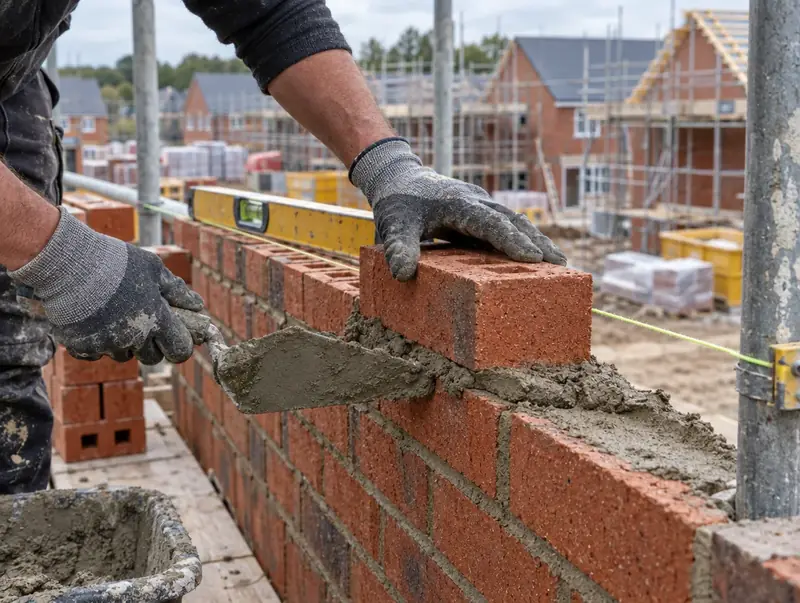
New home construction in Boston is the stage where a consented scheme becomes real homes: site set-up, groundworks, roads and drainage, building the homes and handing them over. Land to Homes manages construction on the sites it brings forward, working with contractors and suppliers, and plans each scheme around homes that can be built well and then sold or let.
 Boston · PE21
Free site appraisal
Tell us about your land and we will call you back. No cost, no obligation.
Prefer to talk? Call 0800 088 6248.
- Free site appraisalNo cost, no obligation
- Legal fees coveredReasonable fees, on options and promotion
- Nothing to pay upfrontOn promotion: we fund planning
- Direct purchaseSuitable sites, with or without planning
- UK-wideEngland, Wales, Scotland and NI
Our work around Boston
Boston (PE21) is one of the Lincolnshire towns we cover, about 27 miles south-east of Lincoln. Nearby, we also cover Spalding, Skegness and Wisbech, all within 23 miles. Boston is part of England’s Yorkshire and the Humber region.
Projects we can take on around Boston include plots where access or drainage is the sticking point, fields that need a masterplan before an application and sites where the layout needs to change. As Boston is in England, applications are judged against the National Planning Policy Framework, and the buyer of land pays Stamp Duty Land Tax (SDLT).
Tell us about the site near Boston and we will explain how we would take it forward.
What we offer in Boston
Energy-efficient homes
Homes are designed to meet current energy standards in each nation, which increasingly means low-carbon heating, high insulation and good airtightness.
Mixed tenures on one site
Homes for sale, homes for rent and affordable homes can be built together, designed so that the tenures are hard to tell apart from the street.
Built to the right regulations
Each home is built to the building regulations or building standards of its nation, with inspections at key stages of the build.
Groundworks and infrastructure
Roads, sewers, drainage and services are planned and built to the standards needed for adoption by the highway authority and water company where that applies.
How the rules work in Boston
Whether a field or large garden could take homes depends mostly on the council's Local Plan and national policy. Under the National Planning Policy Framework, plans define settlement boundaries, and land just outside Boston may still come forward if it is allocated, previously developed or meets evidenced unmet housing need. Smaller housing schemes can also use Permission in Principle, an England-only route that settles location, use and amount first. Our free appraisal explains which route suits your land.
In England, homes are built to the Building Regulations and signed off by council building control or a registered building control approver. Higher-risk residential buildings go through the Building Safety Regulator. Energy standards are being raised through the Future Homes Standard, and most developments must also deliver the biodiversity net gain agreed at planning.
| Who decides applications | The local planning authority, usually the district, borough, city or unitary council (or a national park authority) |
|---|---|
| Land registration | HM Land Registry |
| How a sale becomes binding | A land sale becomes legally binding on exchange of contracts and finishes on completion, after which the buyer registers the title with HM Land Registry. |
| Developer contributions | Section 106 planning obligations, plus the Community Infrastructure Levy (CIL) where the council charges it |
Your questions answered for Boston
Does Land to Homes build the homes itself?
Land to Homes manages planning, design and construction on the sites it brings forward, and is part of the S&K Group, a construction and property group. Construction is carried out with contractors and suppliers under our management. Because we plan land with building in mind, the schemes we take to planning are designed to be delivered.
How are neighbours affected during construction?
Building work brings deliveries, noise and some disruption. Councils often require a construction management plan setting out working hours, delivery routes, parking and controls on dust and noise. We follow those requirements, keep the site tidy and secure, and make sure neighbours know who to contact if something goes wrong.
Do new homes have to be energy efficient?
Yes. Each nation's building regulations or building standards set energy efficiency requirements for new homes, and these have been tightened over recent years. In Scotland, new homes generally need zero direct emissions heating, such as heat pumps. England and Wales are moving to higher standards through updates to their own regulations.
What happens to the roads and sewers on a new development?
On many developments the new roads are built to the highway authority's standards and then adopted, so the council maintains them. Sewers can similarly be adopted by the water company. Where roads or open spaces are not adopted, they are usually looked after by a management company funded by residents, and buyers should check this before reserving.
Can you manage a site in Boston from planning to build?
On land we take forward ourselves in Boston and elsewhere in Lincolnshire, including Skegness, Scunthorpe and Spalding, we manage planning, design and construction. Tell us about the site and we will explain how we would approach it.
Read more: New Home Construction · Guide: Buying a new-build home: what to expect from reservation to keys