
New Home Construction in Lancashire
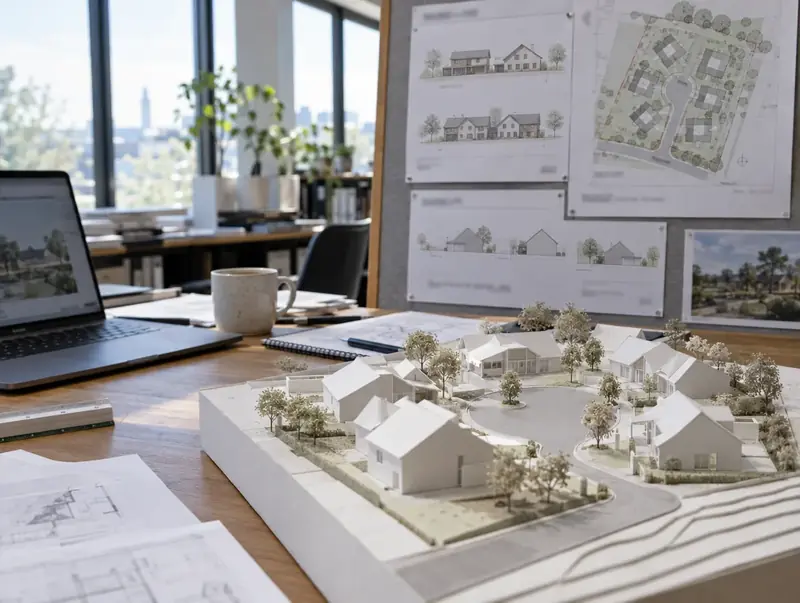
Land to Homes is part of the S&K Group, a construction and property group, so building homes in Lancashire is part of how we plan land from the start. We design schemes that can be built economically, manage the build with contractors and suppliers, and deliver homes for sale, for rent and for councils and housing associations.
 Lancashire
Free site appraisal
Tell us about your land and we will call you back. No cost, no obligation.
Prefer to talk? Call 0800 088 6248.
- Free site appraisalNo cost, no obligation
- Legal fees coveredReasonable fees, on options and promotion
- Nothing to pay upfrontOn promotion: we fund planning
- Direct purchaseSuitable sites, with or without planning
- UK-wideEngland, Wales, Scotland and NI
Sites we take on near Lancashire
Our Lancashire coverage takes in 18 towns and cities, centred on Preston and including Thornton-Cleveleys, Lancaster and Burnley. Neighbouring areas we also cover include Greater Manchester, Merseyside and Cheshire.
Near Lancashire, we look at fields that need a masterplan before an application, schemes that need redesigning to work and in-principle consents that still need detailed approval. As Lancashire is in England, applications are judged against the National Planning Policy Framework, and the buyer of land pays Stamp Duty Land Tax (SDLT).
Send us the site address near Lancashire and we will tell you what we think the planning route is.
What we offer in Lancashire
Built to the right regulations
Each home is built to the building regulations or building standards of its nation, with inspections at key stages of the build.
Warranty considered early
Most mortgage lenders expect a new home to carry a recognised structural warranty, so warranty provider requirements are considered from the design stage.
Energy-efficient homes
Homes are designed to meet current energy standards in each nation, which increasingly means low-carbon heating, high insulation and good airtightness.
Respect for neighbours
Site traffic, working hours, noise and dust are managed under a construction management plan where the council requires one, and neighbours know who to contact.
The English system, as it applies in Lancashire
If your land near Lancashire lies in the Green Belt, national policy still protects it, but England's planning framework now recognises grey belt: Green Belt land that is previously developed or does not strongly contribute to certain Green Belt purposes. Where there is evidenced unmet need and the location is sustainable, grey belt housing can be acceptable, with major schemes meeting the Golden Rules on affordable housing, infrastructure and green space. Planning is never guaranteed, so we check policy, access and constraints first.
In England, homes are built to the Building Regulations and signed off by council building control or a registered building control approver. Higher-risk residential buildings go through the Building Safety Regulator. Energy standards are being raised through the Future Homes Standard, and most developments must also deliver the biodiversity net gain agreed at planning.
| National planning policy | National Planning Policy Framework (NPPF), revised August 2026, with national planning practice guidance |
|---|---|
| Local planning document | Local Plan |
| Who decides applications | The local planning authority, usually the district, borough, city or unitary council (or a national park authority) |
| In-principle consent | Outline planning permission, with reserved matters approved later |
| Land transaction tax (paid by the buyer) | Stamp Duty Land Tax (SDLT) |
| Land registration | HM Land Registry |
| How a sale becomes binding | A land sale becomes legally binding on exchange of contracts and finishes on completion, after which the buyer registers the title with HM Land Registry. |
| Developer contributions | Section 106 planning obligations, plus the Community Infrastructure Levy (CIL) where the council charges it |
Common questions in Lancashire
What are building regulations?
Building regulations set minimum standards for the design and construction of buildings, including structure, fire safety, energy efficiency, drainage and accessibility. England, Wales and Northern Ireland each have their own regulations, approved through building control. Scotland has building standards, and work needs a building warrant from the council before it starts and a completion certificate at the end.
Can you build out a site that already has planning permission?
Yes, where the scheme suits us. We can buy a site with planning permission directly, subject to survey, title and contract, or discuss a joint venture where the landowner keeps an interest. We review the permission, its conditions and any legal agreement first, because they affect what can be built and when.
How are neighbours affected during construction?
Building work brings deliveries, noise and some disruption. Councils often require a construction management plan setting out working hours, delivery routes, parking and controls on dust and noise. We follow those requirements, keep the site tidy and secure, and make sure neighbours know who to contact if something goes wrong.
What are pre-commencement conditions?
They are planning conditions that must be satisfied before any work starts on site, such as approving drainage details, materials or a construction management plan. Starting work without discharging them can put the permission at risk. We deal with them before work begins, together with any planning obligations that apply to the site.
Do you take on planning and building work in Lancashire?
Yes, on sites we buy, option, promote or develop in partnership across Lancashire, including Rawtenstall, Fleetwood and Skelmersdale. We do not take on planning or building work for third parties as a consultancy.
Read more: New Home Construction · Guide: Buying a new-build home: what to expect from reservation to keys