
Sell Land Without Planning in Tyne and Wear
Land without planning permission in Tyne and Wear can still be sold for development. Its value rests on hope, meaning how likely it is that new homes will be allowed. Land to Homes can buy suitable sites as they stand, agree a contract that completes only if planning is granted, or partner with you through an option or promotion agreement.
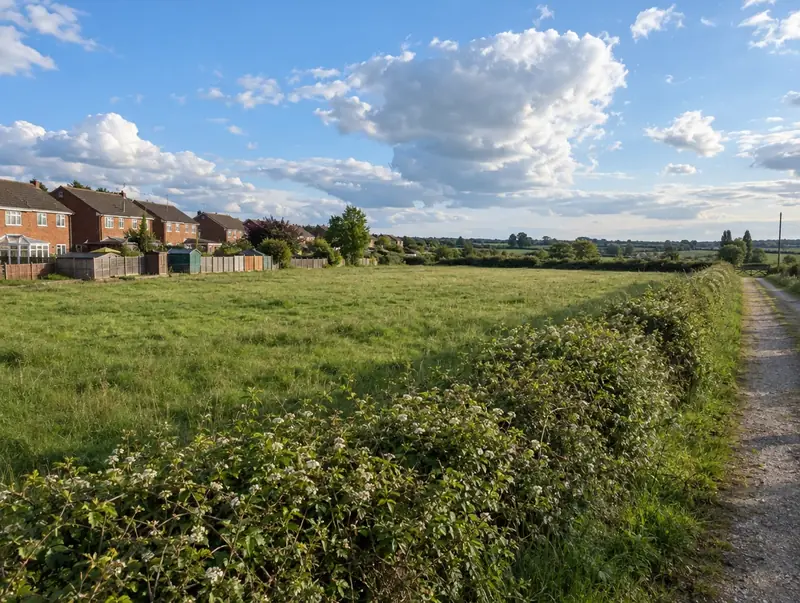 Tyne and Wear
Free site appraisal
Tell us about your land and we will call you back. No cost, no obligation.
Prefer to talk? Call 0800 088 6248.
- Free site appraisalNo cost, no obligation
- Legal fees coveredReasonable fees, on options and promotion
- Nothing to pay upfrontOn promotion: we fund planning
- Direct purchaseSuitable sites, with or without planning
- UK-wideEngland, Wales, Scotland and NI
Land we look at around Tyne and Wear
Across Tyne and Wear, we cover Newcastle upon Tyne and 13 other towns, among them South Shields, Felling and Gateshead. Next door, we also cover Northumberland, County Durham and North Yorkshire.
In and around Tyne and Wear, the land we appraise ranges from backland plots with a workable access to fields put forward or allocated in the local plan, including farmland next to the settlement boundary. In England, where Tyne and Wear sits, planning decisions are made by the local planning authority, usually the district, borough, city or unitary council (or a national park authority).
A postcode and a rough boundary are enough for us to start a free appraisal of land near Tyne and Wear.
What we offer in Tyne and Wear
Hope value explained
Land with no permission but a realistic chance of one is worth more than its current use value, but less than consented land. We explain where your site sits on that scale and why.
Buying land as it stands
Where we can see a planning route we are prepared to back, we can buy your land as it stands, with no onward chain, subject to survey, title and contract.
Option or promotion routes
Where planning will take longer, an option or promotion agreement lets us fund the application while you keep ownership. We explain the difference, including who benefits from a higher or lower sale price.
Local plan timing
Councils review their development plans periodically and invite landowners to put sites forward. We check where your council is in that cycle, because it can matter more than any single application.
Planning in Tyne and Wear: the English rules
Whether a field or large garden could take homes depends mostly on the council's Local Plan and national policy. Under the National Planning Policy Framework, plans define settlement boundaries, and land just outside Tyne and Wear may still come forward if it is allocated, previously developed or meets evidenced unmet housing need. Smaller housing schemes can also use Permission in Principle, an England-only route that settles location, use and amount first. Our free appraisal explains which route suits your land.
In England, the starting point is the Local Plan and the National Planning Policy Framework. Councils assess land put forward in a housing and economic land availability assessment. Smaller housing-led sites can apply for Permission in Principle to test whether the location is acceptable, and some Green Belt land may now be assessed as grey belt.
| National planning policy | National Planning Policy Framework (NPPF), revised August 2026, with national planning practice guidance |
|---|---|
| Local planning document | Local Plan |
| Who decides applications | The local planning authority, usually the district, borough, city or unitary council (or a national park authority) |
| In-principle consent | Outline planning permission, with reserved matters approved later |
| Land transaction tax (paid by the buyer) | Stamp Duty Land Tax (SDLT) |
| Land registration | HM Land Registry |
| How a sale becomes binding | A land sale becomes legally binding on exchange of contracts and finishes on completion, after which the buyer registers the title with HM Land Registry. |
| Developer contributions | Section 106 planning obligations, plus the Community Infrastructure Levy (CIL) where the council charges it |
Your questions answered for Tyne and Wear
What is hope value?
Hope value is the extra amount a buyer will pay above a site's existing use value because there is a realistic prospect of planning permission. The stronger the prospect, and the sooner permission could realistically come, the higher the hope value tends to be. It is lower than the value with permission, because the buyer carries the planning risk.
Should I apply for planning permission myself before selling?
You can, but an application costs money in surveys, reports and fees, and a refusal can make the land harder to sell. A scheme designed by someone who does not intend to build may also not suit housebuilders. Many landowners prefer a partner who carries the cost and risk of planning instead.
Is a field with no road frontage worth selling for development?
It can be, but access is the first question any buyer asks. If the only route in crosses land owned by someone else, rights need to be agreed or a strip bought. We check title plans and highway records before suggesting any deal, so you know whether access is a hurdle or a dead end.
What is a call for sites?
When a council prepares or reviews its development plan, it usually invites landowners and developers to put land forward for consideration. Submitting your site does not mean it will be allocated, but it puts the land in front of the council's planning team. In Wales this is usually called the candidate site process.
Do you buy land in Tyne and Wear?
Yes. Land to Homes looks at land across Tyne and Wear, including Newcastle upon Tyne, North Shields and Hebburn. Every enquiry starts with a free site appraisal, and on option and promotion agreements we pay your reasonable legal fees.
Read more: Sell Land Without Planning · Guide: Planning permission explained for landowners