
Sell Land with Planning Permission in Suffolk
Got planning permission on land in Suffolk but no wish to build? You can sell the site with the consent attached. Land to Homes reads the decision notice, the approved drawings, the conditions and any planning agreement, then tells you whether we would buy it directly, subject to survey, title and contract, and what would affect the figure.
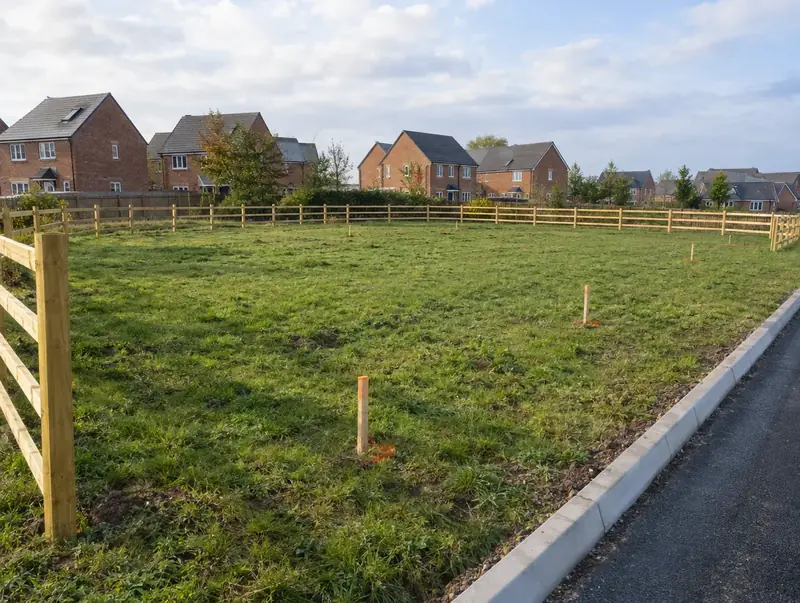 Suffolk
Free site appraisal
Tell us about your land and we will call you back. No cost, no obligation.
Prefer to talk? Call 0800 088 6248.
- Free site appraisalNo cost, no obligation
- Legal fees coveredReasonable fees, on options and promotion
- Nothing to pay upfrontOn promotion: we fund planning
- Direct purchaseSuitable sites, with or without planning
- UK-wideEngland, Wales, Scotland and NI
Our coverage in Suffolk
Our Suffolk coverage takes in 8 towns and cities, centred on Ipswich and including Bury St Edmunds, Haverhill and Sudbury. Neighbouring areas we also cover include Norfolk, Essex and Cambridgeshire.
Typical sites we review near Suffolk include fields put forward or allocated in the local plan, farmland next to the settlement boundary and corner plots and side gardens. Planning in Suffolk follows England’s rules: the National Planning Policy Framework sets national policy and the council’s Local Plan sets local policy.
If you own land near Suffolk, the first step is a free, no-obligation appraisal.
Our approach in Suffolk
Permission read in full
We read the decision notice, the approved plans and every condition, so any offer reflects what the consent actually allows rather than the headline number of homes on the application form.
Direct purchase of consented sites
Where a consented site suits us, we can buy it ourselves with no onward chain, subject to survey, title and contract. Any planning agreement passes to us with the land.
Expiry dates checked
Most permissions lapse if development does not lawfully begin within the period set in the decision. We check the deadline, and whether a lawful start has already been made, before discussing any deal.
Outline or full consent
Outline permission settles the principle, while reserved matters such as layout, scale and appearance still need approval. Full permission is further advanced. We explain how each stage affects what a buyer will pay.
How the rules work in Suffolk
Land with no planning permission can still be sold. Around Suffolk, the usual routes in England are a direct sale, an option agreement or a promotion agreement, where the planning work is funded for you and the land is sold once consent is granted. Outline planning permission settles the principle, with reserved matters approved later. Section 106 obligations, the Community Infrastructure Levy where charged and biodiversity net gain all affect what a site is worth, so independent advice matters.
In England, buyers check Section 106 obligations, any Community Infrastructure Levy liability and, for many newer permissions, the biodiversity gain condition, which usually requires a biodiversity gain plan to be approved before work starts. We also confirm whether the consent came from a full application, an outline approval, or Permission in Principle followed by technical details consent.
| National planning policy | National Planning Policy Framework (NPPF), revised August 2026, with national planning practice guidance |
|---|---|
| Local planning document | Local Plan |
| Who decides applications | The local planning authority, usually the district, borough, city or unitary council (or a national park authority) |
| In-principle consent | Outline planning permission, with reserved matters approved later |
| Land transaction tax (paid by the buyer) | Stamp Duty Land Tax (SDLT) |
| Land registration | HM Land Registry |
| How a sale becomes binding | A land sale becomes legally binding on exchange of contracts and finishes on completion, after which the buyer registers the title with HM Land Registry. |
| Developer contributions | Section 106 planning obligations, plus the Community Infrastructure Levy (CIL) where the council charges it |
Sell Land with Planning Permission in Suffolk: questions
What happens if my planning permission is about to expire?
If development has not lawfully begun by the deadline, the permission usually lapses and a new application is needed, which may be judged against newer policy. The usual choices are to sell to a buyer able to make a lawful start, to apply again, or to make a start yourself after discharging pre-commencement conditions. Take planning advice early.
What is a pre-commencement condition?
It is a condition that must be discharged before any development starts, such as approval of drainage, materials, a construction management plan or ecology measures. Starting work before discharging one can mean the permission has not been lawfully implemented. Buyers check these carefully because they affect both cost and when building can begin.
Is outline planning permission worth less than full permission?
Usually, because more approvals are still needed. Outline permission sets the principle and sometimes the access, while reserved matters such as layout, scale, appearance and landscaping come later. A buyer allows for the cost and risk of that remaining work. In Scotland the closest equivalent is planning permission in principle.
Who pays the Community Infrastructure Levy when I sell land with planning?
CIL is only charged where the council has adopted it, which is possible in England and Wales but not in Scotland or Northern Ireland. It is normally payable when development starts, by whoever has assumed liability. If you sell before work begins, the buyer usually takes on that liability. Reliefs and exemptions generally have to be claimed before commencement, so check the council's charging schedule.
Do you buy land in Suffolk?
Yes. Land to Homes looks at land across Suffolk, including Newmarket, Lowestoft and Ipswich. Every enquiry starts with a free site appraisal, and on option and promotion agreements we pay your reasonable legal fees.
Read more: Sell Land with Planning Permission · Guide: How is development land valued?