
Sell Land with Planning Permission in Hyde
Land with planning permission in Hyde is a site where the council has already approved new homes, either in outline or in full. A buyer is paying for that consent as well as the ground, so the price depends on what the permission allows, the conditions attached and the planning obligations that come with it. Land to Homes reviews all three before making an offer.
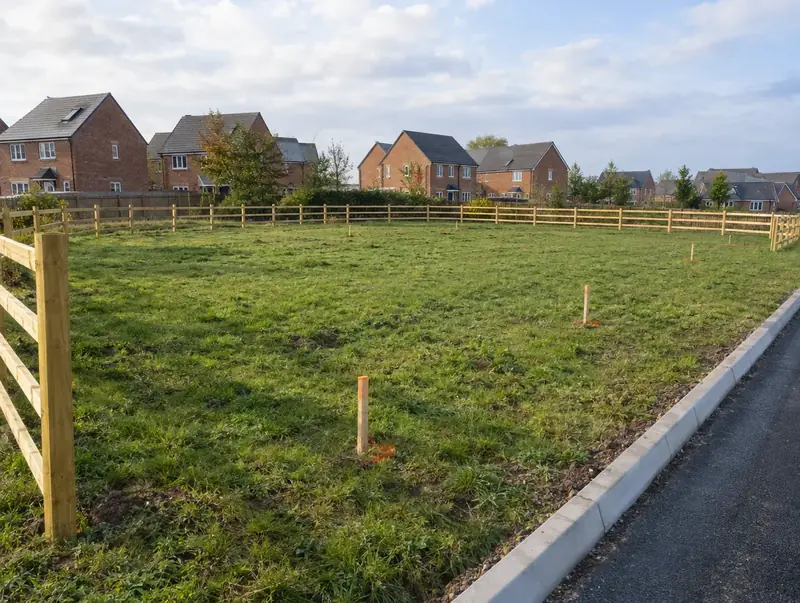 Hyde · SK14
Free site appraisal
Tell us about your land and we will call you back. No cost, no obligation.
Prefer to talk? Call 0800 088 6248.
- Free site appraisalNo cost, no obligation
- Legal fees coveredReasonable fees, on options and promotion
- Nothing to pay upfrontOn promotion: we fund planning
- Direct purchaseSuitable sites, with or without planning
- UK-wideEngland, Wales, Scotland and NI
Our coverage in Hyde
About 7 miles east of Manchester, Hyde is part of our Greater Manchester coverage, centred on postcode district SK14. The nearest other places we cover are Denton (2 miles), Dukinfield (2 miles) and Stalybridge (2 miles). Hyde is in the North West region of England.
Typical sites we review near Hyde include redundant agricultural buildings, land behind street frontages and land that already has planning permission. In England, where Hyde sits, planning decisions are made by the local planning authority, usually the district, borough, city or unitary council (or a national park authority).
A postcode and a rough boundary are enough for us to start a free appraisal of land near Hyde.
What we offer in Hyde
Outline or full consent
Outline permission settles the principle, while reserved matters such as layout, scale and appearance still need approval. Full permission is further advanced. We explain how each stage affects what a buyer will pay.
Conditions priced in
Pre-commencement conditions, such as drainage, materials or ecology details, must be discharged before work starts. We identify which are outstanding, what they are likely to cost and who would deal with them.
Buildability tested
As part of the S&K Group, a construction and property group, we test whether the approved homes can be built for a sensible cost, not just whether the drawings look right.
Planning obligations understood
Section 106 agreements in England and Wales, Section 75 in Scotland and Section 76 in Northern Ireland bind the land. Their costs, such as affordable housing or contributions, pass to the buyer and affect value.
The English system, as it applies in Hyde
Selling development land in Hyde usually starts with heads of terms, a short written summary of price, conditions and fees, before solicitors draft the contract. In England the sale becomes binding on exchange of contracts and finishes on completion, with the title then registered at HM Land Registry. The buyer normally pays Stamp Duty Land Tax. On option and promotion agreements with Land to Homes, your reasonable legal fees are covered, with the amount agreed in the heads of terms.
In England, buyers check Section 106 obligations, any Community Infrastructure Levy liability and, for many newer permissions, the biodiversity gain condition, which usually requires a biodiversity gain plan to be approved before work starts. We also confirm whether the consent came from a full application, an outline approval, or Permission in Principle followed by technical details consent.
| In-principle consent | Outline planning permission, with reserved matters approved later |
|---|---|
| Land transaction tax (paid by the buyer) | Stamp Duty Land Tax (SDLT) |
| Land registration | HM Land Registry |
| Developer contributions | Section 106 planning obligations, plus the Community Infrastructure Levy (CIL) where the council charges it |
Your questions answered for Hyde
Is outline planning permission worth less than full permission?
Usually, because more approvals are still needed. Outline permission sets the principle and sometimes the access, while reserved matters such as layout, scale, appearance and landscaping come later. A buyer allows for the cost and risk of that remaining work. In Scotland the closest equivalent is planning permission in principle.
Who pays the Community Infrastructure Levy when I sell land with planning?
CIL is only charged where the council has adopted it, which is possible in England and Wales but not in Scotland or Northern Ireland. It is normally payable when development starts, by whoever has assumed liability. If you sell before work begins, the buyer usually takes on that liability. Reliefs and exemptions generally have to be claimed before commencement, so check the council's charging schedule.
Can a buyer change the approved scheme?
Yes, through a minor amendment, a variation of conditions or a fresh application, depending on the size of the change. Each route carries its own planning risk and cost. If a buyer's offer depends on a different scheme being approved, the deal is usually conditional on that new permission rather than a straight purchase.
What is a pre-commencement condition?
It is a condition that must be discharged before any development starts, such as approval of drainage, materials, a construction management plan or ecology measures. Starting work before discharging one can mean the permission has not been lawfully implemented. Buyers check these carefully because they affect both cost and when building can begin.
Do you work with landowners in Hyde?
We do. We work with landowners in Hyde and elsewhere in Greater Manchester, including Leigh, Altrincham and Urmston. Send us a postcode and we will start with a free, no-obligation appraisal of what the land could take.
Read more: Sell Land with Planning Permission · Guide: How is development land valued?