
Land Assembly and Access in Lanarkshire
Land assembly in Lanarkshire means bringing several pieces of land under one plan so they can be developed together. It might combine neighbouring gardens, separate fields, or a main site and the strip needed to reach the road. Land to Homes negotiates with each owner and sets up a fair, written way of sharing value.
 Lanarkshire
Free site appraisal
Tell us about your land and we will call you back. No cost, no obligation.
Prefer to talk? Call 0800 088 6248.
- Free site appraisalNo cost, no obligation
- Legal fees coveredReasonable fees, on options and promotion
- Nothing to pay upfrontOn promotion: we fund planning
- Direct purchaseSuitable sites, with or without planning
- UK-wideEngland, Wales, Scotland and NI
Land we look at around Lanarkshire
We cover 9 places across Lanarkshire: East Kilbride is the main one, alongside Hamilton, Airdrie and Cambuslang. Neighbouring areas we also cover include Glasgow & the Clyde, Forth Valley and Ayrshire.
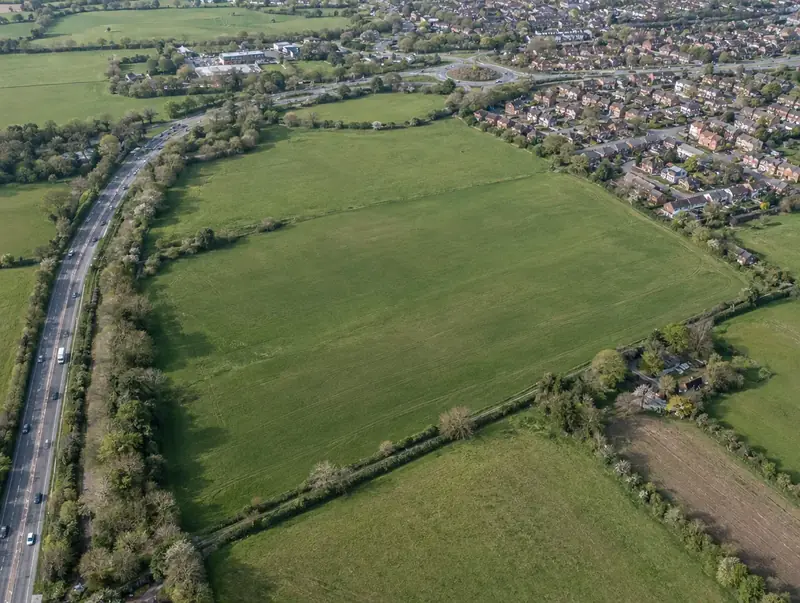
Around Lanarkshire we look at corner plots and side gardens, farmland next to the settlement boundary and redundant commercial buildings. As Lanarkshire is in Scotland, applications are judged against National Planning Framework 4, and the buyer of land pays Land and Buildings Transaction Tax (LBTT).
Send us a postcode in or near G74 and we will start with a free desktop appraisal.
What we offer in Lanarkshire
Ransom strips identified
A ransom strip is land that controls access to a development site. We check titles and highway records to establish who owns every piece of land between your site and the public road.
Unregistered land traced
Some strips and verges have never been registered. We search the records and, where an owner cannot be traced, explain the options, which usually need specialist legal advice.
Equalisation between owners
A collaboration or equalisation agreement shares proceeds by area or agreed proportion, so it does not matter whose land ends up as roads, open space or homes in the final layout.
Visibility splays secured
A new junction needs clear sightlines across land on either side. If any of that land is in other ownership, rights or a purchase are needed before the access can work.
Planning in Lanarkshire: the Scottish rules
If you own land on the edge of Lanarkshire, its prospects in Scotland depend largely on the Local Development Plan, which allocates sites for housing, and on NPF4 policies such as those on local living, infrastructure and quality homes. An option or promotion agreement lets a partner fund the planning case while you keep ownership until a sale. With Land to Homes, your reasonable legal fees on these agreements are covered, with the amount agreed in the heads of terms.
In Scotland, access rights over another person's land are servitudes rather than easements, and new roads need roads construction consent from the council under the Roads (Scotland) Act 1984. Titles may be on the Land Register or the older Register of Sasines, both kept by Registers of Scotland. Missives and LBTT apply to each purchase.
| National planning policy | National Planning Framework 4 (NPF4), which forms part of the statutory development plan |
|---|---|
| Local planning document | Local Development Plan (LDP) |
| Who decides applications | The council as planning authority (or a national park authority in its area) |
| In-principle consent | Planning permission in principle (PPP), followed by approval of matters specified in conditions |
| Land transaction tax (paid by the buyer) | Land and Buildings Transaction Tax (LBTT) |
| Land registration | Registers of Scotland (Land Register of Scotland) |
| How a sale becomes binding | Land sales are concluded through missives, formal letters exchanged between solicitors that become a binding contract once concluded, followed by settlement on the date of entry and registration in the Land Register of Scotland. |
| Developer contributions | Section 75 planning obligations, with Section 69 agreements sometimes used for simple one-off payments |
Land Assembly and Access in Lanarkshire: questions
What is an equalisation agreement?
It is an agreement between landowners whose land will be developed together. It shares proceeds and costs by an agreed formula, usually by area, regardless of where homes, roads or open space end up. Without one, owners may compete for the most valuable parts of the layout and stall the whole scheme.
What is a visibility splay?
A visibility splay is the area of land either side of a junction that must be kept clear so drivers can see approaching traffic. Its size depends on road speeds and the highway authority's standards. If part of the splay is owned by someone else, the scheme needs their agreement before the access can work.
How do I find out who owns a strip of land?
Registered land can be searched through the land registry for the relevant nation. Unregistered land is harder: old deeds, local knowledge, highway records and neighbours can all help. Where an owner genuinely cannot be found, there are legal options, but they need specialist advice and can add time.
Who pays the legal costs in a land assembly?
It depends on the structure. On option and promotion agreements with Land to Homes, we pay your reasonable legal fees, with the amount agreed up front in the heads of terms. For direct purchases and collaboration agreements, cost arrangements are agreed case by case and set out in writing.
Is Lanarkshire an area you cover for land?
Yes, we cover land across Lanarkshire, including Hamilton, Airdrie and Wishaw. Where a site suits us we can buy it directly, or set up an option or promotion agreement. On promotion there is nothing to pay upfront.
Read more: Land Assembly and Access · Guide: Ransom strips and access: what landowners need to know