
Land Assembly and Access in Holyhead
Some sites in Holyhead cannot be developed alone because another owner controls the way in. That might be a ransom strip, a verge, land needed for visibility at a junction, or a private lane. Land to Homes investigates title and highway records, then works with each party to agree access on fair, written terms.
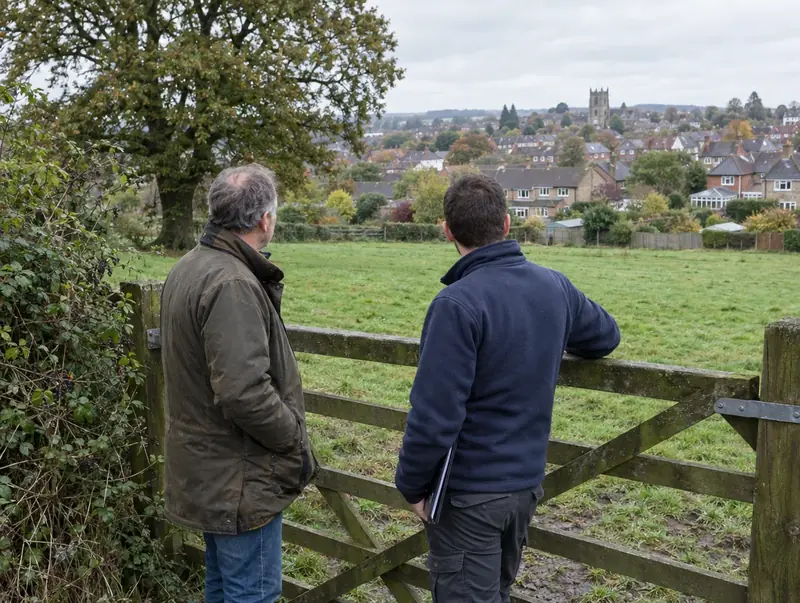 Holyhead · LL65
Free site appraisal
Tell us about your land and we will call you back. No cost, no obligation.
Prefer to talk? Call 0800 088 6248.
- Free site appraisalNo cost, no obligation
- Legal fees coveredReasonable fees, on options and promotion
- Nothing to pay upfrontOn promotion: we fund planning
- Direct purchaseSuitable sites, with or without planning
- UK-wideEngland, Wales, Scotland and NI
Land and sites near Holyhead
In Gwynedd, Holyhead lies about 22 miles west of Bangor (Gwynedd); its central postcode district is LL65. Nearby, we also cover Caernarfon, Bangor (Gwynedd) and Pwllheli, all within 30 miles.
Sites worth a conversation around Holyhead: small holdings and pony paddocks, corner plots and side gardens and large and long rear gardens. Planning in Holyhead follows Wales’s rules: Planning Policy Wales sets national policy and the council’s Local Development Plan sets local policy.
If you own land near Holyhead, the first step is a free, no-obligation appraisal.
Our approach in Holyhead
One planning strategy
A single application covering the whole area usually produces a better layout than piecemeal schemes, and councils often expect it where their plans call for comprehensive development.
Unregistered land traced
Some strips and verges have never been registered. We search the records and, where an owner cannot be traced, explain the options, which usually need specialist legal advice.
Visibility splays secured
A new junction needs clear sightlines across land on either side. If any of that land is in other ownership, rights or a purchase are needed before the access can work.
Deals to suit each owner
Different owners may want different routes: some prefer to sell outright, others an option or promotion. The structure can combine these within one plan for the whole area.
Planning in Holyhead: the Welsh rules
Permission in Principle is not available in Wales, so the usual first step for land near Holyhead is an outline planning application, with reserved matters to follow, or a full application. Councils allocate housing sites through their Local Development Plan, and landowners can put land forward as a candidate site when a plan is prepared or reviewed. If your land is not allocated, an option or promotion agreement lets a partner take on the cost of promoting it.
In Wales, road adoption also uses Section 38 and Section 278 agreements under the Highways Act 1980, and sustainable drainage serving several properties is normally adopted by the SuDS approving body, so drainage routes across ownerships need agreeing. Larger Local Development Plan allocations often expect a single masterplan, and buyers pay Land Transaction Tax.
| National planning policy | Planning Policy Wales (Edition 12) and Future Wales: the National Plan 2040, supported by Technical Advice Notes |
|---|---|
| Who decides applications | The local planning authority, usually the county or county borough council (or a national park authority) |
| In-principle consent | Outline planning permission, with reserved matters approved later |
| How a sale becomes binding | As in England, a land sale becomes legally binding on exchange of contracts and finishes on completion, with the title registered at HM Land Registry. |
Your questions answered for Holyhead
What is an equalisation agreement?
It is an agreement between landowners whose land will be developed together. It shares proceeds and costs by an agreed formula, usually by area, regardless of where homes, roads or open space end up. Without one, owners may compete for the most valuable parts of the layout and stall the whole scheme.
Can the council force a neighbour to sell land for my development?
Generally no, for a private housing scheme. Councils have compulsory purchase powers for certain public purposes, but they are not a routine tool for individual developments. Most land assembly is achieved by agreement, which is why early, fair and well-documented negotiation matters so much.
What if my access crosses a public footpath?
A footpath crossing does not usually prevent access, but the design must keep the path safe and usable. If the layout needs the path to move, a formal diversion order is required, which is a separate legal process that members of the public can object to.
How do I find out who owns a strip of land?
Registered land can be searched through the land registry for the relevant nation. Unregistered land is harder: old deeds, local knowledge, highway records and neighbours can all help. Where an owner genuinely cannot be found, there are legal options, but they need specialist advice and can add time.
Do you buy land in Holyhead?
Yes. Land to Homes looks at land in Holyhead and elsewhere in Gwynedd, including Pwllheli, Caernarfon and Bangor (Gwynedd). Every enquiry starts with a free site appraisal, and on option and promotion agreements we pay your reasonable legal fees.
Read more: Land Assembly and Access · Guide: How affordable and social homes are delivered across the UK