
Land Assembly and Access in East Riding of Yorkshire
When several owners in East Riding of Yorkshire each hold part of a developable area, nobody wants their land to become the road while a neighbour gets the houses. An equalisation agreement solves that by sharing proceeds by area, not by layout. Land to Homes can coordinate the owners, the planning strategy and the access as one package.
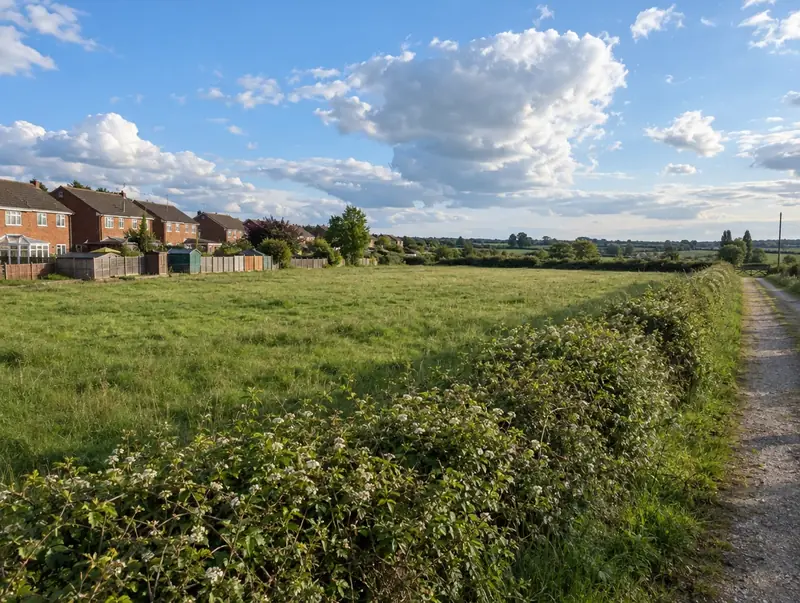 East Riding of Yorkshire
Free site appraisal
Tell us about your land and we will call you back. No cost, no obligation.
Prefer to talk? Call 0800 088 6248.
- Free site appraisalNo cost, no obligation
- Legal fees coveredReasonable fees, on options and promotion
- Nothing to pay upfrontOn promotion: we fund planning
- Direct purchaseSuitable sites, with or without planning
- UK-wideEngland, Wales, Scotland and NI
Land and sites near East Riding of Yorkshire
Across East Riding of Yorkshire, we cover Kingston upon Hull and 3 other towns, among them Bridlington, Beverley and Goole. Neighbouring areas we also cover include North Yorkshire, South Yorkshire and Lincolnshire.
In and around East Riding of Yorkshire, the land we appraise ranges from redundant commercial buildings to former garage blocks and yards, including farmland next to the settlement boundary. Because East Riding of Yorkshire is in England, land titles are registered with HM Land Registry and transfers attract Stamp Duty Land Tax (SDLT).
Send us a postcode in or near HU1 and we will start with a free desktop appraisal.
What we offer in East Riding of Yorkshire
Highway boundaries checked
The adopted highway does not always reach your boundary. We ask the highway authority for its records, because a narrow unadopted verge can change the access position completely.
Unregistered land traced
Some strips and verges have never been registered. We search the records and, where an owner cannot be traced, explain the options, which usually need specialist legal advice.
Deals to suit each owner
Different owners may want different routes: some prefer to sell outright, others an option or promotion. The structure can combine these within one plan for the whole area.
Ransom strips identified
A ransom strip is land that controls access to a development site. We check titles and highway records to establish who owns every piece of land between your site and the public road.
Rules that apply in East Riding of Yorkshire
Selling development land in East Riding of Yorkshire usually starts with heads of terms, a short written summary of price, conditions and fees, before solicitors draft the contract. In England the sale becomes binding on exchange of contracts and finishes on completion, with the title then registered at HM Land Registry. The buyer normally pays Stamp Duty Land Tax. On option and promotion agreements with Land to Homes, your reasonable legal fees are covered, with the amount agreed in the heads of terms.
In England, new estate roads are usually adopted under a Section 38 agreement with the highway authority, with works to the existing road under a Section 278 agreement. Ownership is checked through HM Land Registry and local records. Where a Local Plan allocates a larger site across several ownerships, it may require a masterplan covering all of them.
| National planning policy | National Planning Policy Framework (NPPF), revised August 2026, with national planning practice guidance |
|---|---|
| Local planning document | Local Plan |
| Who decides applications | The local planning authority, usually the district, borough, city or unitary council (or a national park authority) |
| In-principle consent | Outline planning permission, with reserved matters approved later |
| Land transaction tax (paid by the buyer) | Stamp Duty Land Tax (SDLT) |
| Land registration | HM Land Registry |
| How a sale becomes binding | A land sale becomes legally binding on exchange of contracts and finishes on completion, after which the buyer registers the title with HM Land Registry. |
| Developer contributions | Section 106 planning obligations, plus the Community Infrastructure Levy (CIL) where the council charges it |
Land Assembly and Access in East Riding of Yorkshire: questions
Who pays the legal costs in a land assembly?
It depends on the structure. On option and promotion agreements with Land to Homes, we pay your reasonable legal fees, with the amount agreed up front in the heads of terms. For direct purchases and collaboration agreements, cost arrangements are agreed case by case and set out in writing.
Should neighbours sell their land together or separately?
Together usually produces a stronger planning case and a more efficient layout, especially where one access can serve everyone. It needs trust and clear documents. Selling separately can work for a plot with its own access, but may limit what the wider area can achieve.
What is a ransom strip?
A ransom strip is a piece of land, sometimes very narrow, that sits between a development site and the road or services it needs. Whoever owns it can block access or ask for a share of the value it unlocks. The amount is negotiated case by case. Our guide to ransom strips and access explains more.
Can the council force a neighbour to sell land for my development?
Generally no, for a private housing scheme. Councils have compulsory purchase powers for certain public purposes, but they are not a routine tool for individual developments. Most land assembly is achieved by agreement, which is why early, fair and well-documented negotiation matters so much.
Is East Riding of Yorkshire an area you cover for land?
Yes, we cover land across East Riding of Yorkshire, including Beverley, Kingston upon Hull and Goole. Where a site suits us we can buy it directly, or set up an option or promotion agreement. On promotion there is nothing to pay upfront.
Read more: Land Assembly and Access · Guide: Ransom strips and access: what landowners need to know