
Land Assembly and Access in Dumfries
Some sites in Dumfries cannot be developed alone because another owner controls the way in. That might be a ransom strip, a verge, land needed for visibility at a junction, or a private lane. Land to Homes investigates title and highway records, then works with each party to agree access on fair, written terms.
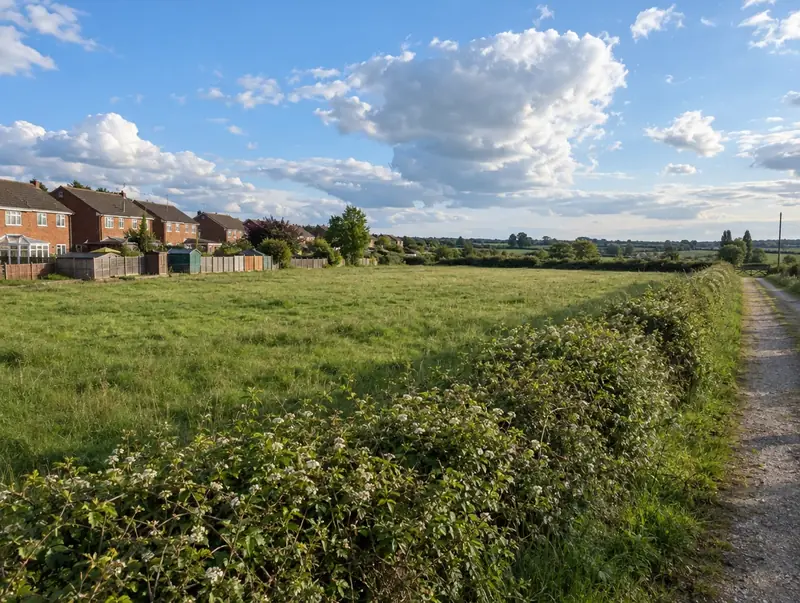 Dumfries · DG1
Free site appraisal
Tell us about your land and we will call you back. No cost, no obligation.
Prefer to talk? Call 0800 088 6248.
- Free site appraisalNo cost, no obligation
- Legal fees coveredReasonable fees, on options and promotion
- Nothing to pay upfrontOn promotion: we fund planning
- Direct purchaseSuitable sites, with or without planning
- UK-wideEngland, Wales, Scotland and NI
Land and sites near Dumfries
Dumfries (DG1) is the hub of our Dumfries & Galloway coverage, with 2 further towns covered. Annan is the closest neighbouring place we cover, at about 15 miles, followed by Hawick and Peebles.
Typical sites we review near Dumfries include land behind street frontages, land that already has planning permission and infill gaps along existing streets. In Scotland, where Dumfries sits, planning decisions are made by the council as planning authority (or a national park authority in its area).
Send us a postcode in or near DG1 and we will start with a free desktop appraisal.
Our approach in Dumfries
Rights of way and easements
Public footpaths, drainage easements and private rights can affect a layout. We map them early and plan around them, or seek diversions, where the scheme requires it.
Deals to suit each owner
Different owners may want different routes: some prefer to sell outright, others an option or promotion. The structure can combine these within one plan for the whole area.
Ransom strips identified
A ransom strip is land that controls access to a development site. We check titles and highway records to establish who owns every piece of land between your site and the public road.
Equalisation between owners
A collaboration or equalisation agreement shares proceeds by area or agreed proportion, so it does not matter whose land ends up as roads, open space or homes in the final layout.
The Scottish system, as it applies in Dumfries
Land sales in Scotland are concluded through missives, an exchange of formal letters between solicitors. Once missives are concluded they form a binding contract, and the buyer takes entry at settlement, then registers the title with Registers of Scotland. For land near Dumfries, missives can be made conditional on planning permission in principle, so the sale only proceeds if consent is secured. The buyer pays Land and Buildings Transaction Tax to Revenue Scotland.
In Scotland, access rights over another person's land are servitudes rather than easements, and new roads need roads construction consent from the council under the Roads (Scotland) Act 1984. Titles may be on the Land Register or the older Register of Sasines, both kept by Registers of Scotland. Missives and LBTT apply to each purchase.
| National planning policy | National Planning Framework 4 (NPF4), which forms part of the statutory development plan |
|---|---|
| In-principle consent | Planning permission in principle (PPP), followed by approval of matters specified in conditions |
| Land transaction tax (paid by the buyer) | Land and Buildings Transaction Tax (LBTT) |
| Developer contributions | Section 75 planning obligations, with Section 69 agreements sometimes used for simple one-off payments |
Common questions in Dumfries
What is a ransom strip?
A ransom strip is a piece of land, sometimes very narrow, that sits between a development site and the road or services it needs. Whoever owns it can block access or ask for a share of the value it unlocks. The amount is negotiated case by case. Our guide to ransom strips and access explains more.
What if my access crosses a public footpath?
A footpath crossing does not usually prevent access, but the design must keep the path safe and usable. If the layout needs the path to move, a formal diversion order is required, which is a separate legal process that members of the public can object to.
Should neighbours sell their land together or separately?
Together usually produces a stronger planning case and a more efficient layout, especially where one access can serve everyone. It needs trust and clear documents. Selling separately can work for a plot with its own access, but may limit what the wider area can achieve.
Who pays the legal costs in a land assembly?
It depends on the structure. On option and promotion agreements with Land to Homes, we pay your reasonable legal fees, with the amount agreed up front in the heads of terms. For direct purchases and collaboration agreements, cost arrangements are agreed case by case and set out in writing.
Do you buy land in Dumfries?
Yes. Land to Homes looks at land in Dumfries and elsewhere in Dumfries & Galloway, including Stranraer and Annan. Every enquiry starts with a free site appraisal, and on option and promotion agreements we pay your reasonable legal fees.
Read more: Land Assembly and Access · Guide: How affordable and social homes are delivered across the UK