
Sell an Infill Plot in Wallsend
An infill plot in Wallsend is a gap in an otherwise built-up street or frontage, such as land between two houses, a side garden at the end of a terrace, or a cleared site in a row. Because it fills a gap rather than extending a settlement, it often has policy support, but design and neighbour impact are scrutinised closely.
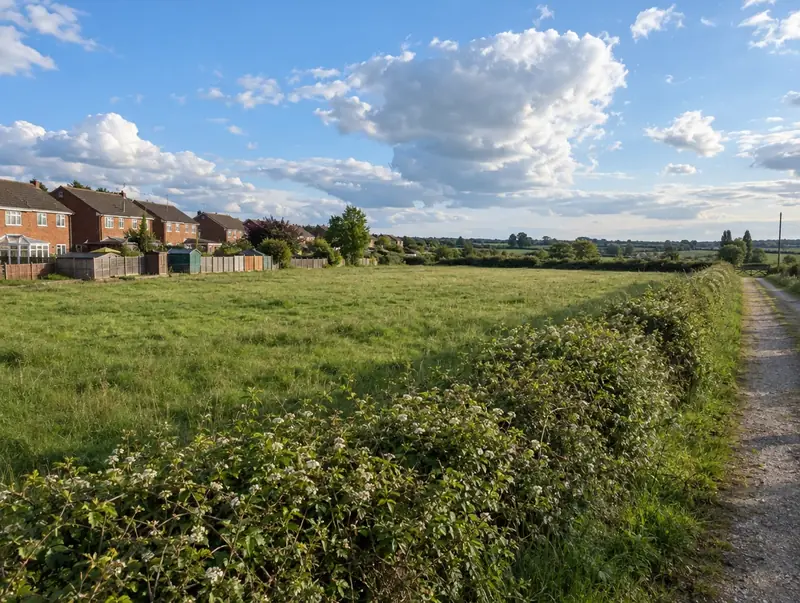 Wallsend · NE28
Free site appraisal
Tell us about your land and we will call you back. No cost, no obligation.
Prefer to talk? Call 0800 088 6248.
- Free site appraisalNo cost, no obligation
- Legal fees coveredReasonable fees, on options and promotion
- Nothing to pay upfrontOn promotion: we fund planning
- Direct purchaseSuitable sites, with or without planning
- UK-wideEngland, Wales, Scotland and NI
Our coverage in Wallsend
We cover Wallsend as part of Tyne and Wear. It is about 3 miles east of Newcastle upon Tyne, around postcode district NE28. Close by, our coverage also takes in Hebburn, Jarrow and Felling. Within England, Wallsend falls in the North East region.
Around Wallsend we look at infill gaps along existing streets, paddocks on the edge of Wallsend and corner plots and side gardens. Planning in Wallsend follows England’s rules: the National Planning Policy Framework sets national policy and the council’s Local Plan sets local policy.
A postcode and a rough boundary are enough for us to start a free appraisal of land near Wallsend.
What you get in Wallsend
We can buy the plot
Where a plot suits us, we can buy it ourselves, with or without planning, with no onward chain, subject to survey, title and contract. Any offer is set out in writing.
Neighbours' light and privacy
Window positions, outlook and daylight to neighbouring homes are tested in planning. We look at how a design could protect them, because this often decides whether infill is approved.
Village infill policies
Some rural policies allow limited infilling within villages even where wider development is restricted. We check whether your plot falls within the exact wording of those rules.
Street scene first
Councils look at the building line, roof heights, plot widths and materials along the street. A new home that follows that pattern has a much better chance of approval than one that ignores it.
The English system, as it applies in Wallsend
Selling development land in Wallsend usually starts with heads of terms, a short written summary of price, conditions and fees, before solicitors draft the contract. In England the sale becomes binding on exchange of contracts and finishes on completion, with the title then registered at HM Land Registry. The buyer normally pays Stamp Duty Land Tax. On option and promotion agreements with Land to Homes, your reasonable legal fees are covered, with the amount agreed in the heads of terms.
In England, the NPPF supports small sites and treats limited infilling in villages as an exception within the Green Belt. Smaller schemes can test the principle of housing through Permission in Principle before detailed design. Party wall procedures apply where work affects a shared wall or boundary, and buyers pay Stamp Duty Land Tax.
| National planning policy | National Planning Policy Framework (NPPF), revised August 2026, with national planning practice guidance |
|---|---|
| Who decides applications | The local planning authority, usually the district, borough, city or unitary council (or a national park authority) |
| In-principle consent | Outline planning permission, with reserved matters approved later |
| Developer contributions | Section 106 planning obligations, plus the Community Infrastructure Levy (CIL) where the council charges it |
Sell an Infill Plot in Wallsend: questions
What does a buyer check on a small infill site?
Title and boundaries, rights of way, the planning history of the plot, the location of sewers and water mains, trees, drainage, ground conditions, and whether the street has a pattern a new home can follow. Small issues matter more on small sites because they directly affect what can fit.
Do infill plots need biodiversity net gain?
In England, recent changes exempt many very small sites from biodiversity net gain, subject to conditions, and other exemptions may apply. Wales, Scotland and Northern Ireland take different approaches to biodiversity in planning. Check the current rules with your council or a planning consultant before you apply.
What is an infill plot?
An infill plot is a gap within an existing line of buildings, such as a space between two houses or at the end of a terrace, where a new home would continue the street rather than extend into open land. Exact definitions vary between councils, and rural policies often define infill more narrowly.
How small can a plot be for a new house?
There is no single minimum. It depends on the width of the frontage, the size of neighbouring plots, space standards for the new home, garden and parking requirements, and how the design fits the street. A narrow plot may still work for a terraced design that continues an existing row.
Do you work with landowners in Wallsend?
We do. We work with landowners in Wallsend and elsewhere in Tyne and Wear, including Gosforth, Gateshead and Jarrow. Send us a postcode and we will start with a free, no-obligation appraisal of what the land could take.
Read more: Sell an Infill Plot · Guide: Selling part of your garden: what you need to know