
Sell an Infill Plot in Glenrothes
Owners of small gap sites in Glenrothes are often told the plot is too small to bother with. It may not be. One well-designed house on the right frontage can be a straightforward planning case. Land to Homes gives a free, no-obligation appraisal and, where the plot suits us, can buy it directly, subject to survey, title and contract.
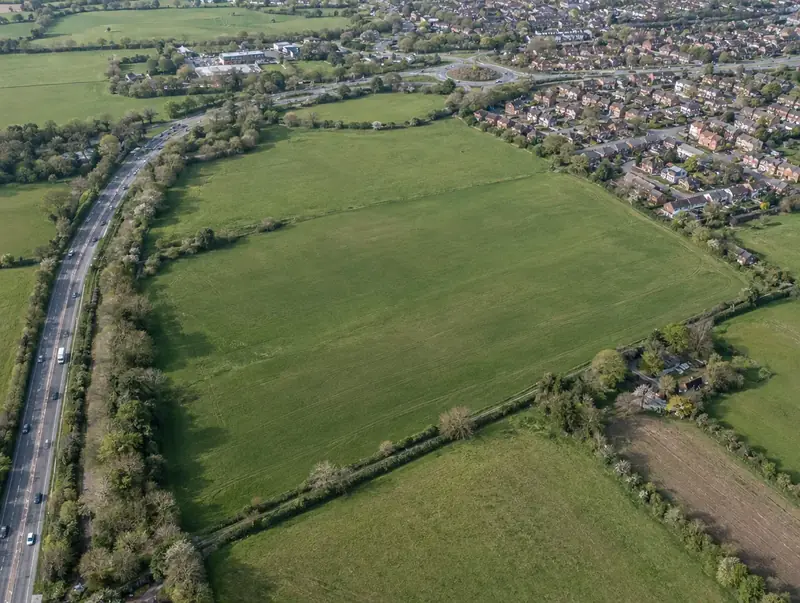 Glenrothes · KY7
Free site appraisal
Tell us about your land and we will call you back. No cost, no obligation.
Prefer to talk? Call 0800 088 6248.
- Free site appraisalNo cost, no obligation
- Legal fees coveredReasonable fees, on options and promotion
- Nothing to pay upfrontOn promotion: we fund planning
- Direct purchaseSuitable sites, with or without planning
- UK-wideEngland, Wales, Scotland and NI
Selling land around Glenrothes
Glenrothes (KY7) is one of the Fife towns we cover, about 14 miles north-east of Dunfermline. Nearby, we also cover Kirkcaldy, Dunfermline and Edinburgh, all within 17 miles.
In and around Glenrothes, the land we appraise ranges from land behind street frontages to small holdings and pony paddocks, including brownfield land in and around Glenrothes. In Scotland, where Glenrothes sits, planning decisions are made by the council as planning authority (or a national park authority in its area).
Tell us where your land is around Glenrothes and we will explain the routes open to you.
What you get in Glenrothes
Services and connections
Connecting water, sewers and power to a single plot can be costly where mains are not close by. We check where services run before estimating what the plot could support.
Neighbours' light and privacy
Window positions, outlook and daylight to neighbouring homes are tested in planning. We look at how a design could protect them, because this often decides whether infill is approved.
Self-builder or developer
Some infill plots suit individual self-builders, while others suit a developer building several homes. We explain who is likely to want your plot and what that means for the deal.
Street scene first
Councils look at the building line, roof heights, plot widths and materials along the street. A new home that follows that pattern has a much better chance of approval than one that ignores it.
Planning in Glenrothes: the Scottish rules
If you own land on the edge of Glenrothes, its prospects in Scotland depend largely on the Local Development Plan, which allocates sites for housing, and on NPF4 policies such as those on local living, infrastructure and quality homes. An option or promotion agreement lets a partner fund the planning case while you keep ownership until a sale. With Land to Homes, your reasonable legal fees on these agreements are covered, with the amount agreed in the heads of terms.
In Scotland, infill sites are assessed against the Local Development Plan and NPF4, including its policies on local living and rural homes. Small sites are often consented through planning permission in principle or a full application. Shared boundaries are dealt with under Scots property law rather than party wall legislation, and a building warrant is required.
| National planning policy | National Planning Framework 4 (NPF4), which forms part of the statutory development plan |
|---|---|
| Who decides applications | The council as planning authority (or a national park authority in its area) |
| Land registration | Registers of Scotland (Land Register of Scotland) |
| How a sale becomes binding | Land sales are concluded through missives, formal letters exchanged between solicitors that become a binding contract once concluded, followed by settlement on the date of entry and registration in the Land Register of Scotland. |
Common questions in Glenrothes
What is an infill plot?
An infill plot is a gap within an existing line of buildings, such as a space between two houses or at the end of a terrace, where a new home would continue the street rather than extend into open land. Exact definitions vary between councils, and rural policies often define infill more narrowly.
How small can a plot be for a new house?
There is no single minimum. It depends on the width of the frontage, the size of neighbouring plots, space standards for the new home, garden and parking requirements, and how the design fits the street. A narrow plot may still work for a terraced design that continues an existing row.
What does a buyer check on a small infill site?
Title and boundaries, rights of way, the planning history of the plot, the location of sewers and water mains, trees, drainage, ground conditions, and whether the street has a pattern a new home can follow. Small issues matter more on small sites because they directly affect what can fit.
Is it easier to get planning permission for infill?
Often, because infill makes use of land within a settlement. But councils still refuse infill that harms the character of the street, neighbours' amenity or highway safety. In some rural areas, infill policies are tightly defined, so it pays to check the exact policy wording for your area.
Is Glenrothes an area you cover for land?
Yes, we cover land in Glenrothes and elsewhere in Fife, including Dunfermline and Kirkcaldy. Where a site suits us we can buy it directly, or set up an option or promotion agreement. On promotion there is nothing to pay upfront.
Read more: Sell an Infill Plot · Guide: Selling part of your garden: what you need to know