
Sell an Infill Plot in Argyll & Bute
Selling infill land in Argyll & Bute turns on three questions: does the gap fit the pattern of the street, are services and access available, and would a new home affect neighbours' light or privacy? Land to Homes checks each one, explains the likely scale of scheme, and puts any offer or terms in writing before you commit.
 Argyll & Bute
Free site appraisal
Tell us about your land and we will call you back. No cost, no obligation.
Prefer to talk? Call 0800 088 6248.
- Free site appraisalNo cost, no obligation
- Legal fees coveredReasonable fees, on options and promotion
- Nothing to pay upfrontOn promotion: we fund planning
- Direct purchaseSuitable sites, with or without planning
- UK-wideEngland, Wales, Scotland and NI
Land and sites near Argyll & Bute
We cover 4 places across Argyll & Bute: Helensburgh is the main one, alongside Oban, Campbeltown and Dunoon. Next door, we also cover Glasgow & the Clyde, Ayrshire and Lanarkshire.
In and around Argyll & Bute, the land we appraise ranges from redundant commercial buildings to land that already has planning permission, including former garage blocks and yards. Because Argyll & Bute is in Scotland, land titles are registered with Registers of Scotland (Land Register of Scotland) and transfers attract Land and Buildings Transaction Tax (LBTT).
A postcode and a rough boundary are enough for us to start a free appraisal of land near Argyll & Bute.
Why work with Land to Homes in Argyll & Bute
We can buy the plot
Where a plot suits us, we can buy it ourselves, with or without planning, with no onward chain, subject to survey, title and contract. Any offer is set out in writing.
Services and connections
Connecting water, sewers and power to a single plot can be costly where mains are not close by. We check where services run before estimating what the plot could support.
Village infill policies
Some rural policies allow limited infilling within villages even where wider development is restricted. We check whether your plot falls within the exact wording of those rules.
Party walls and boundaries
Building on or near a shared boundary can trigger party wall procedures in England and Wales. Clear boundaries on the title plan help avoid disputes with neighbours later on.
Planning in Argyll & Bute: the Scottish rules
In Scotland, planning applications for land around Argyll & Bute are decided by the council as planning authority, using National Planning Framework 4 and the Local Development Plan, which together form the statutory development plan. Instead of outline permission, Scotland uses planning permission in principle, followed by approval of matters specified in conditions. Land to Homes can buy suitable sites directly or promote land through planning, and every conversation starts with a free site appraisal.
In Scotland, infill sites are assessed against the Local Development Plan and NPF4, including its policies on local living and rural homes. Small sites are often consented through planning permission in principle or a full application. Shared boundaries are dealt with under Scots property law rather than party wall legislation, and a building warrant is required.
| National planning policy | National Planning Framework 4 (NPF4), which forms part of the statutory development plan |
|---|---|
| Local planning document | Local Development Plan (LDP) |
| Who decides applications | The council as planning authority (or a national park authority in its area) |
| In-principle consent | Planning permission in principle (PPP), followed by approval of matters specified in conditions |
| Land transaction tax (paid by the buyer) | Land and Buildings Transaction Tax (LBTT) |
| Land registration | Registers of Scotland (Land Register of Scotland) |
| How a sale becomes binding | Land sales are concluded through missives, formal letters exchanged between solicitors that become a binding contract once concluded, followed by settlement on the date of entry and registration in the Land Register of Scotland. |
| Developer contributions | Section 75 planning obligations, with Section 69 agreements sometimes used for simple one-off payments |
Your questions answered for Argyll & Bute
Should I sell an infill plot with or without planning?
Selling with permission usually achieves a higher price, but means paying for drawings, surveys and fees yourself and accepting the risk of refusal. Selling without planning is simpler and passes that risk to the buyer. A contract conditional on planning sits between the two and suits many small plots.
What is an infill plot?
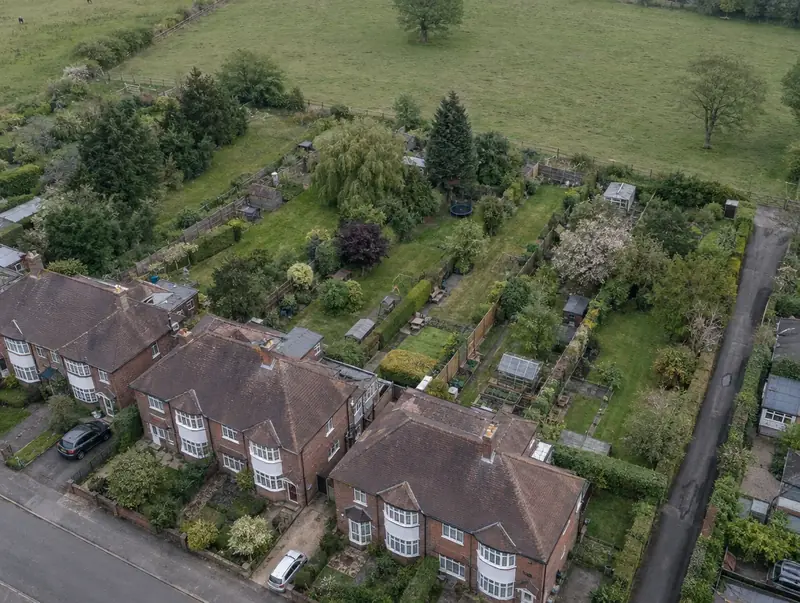
An infill plot is a gap within an existing line of buildings, such as a space between two houses or at the end of a terrace, where a new home would continue the street rather than extend into open land. Exact definitions vary between councils, and rural policies often define infill more narrowly.
Can I sell the side garden of my end-of-terrace house?
Often, yes, where the side garden is wide enough for a new home that continues the terrace or stands as a separate detached house. Consider the impact on your own home, parking and garden, and whether your mortgage lender will agree to release the land.
How small can a plot be for a new house?
There is no single minimum. It depends on the width of the frontage, the size of neighbouring plots, space standards for the new home, garden and parking requirements, and how the design fits the street. A narrow plot may still work for a terraced design that continues an existing row.
Is Argyll & Bute an area you cover for land?
Yes, we cover land across Argyll & Bute, including Dunoon, Oban and Helensburgh. Where a site suits us we can buy it directly, or set up an option or promotion agreement. On promotion there is nothing to pay upfront.
Read more: Sell an Infill Plot · Guide: Selling part of your garden: what you need to know