
Council and Housing Partnerships in Fife
Council and housing association partnerships in Fife are the arrangements through which a developer delivers new affordable homes for public and social landlords. Land to Homes offers package deals, land-led schemes, affordable homes secured through planning and design and build contracts for registered providers, and can bid for council land disposals where the terms suit. Each route is agreed in writing before work starts.
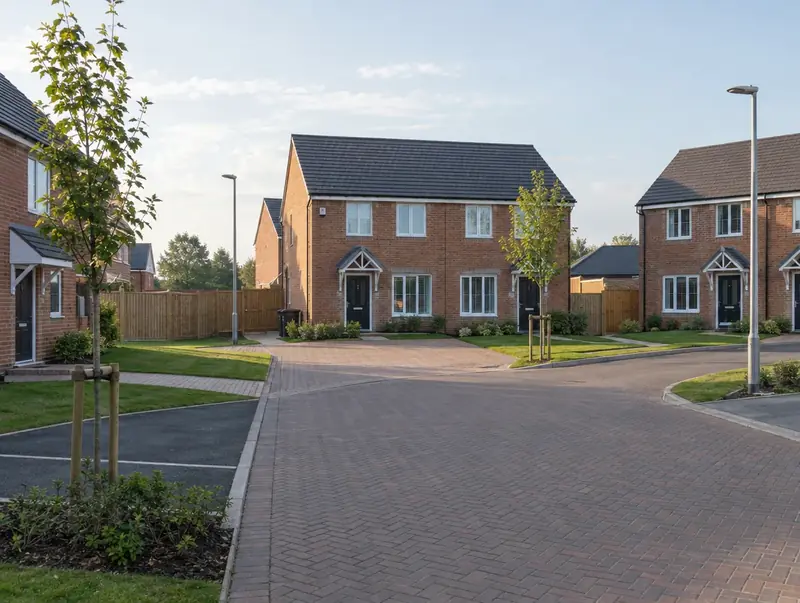 Fife
Talk to us about a partnership
Tell us about your organisation and the homes you need.
Prefer to talk? Call 0800 088 6248.
- Private conversationsEvery arrangement documented
- Land to homesLand, planning and construction
- Housing partnersCouncils and housing associations
- No public offerNothing here is an offer to invest
- UK-wideEngland, Wales, Scotland and NI
New homes around Fife
We cover 3 places across Fife: Dunfermline is the main one, alongside Kirkcaldy and Glenrothes. If your land is near a boundary, we also cover Edinburgh & the Lothians, Forth Valley and Perth & Kinross.
People registering interest around Fife can tell us whether they want homes for shared ownership, homes for first-time buyers or larger family homes. Because Fife is in Scotland, land titles are registered with Registers of Scotland (Land Register of Scotland) and transfers attract Land and Buildings Transaction Tax (LBTT).
Register for Fife and we will contact you if we bring homes forward nearby.
Why work with Land to Homes in Fife
Design and build
We design and build homes on land owned by a council or provider, to its specification and within its procurement rules.
Planning obligation homes
The affordable homes required by a Section 106, Section 75 or Section 76 agreement, designed with a provider and transferred on completion.
Council land disposals
We respond to council land disposals and development opportunities where the terms suit, following the process the council sets.
Standards agreed up front
Provider design standards, space standards and energy targets are agreed at the start, so the homes are ready to transfer on completion.
Planning in Fife: the Scottish rules
Affordable homes in Fife are mainly funded through the Scottish Government's Affordable Housing Supply Programme, with councils and registered social landlords building them. Councils set local investment priorities in their Strategic Housing Investment Plans. On private developments, Local Development Plans often require an affordable housing contribution, secured through a Section 75 agreement. Land to Homes can bring forward land and deliver homes for councils and housing associations.
In Scotland, councils and registered social landlords regulated by the Scottish Housing Regulator deliver affordable homes through the Affordable Housing Supply Programme, prioritised in each council's Strategic Housing Investment Plan. Developer contributions are secured through Section 75 agreements, and package deals for social and mid-market rent homes are one established route.
| National planning policy | National Planning Framework 4 (NPF4), which forms part of the statutory development plan |
|---|---|
| Local planning document | Local Development Plan (LDP) |
| Who decides applications | The council as planning authority (or a national park authority in its area) |
| In-principle consent | Planning permission in principle (PPP), followed by approval of matters specified in conditions |
| Land transaction tax (paid by the buyer) | Land and Buildings Transaction Tax (LBTT) |
| Land registration | Registers of Scotland (Land Register of Scotland) |
| How a sale becomes binding | Land sales are concluded through missives, formal letters exchanged between solicitors that become a binding contract once concluded, followed by settlement on the date of entry and registration in the Land Register of Scotland. |
| Developer contributions | Section 75 planning obligations, with Section 69 agreements sometimes used for simple one-off payments |
Common questions in Fife
What are Section 106 affordable homes?
They are affordable homes a developer must provide under a Section 106 agreement attached to a planning permission in England or Wales. The agreement sets the number, tenure and often the transfer terms, and the homes are usually sold to a registered provider. Scotland uses Section 75 agreements and Northern Ireland uses Section 76 agreements for similar purposes.
How do council land disposals work?
When a council sells or leases land for housing, it usually has legal duties around obtaining value and must follow its own disposal and procurement rules. Disposals may be marketed openly, offered through a development partner process or tendered. Land to Homes responds to opportunities where the terms suit, following the process the council sets.
Who applies for grant funding for affordable homes?
Usually the housing association or council, because public grant for affordable housing is normally paid to them under programmes run by Homes England, the Greater London Authority, the Welsh Government, the Scottish Government or, in Northern Ireland, the Housing Executive's Social Housing Development Programme. We plan schemes with the relevant funding conditions in mind.
What is a land-led scheme?
A land-led scheme is one where land is secured and a scheme is planned around a provider's needs, rather than the provider buying a share of homes within a market-led development. It can allow a higher proportion of affordable homes, or a fully affordable scheme, where planning policy and funding support it.
Can I register for new homes in Fife?
Yes. Registering for Fife is free and does not commit you to anything. There are no homes available yet; if we bring homes forward in or near Fife, we will contact you.
Read more: Council and Housing Association Partnerships · Guide: How affordable and social homes are delivered across the UK