
Sell Farmland and Paddocks in County Antrim
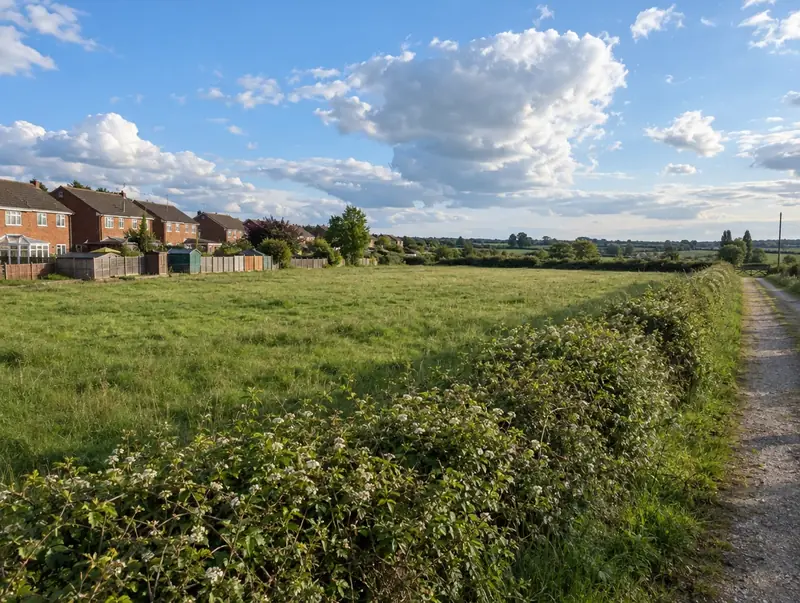
Selling farmland or paddocks in County Antrim for development usually means land on the edge of a town or village that could take new homes once planning policy allows. Value depends heavily on planning prospects, so many deals are options or promotion agreements that let you keep farming until permission is granted and the land is sold.
 County Antrim
Free site appraisal
Tell us about your land and we will call you back. No cost, no obligation.
Prefer to talk? Call 0800 088 6248.
- Free site appraisalNo cost, no obligation
- Legal fees coveredReasonable fees, on options and promotion
- Nothing to pay upfrontOn promotion: we fund planning
- Direct purchaseSuitable sites, with or without planning
- UK-wideEngland, Wales, Scotland and NI
Our coverage in County Antrim
Our County Antrim coverage takes in 7 towns and cities, centred on Belfast and including Carrickfergus, Antrim and Lisburn. Neighbouring areas we also cover include County Down, County Armagh and County Londonderry.
In and around County Antrim, the land we appraise ranges from paddocks on the edge of Belfast to small holdings and pony paddocks, including large and long rear gardens. In Northern Ireland, where County Antrim sits, planning decisions are made by the 11 district councils, with the Department for Infrastructure deciding regionally significant applications.
Send us a postcode in or near BT1 and we will start with a free desktop appraisal.
How we work in County Antrim
Fees covered on options
On option and promotion agreements we pay your reasonable legal fees, with the amount agreed up front in the heads of terms, so specialist rural legal advice is within reach.
Land quality and flood risk
Planning policy tends to protect higher-grade farmland, and flood zones can rule land out entirely. We check agricultural land quality mapping and flood maps early, before any detailed discussion of terms.
Access kept to retained fields
Deals can reserve access rights, service connections and drainage routes for the rest of your holding, so a new scheme does not cut off fields or buildings you keep.
Tenancies handled carefully
If the land is let, the type of tenancy decides how and when vacant possession can be obtained. We look at the tenancy before proposing any deal and recommend specialist agricultural advice.
Rules that apply in County Antrim
Countryside planning policy in Northern Ireland is generally restrictive, so land inside or next to the settlement development limits around County Antrim is usually the strongest prospect for new homes. Outline planning permission can establish the principle, with reserved matters approved later. A promotion agreement lets us fund that planning work, with our costs recovered from the sale proceeds only if the land sells with planning. Your reasonable legal fees are covered too, agreed in the heads of terms.
In Northern Ireland, countryside housing is tightly controlled through the SPPS and PPS 21, or a council's adopted plan strategy, with limited exceptions such as a dwelling on an active and established farm. Much grazing land is let in conacre, a seasonal arrangement that can usually be timed around a sale. Stamp Duty Land Tax applies.
| National planning policy | Strategic Planning Policy Statement (SPPS, Edition 2), applied with retained Planning Policy Statements until each council adopts its Plan Strategy |
|---|---|
| Local planning document | Local Development Plan (LDP), made up of a Plan Strategy and a Local Policies Plan |
| Who decides applications | The 11 district councils, with the Department for Infrastructure deciding regionally significant applications |
| In-principle consent | Outline planning permission, with reserved matters approved later |
| Land transaction tax (paid by the buyer) | Stamp Duty Land Tax (SDLT) |
| Land registration | Land & Property Services (Land Registry and Registry of Deeds) |
| How a sale becomes binding | A land sale becomes legally binding when contracts signed by both parties are exchanged and finishes on completion, with the title registered in the Land Registry at Land & Property Services. |
| Developer contributions | Section 76 planning agreements under the Planning Act (Northern Ireland) 2011 (there is no Community Infrastructure Levy) |
Common questions in County Antrim
Can I sell a paddock for housing?
Often, if it sits within or next to a settlement and has safe road access. Paddocks behind existing homes are common development sites. Those in open countryside, or with poor access, rarely get permission. We check the development plan and site constraints before suggesting any route or deal structure.
How do I keep access to the rest of my farm?
Through rights reserved in the agreement and the eventual transfer. These can include a right of way through the new estate road, service connections and drainage routes for retained land. Plan them early, because once a layout is approved it is much harder to add access later.
What happens to my tenant farmer if I sell for development?
It depends on the tenancy. Some older agricultural tenancies give tenants strong security, while newer tenancies and grazing licences are usually more flexible. Planning permission for a non-agricultural use can sometimes support ending a tenancy, but the rules are technical and specialist advice is essential. We factor the tenancy into any deal.
Will selling farmland affect my inheritance tax reliefs?
It may. Reliefs for agricultural and business property depend on how the land is used and held, and selling land or holding cash instead can change the position. These rules have changed recently, so speak to an accountant or tax adviser before agreeing terms.
Is County Antrim an area you cover for land?
Yes, we cover land across County Antrim, including Newtownabbey, Ballymena and Antrim. Where a site suits us we can buy it directly, or set up an option or promotion agreement. On promotion there is nothing to pay upfront.
Read more: Sell Farmland and Paddocks · Guide: Green Belt and grey belt land explained