
Sell a Building for Conversion in Yeovil
An empty pub, chapel or workshop in Yeovil may be worth more as homes than in its last use, but conversions are rarely simple. Land to Homes looks at the planning route, heritage status, structure, services and any community interest in the building, then offers a direct purchase, subject to survey, title and contract, or another route.
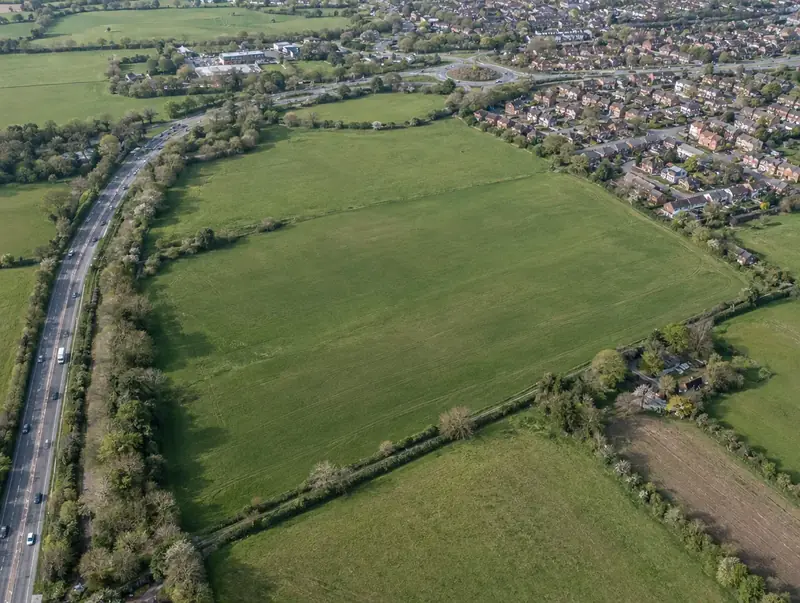 Yeovil · BA20
Free site appraisal
Tell us about your land and we will call you back. No cost, no obligation.
Prefer to talk? Call 0800 088 6248.
- Free site appraisalNo cost, no obligation
- Legal fees coveredReasonable fees, on options and promotion
- Nothing to pay upfrontOn promotion: we fund planning
- Direct purchaseSuitable sites, with or without planning
- UK-wideEngland, Wales, Scotland and NI
Our coverage in Yeovil
Yeovil sits about 32 miles south of Bath in Somerset, in the BA20 postcode district. Nearby, we also cover Bridgwater, Taunton and Weymouth, all within 24 miles. Yeovil is part of England’s South West region.
Sites worth a conversation around Yeovil: farmland next to the settlement boundary, redundant commercial buildings and corner plots and side gardens. Because Yeovil is in England, land titles are registered with HM Land Registry and transfers attract Stamp Duty Land Tax (SDLT).
If you own land near Yeovil, the first step is a free, no-obligation appraisal.
How we work in Yeovil
Building regulations apply
Changing a building to homes brings in building regulations or, in Scotland, a building warrant, covering fire safety, sound insulation, energy efficiency and escape routes. These often drive conversion costs.
Pubs and chapels
Pubs, chapels and community halls do not usually benefit from these rights and need full planning permission. Councils often ask for evidence that the existing use is no longer viable or needed.
Direct purchase of buildings
Where a building suits us, we can buy it ourselves, with or without consent, with no onward chain, subject to survey, title and contract. Any offer is set out in writing.
Heritage handled carefully
Listed buildings need listed building consent for most changes, and conservation areas add design controls. Historic chapels and barns can still convert well when their character is respected.
Planning in Yeovil: the English rules
In England, most planning applications for new homes in Yeovil are decided by the local planning authority, usually the council, using its Local Plan and the National Planning Policy Framework. Many landowners sell without planning, either outright or through an option or promotion agreement that funds the application first. Land to Homes offers a free site appraisal, pays your reasonable legal fees on option and promotion agreements, and can buy suitable sites directly, subject to survey, title and contract.
In England, Class MA allows many buildings in commercial, business and service use to convert to homes through prior approval, and Class Q covers some agricultural buildings. These rights are England-only, carry conditions and exclusions, and can be removed locally by Article 4 directions. New homes must meet national space standards, and pubs need full planning permission.
| National planning policy | National Planning Policy Framework (NPPF), revised August 2026, with national planning practice guidance |
|---|---|
| Who decides applications | The local planning authority, usually the district, borough, city or unitary council (or a national park authority) |
| In-principle consent | Outline planning permission, with reserved matters approved later |
| Land transaction tax (paid by the buyer) | Stamp Duty Land Tax (SDLT) |
Sell a Building for Conversion in Yeovil: questions
Will VAT be charged when I sell my commercial building?
It may be, if you have opted to tax it. However, a buyer who intends to convert the building into homes can, in many cases, give you a certificate that disapplies the option to tax. The rules are technical, so ask your accountant before agreeing terms.
What makes a building suitable for conversion to homes?
Good natural light, a sensible floor depth, adequate ceiling heights, a sound structure, room for bin and bike stores, and a location where people want to live. Buildings that need major structural work, or whose windows cannot light every habitable room, are harder and more expensive to convert.
Can I convert an office to flats without planning permission?
In England, many office buildings can change to homes under Class MA permitted development, which needs prior approval from the council rather than full planning permission. Conditions and exclusions apply, including for listed buildings, some protected areas and places covered by an Article 4 direction. Elsewhere in the UK, a planning application is normally needed.
What is Class Q permitted development?
Class Q is an England-only right that can allow agricultural buildings to become homes through prior approval, subject to limits on numbers and floor space and exclusions for listed buildings and some protected areas. The building must be suitable for conversion rather than needing substantial rebuilding. Scotland has a separate, narrower right of its own.
Do you buy land in Yeovil?
Yes. Land to Homes looks at land in Yeovil and elsewhere in Somerset, including Nailsea, Weston-super-Mare and Taunton. Every enquiry starts with a free site appraisal, and on option and promotion agreements we pay your reasonable legal fees.
Read more: Sell a Building for Conversion · Guide: Biodiversity net gain for landowners: what it means for your land