
Sell a Building for Conversion in Salford
An empty pub, chapel or workshop in Salford may be worth more as homes than in its last use, but conversions are rarely simple. Land to Homes looks at the planning route, heritage status, structure, services and any community interest in the building, then offers a direct purchase, subject to survey, title and contract, or another route.
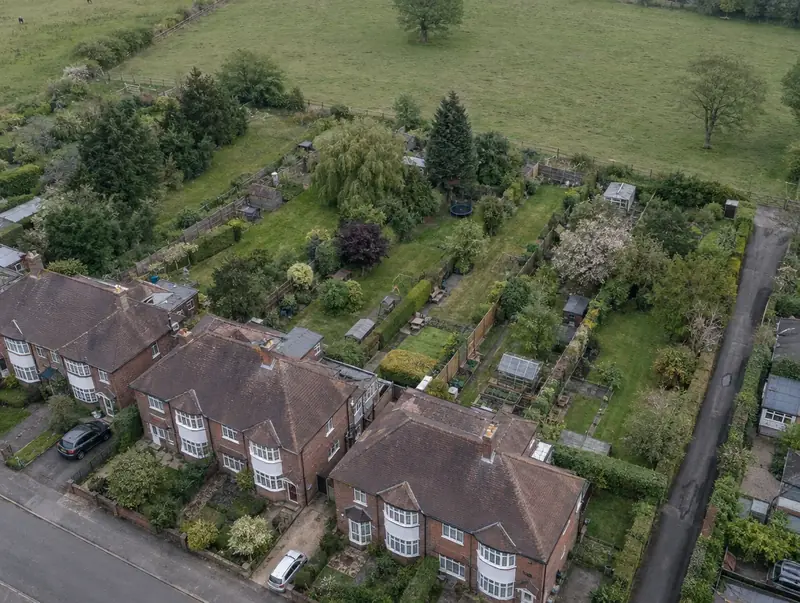 Salford · M6
Free site appraisal
Tell us about your land and we will call you back. No cost, no obligation.
Prefer to talk? Call 0800 088 6248.
- Free site appraisalNo cost, no obligation
- Legal fees coveredReasonable fees, on options and promotion
- Nothing to pay upfrontOn promotion: we fund planning
- Direct purchaseSuitable sites, with or without planning
- UK-wideEngland, Wales, Scotland and NI
Land we look at around Salford
In Greater Manchester, Salford lies about 2 miles west of Manchester; its central postcode district is M6. The nearest other places we cover are Eccles (2 miles), Old Trafford (2 miles) and Manchester (2 miles). Salford is part of England’s North West region.
In and around Salford, the land we appraise ranges from farmland next to the settlement boundary to large and long rear gardens, including redundant agricultural buildings. In England, where Salford sits, planning decisions are made by the local planning authority, usually the district, borough, city or unitary council (or a national park authority).
Tell us where your land is around Salford and we will explain the routes open to you.
How we work in Salford
Light, depth and layout
Deep office floors and small windows can make poor homes. Habitable rooms need adequate natural light, so we test whether the building can provide good layouts before making an offer.
Building regulations apply
Changing a building to homes brings in building regulations or, in Scotland, a building warrant, covering fire safety, sound insulation, energy efficiency and escape routes. These often drive conversion costs.
Planning route identified
We check whether permitted development with prior approval could apply, or whether a full application, and possibly listed building consent, is needed. The route shapes cost, risk and value.
Heritage handled carefully
Listed buildings need listed building consent for most changes, and conservation areas add design controls. Historic chapels and barns can still convert well when their character is respected.
Rules that apply in Salford
Selling development land in Salford usually starts with heads of terms, a short written summary of price, conditions and fees, before solicitors draft the contract. In England the sale becomes binding on exchange of contracts and finishes on completion, with the title then registered at HM Land Registry. The buyer normally pays Stamp Duty Land Tax. On option and promotion agreements with Land to Homes, your reasonable legal fees are covered, with the amount agreed in the heads of terms.
In England, Class MA allows many buildings in commercial, business and service use to convert to homes through prior approval, and Class Q covers some agricultural buildings. These rights are England-only, carry conditions and exclusions, and can be removed locally by Article 4 directions. New homes must meet national space standards, and pubs need full planning permission.
| Who decides applications | The local planning authority, usually the district, borough, city or unitary council (or a national park authority) |
|---|---|
| In-principle consent | Outline planning permission, with reserved matters approved later |
| Land registration | HM Land Registry |
| Developer contributions | Section 106 planning obligations, plus the Community Infrastructure Levy (CIL) where the council charges it |
Your questions answered for Salford
What makes a building suitable for conversion to homes?
Good natural light, a sensible floor depth, adequate ceiling heights, a sound structure, room for bin and bike stores, and a location where people want to live. Buildings that need major structural work, or whose windows cannot light every habitable room, are harder and more expensive to convert.
Will VAT be charged when I sell my commercial building?
It may be, if you have opted to tax it. However, a buyer who intends to convert the building into homes can, in many cases, give you a certificate that disapplies the option to tax. The rules are technical, so ask your accountant before agreeing terms.
What is Class Q permitted development?
Class Q is an England-only right that can allow agricultural buildings to become homes through prior approval, subject to limits on numbers and floor space and exclusions for listed buildings and some protected areas. The building must be suitable for conversion rather than needing substantial rebuilding. Scotland has a separate, narrower right of its own.
What is an asset of community value?
In England, a community group can ask the council to list a building such as a pub or hall as an asset of community value. If a listed asset is put up for sale, a moratorium can give community groups a chance to bid, but it does not force you to sell to them. Scotland has its own community right to buy.
Is Salford an area you cover for land?
Yes, we cover land in Salford and elsewhere in Greater Manchester, including Denton, Chadderton and Stalybridge. Where a site suits us we can buy it directly, or set up an option or promotion agreement. On promotion there is nothing to pay upfront.
Read more: Sell a Building for Conversion · Guide: Tax when selling land for development