
Sell a Building for Conversion in Cookstown
In England, some offices, shops and barns can become homes through permitted development with prior approval rather than a full planning application. Wales, Scotland and Northern Ireland have different rules. Land to Homes checks which route applies to your building in Cookstown and whether its structure, layout and daylight can produce good homes.
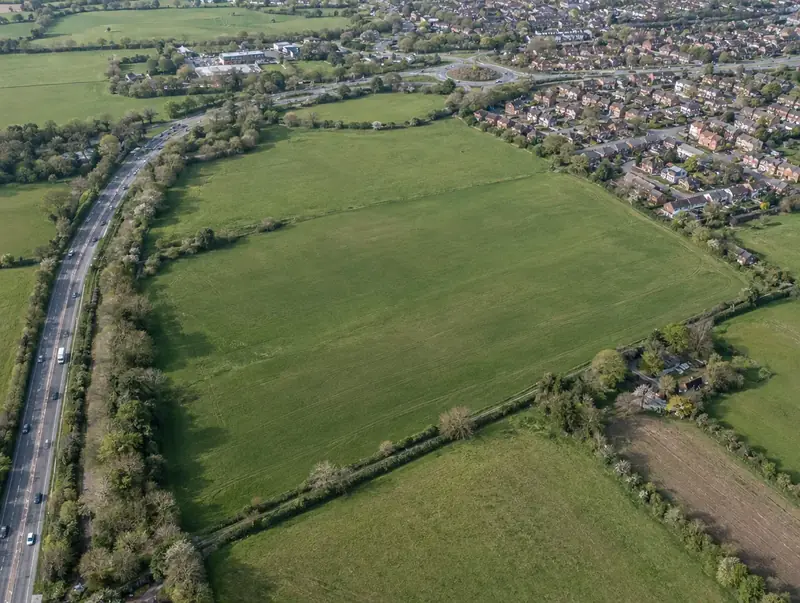 Cookstown · BT80
Free site appraisal
Tell us about your land and we will call you back. No cost, no obligation.
Prefer to talk? Call 0800 088 6248.
- Free site appraisalNo cost, no obligation
- Legal fees coveredReasonable fees, on options and promotion
- Nothing to pay upfrontOn promotion: we fund planning
- Direct purchaseSuitable sites, with or without planning
- UK-wideEngland, Wales, Scotland and NI
Selling land around Cookstown
Cookstown sits about 22 miles east of Omagh in County Tyrone, in the BT80 postcode district. Nearby, we also cover Magherafelt, Dungannon and Portadown, all within 20 miles.
In and around Cookstown, the land we appraise ranges from infill gaps along existing streets to backland plots with a workable access, including brownfield land in and around Cookstown. In Northern Ireland, where Cookstown sits, planning decisions are made by the 11 district councils, with the Department for Infrastructure deciding regionally significant applications.
Tell us where your land is around Cookstown and we will explain the routes open to you.
What you get in Cookstown
Building regulations apply
Changing a building to homes brings in building regulations or, in Scotland, a building warrant, covering fire safety, sound insulation, energy efficiency and escape routes. These often drive conversion costs.
Heritage handled carefully
Listed buildings need listed building consent for most changes, and conservation areas add design controls. Historic chapels and barns can still convert well when their character is respected.
Planning route identified
We check whether permitted development with prior approval could apply, or whether a full application, and possibly listed building consent, is needed. The route shapes cost, risk and value.
Direct purchase of buildings
Where a building suits us, we can buy it ourselves, with or without consent, with no onward chain, subject to survey, title and contract. Any offer is set out in writing.
Planning in Cookstown: the Northern Irish rules
Selling land near Cookstown follows a familiar pattern in Northern Ireland: heads of terms, then an exchange of contracts signed by both sides, which makes the sale binding, and completion. The buyer pays Stamp Duty Land Tax, as in England, and the title is registered with Land Registry, part of Land & Property Services, although older titles may first need moving from the Registry of Deeds. Infrastructure and affordable housing are usually secured through a Section 76 planning agreement.
Northern Ireland has no equivalent of England's Class MA or Class Q, so conversions to homes normally need full planning permission. In the countryside, PPS 21 or a council's adopted plan strategy can allow conversion of suitable buildings, such as former schools, churches or traditional barns, subject to criteria. Listed buildings need listed building consent. Stamp Duty Land Tax applies.
| Local planning document | Local Development Plan (LDP), made up of a Plan Strategy and a Local Policies Plan |
|---|---|
| Who decides applications | The 11 district councils, with the Department for Infrastructure deciding regionally significant applications |
| Land registration | Land & Property Services (Land Registry and Registry of Deeds) |
| Developer contributions | Section 76 planning agreements under the Planning Act (Northern Ireland) 2011 (there is no Community Infrastructure Levy) |
Sell a Building for Conversion in Cookstown: questions
Can I sell the space above my shop and keep trading below?
Often, yes. Upper floors above shops can be converted separately, subject to planning, a separate entrance and fire separation between the shop and the homes. A sale may involve splitting the title or granting a long lease of the upper parts. Your solicitor will advise on the right structure.
What makes a building suitable for conversion to homes?
Good natural light, a sensible floor depth, adequate ceiling heights, a sound structure, room for bin and bike stores, and a location where people want to live. Buildings that need major structural work, or whose windows cannot light every habitable room, are harder and more expensive to convert.
Can a chapel or church be converted into homes?
Often, yes, with full planning permission, and listed building consent if it is listed. A buyer will check the title for covenants imposed by the original religious body, any burial ground, and access. Many chapels convert well because of their volume and tall windows, but parking and neighbours need care.
Will VAT be charged when I sell my commercial building?
It may be, if you have opted to tax it. However, a buyer who intends to convert the building into homes can, in many cases, give you a certificate that disapplies the option to tax. The rules are technical, so ask your accountant before agreeing terms.
Do you work with landowners in Cookstown?
We do. We work with landowners in Cookstown and elsewhere in County Tyrone, including Dungannon, Omagh and Strabane. Send us a postcode and we will start with a free, no-obligation appraisal of what the land could take.
Read more: Sell a Building for Conversion · Guide: Who pays for land promotion? Fees, costs and legal fees explained