
Sell a Building for Conversion in Newtownards
In England, some offices, shops and barns can become homes through permitted development with prior approval rather than a full planning application. Wales, Scotland and Northern Ireland have different rules. Land to Homes checks which route applies to your building in Newtownards and whether its structure, layout and daylight can produce good homes.
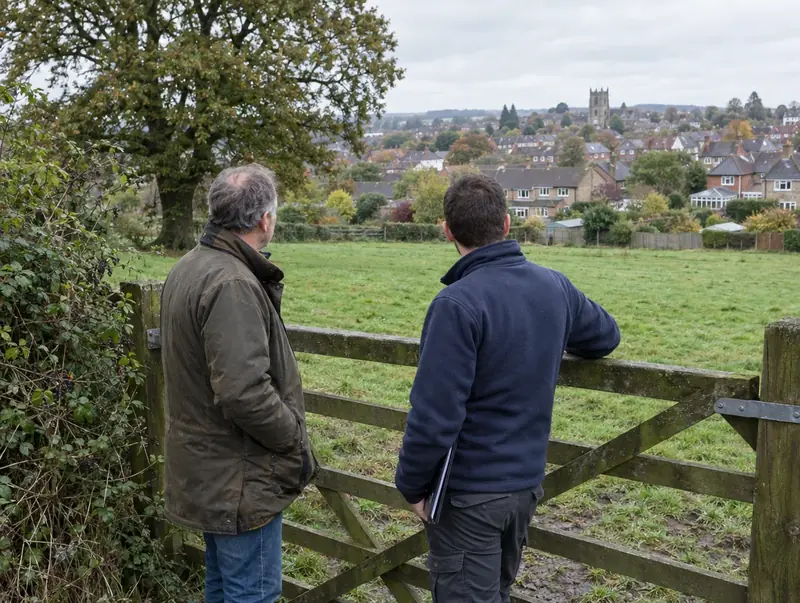 Newtownards · BT23
Free site appraisal
Tell us about your land and we will call you back. No cost, no obligation.
Prefer to talk? Call 0800 088 6248.
- Free site appraisalNo cost, no obligation
- Legal fees coveredReasonable fees, on options and promotion
- Nothing to pay upfrontOn promotion: we fund planning
- Direct purchaseSuitable sites, with or without planning
- UK-wideEngland, Wales, Scotland and NI
Land we look at around Newtownards
Newtownards sits about 5 miles south of Bangor (County Down) in County Down, in the BT23 postcode district. Nearby, we also cover Bangor (County Down), Castlereagh and Belfast, all within 9 miles.
In and around Newtownards, the land we appraise ranges from backland plots with a workable access to infill gaps along existing streets, including paddocks on the edge of Newtownards. As Newtownards is in Northern Ireland, applications are judged against the Strategic Planning Policy Statement, and the buyer of land pays Stamp Duty Land Tax (SDLT).
If you own land near Newtownards, the first step is a free, no-obligation appraisal.
What you get in Newtownards
Direct purchase of buildings
Where a building suits us, we can buy it ourselves, with or without consent, with no onward chain, subject to survey, title and contract. Any offer is set out in writing.
Heritage handled carefully
Listed buildings need listed building consent for most changes, and conservation areas add design controls. Historic chapels and barns can still convert well when their character is respected.
Building regulations apply
Changing a building to homes brings in building regulations or, in Scotland, a building warrant, covering fire safety, sound insulation, energy efficiency and escape routes. These often drive conversion costs.
Planning route identified
We check whether permitted development with prior approval could apply, or whether a full application, and possibly listed building consent, is needed. The route shapes cost, risk and value.
How the rules work in Newtownards
Countryside planning policy in Northern Ireland is generally restrictive, so land inside or next to the settlement development limits around Newtownards is usually the strongest prospect for new homes. Outline planning permission can establish the principle, with reserved matters approved later. A promotion agreement lets us fund that planning work, with our costs recovered from the sale proceeds only if the land sells with planning. Your reasonable legal fees are covered too, agreed in the heads of terms.
Northern Ireland has no equivalent of England's Class MA or Class Q, so conversions to homes normally need full planning permission. In the countryside, PPS 21 or a council's adopted plan strategy can allow conversion of suitable buildings, such as former schools, churches or traditional barns, subject to criteria. Listed buildings need listed building consent. Stamp Duty Land Tax applies.
| National planning policy | Strategic Planning Policy Statement (SPPS, Edition 2), applied with retained Planning Policy Statements until each council adopts its Plan Strategy |
|---|---|
| In-principle consent | Outline planning permission, with reserved matters approved later |
| Land registration | Land & Property Services (Land Registry and Registry of Deeds) |
| Developer contributions | Section 76 planning agreements under the Planning Act (Northern Ireland) 2011 (there is no Community Infrastructure Levy) |
Common questions in Newtownards
What is an asset of community value?
In England, a community group can ask the council to list a building such as a pub or hall as an asset of community value. If a listed asset is put up for sale, a moratorium can give community groups a chance to bid, but it does not force you to sell to them. Scotland has its own community right to buy.
What makes a building suitable for conversion to homes?
Good natural light, a sensible floor depth, adequate ceiling heights, a sound structure, room for bin and bike stores, and a location where people want to live. Buildings that need major structural work, or whose windows cannot light every habitable room, are harder and more expensive to convert.
Can a chapel or church be converted into homes?
Often, yes, with full planning permission, and listed building consent if it is listed. A buyer will check the title for covenants imposed by the original religious body, any burial ground, and access. Many chapels convert well because of their volume and tall windows, but parking and neighbours need care.
Can I sell the space above my shop and keep trading below?
Often, yes. Upper floors above shops can be converted separately, subject to planning, a separate entrance and fire separation between the shop and the homes. A sale may involve splitting the title or granting a long lease of the upper parts. Your solicitor will advise on the right structure.
Is Newtownards an area you cover for land?
Yes, we cover land in Newtownards and elsewhere in County Down, including Castlereagh, Banbridge and Downpatrick. Where a site suits us we can buy it directly, or set up an option or promotion agreement. On promotion there is nothing to pay upfront.
Read more: Sell a Building for Conversion · Guide: Selling part of your garden: what you need to know