
Sell Brownfield Land in Sudbury
Brownfield land in Sudbury is land that has been built on or used before, such as a former yard, depot, garage block, workshop or car park. Planning policy across the UK generally favours reusing it for homes, but ground contamination, demolition, old services and neighbouring uses all affect value. Land to Homes assesses each of these before making an offer.
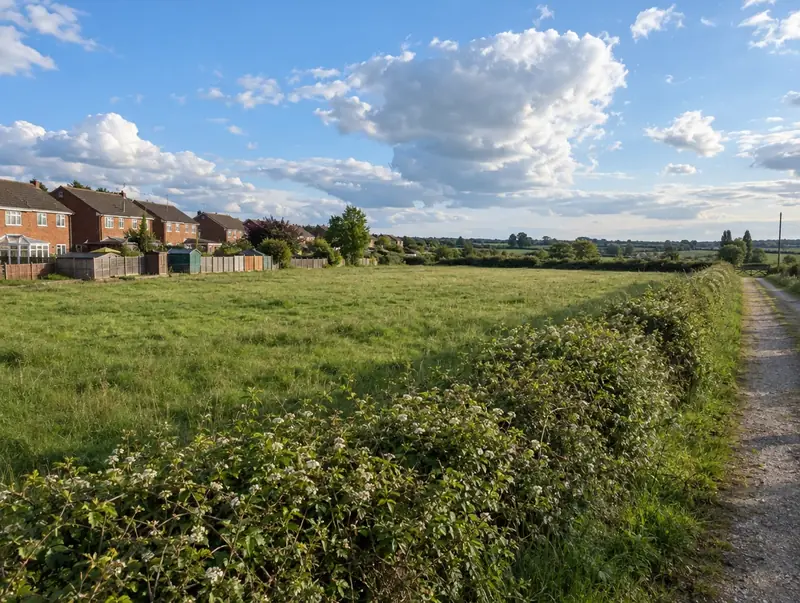 Sudbury · CO10
Free site appraisal
Tell us about your land and we will call you back. No cost, no obligation.
Prefer to talk? Call 0800 088 6248.
- Free site appraisalNo cost, no obligation
- Legal fees coveredReasonable fees, on options and promotion
- Nothing to pay upfrontOn promotion: we fund planning
- Direct purchaseSuitable sites, with or without planning
- UK-wideEngland, Wales, Scotland and NI
Land we look at around Sudbury
Sudbury sits about 18 miles west of Ipswich in Suffolk, in the CO10 postcode district. Nearby, we also cover Colchester, Haverhill and Braintree, all within 13 miles. Sudbury is part of England’s East of England region.
Typical sites we review near Sudbury include redundant agricultural buildings, corner plots and side gardens and infill gaps along existing streets. As Sudbury is in England, applications are judged against the National Planning Policy Framework, and the buyer of land pays Stamp Duty Land Tax (SDLT).
Tell us where your land is around Sudbury and we will explain the routes open to you.
How we work in Sudbury
Loss of employment land
Councils may resist losing business land to housing. Policies vary, so we check whether marketing evidence or a viability case is likely to be needed before any application is made.
VAT on commercial sites
If you have opted to tax the property, VAT may be chargeable on the sale, which affects what a buyer pays. Your accountant should confirm the position before a price is agreed.
Demolition and asbestos
Older buildings often contain asbestos, which must be surveyed and removed by licensed specialists where required before demolition. These costs feed into the price, so an early survey supports a firmer offer.
Tenants and leases
If business tenants remain, their lease terms and any statutory protection affect when the site can be cleared. We review the leases before agreeing timing with you.
Planning in Sudbury: the English rules
Whether a field or large garden could take homes depends mostly on the council's Local Plan and national policy. Under the National Planning Policy Framework, plans define settlement boundaries, and land just outside Sudbury may still come forward if it is allocated, previously developed or meets evidenced unmet housing need. Smaller housing schemes can also use Permission in Principle, an England-only route that settles location, use and amount first. Our free appraisal explains which route suits your land.
In England, councils keep brownfield land registers, and sites on Part 2 of a register can be granted Permission in Principle. The NPPF gives substantial weight to using suitable brownfield land for homes. Contamination is normally handled through planning conditions, following the Environment Agency's land contamination risk management guidance, with Part 2A of the Environmental Protection Act 1990 as a backstop.
| National planning policy | National Planning Policy Framework (NPPF), revised August 2026, with national planning practice guidance |
|---|---|
| Local planning document | Local Plan |
| In-principle consent | Outline planning permission, with reserved matters approved later |
| Developer contributions | Section 106 planning obligations, plus the Community Infrastructure Levy (CIL) where the council charges it |
Common questions in Sudbury
What counts as brownfield land?
Brownfield, or previously developed land, is land that is or was occupied by a permanent structure, including the land around it. Former yards, depots, garage blocks and commercial buildings usually qualify. Definitions vary by nation, and some exclude private gardens, agricultural buildings or sites where earlier remains have blended into the landscape.
Is it easier to get planning permission on brownfield land?
Usually it has stronger policy support than greenfield land, because national policy in each UK nation encourages the reuse of previously developed land. Permission is still not automatic: loss of employment land, heritage, flood risk, neighbours and design all matter, and a site in an area protected for business use may still struggle.
Can I sell a commercial site that still has tenants?
Yes. Many sites sell with tenants in place, and the buyer manages the leases coming to an end. Business tenants can have statutory rights to stay in some cases, so the lease terms and any notices matter. We review the leases and agree timing that works for you and, where possible, for the tenants.
What is a sequential test for flood risk?
It is a planning test that steers new development to areas at the lowest risk of flooding. If a site is in a higher-risk area, the applicant may need to show there are no reasonably available sites at lower risk. England applies it through the NPPF; Wales, Scotland and Northern Ireland have their own flood policies.
Is Sudbury an area you cover for land?
Yes, we cover land in Sudbury and elsewhere in Suffolk, including Lowestoft, Stowmarket and Felixstowe. Where a site suits us we can buy it directly, or set up an option or promotion agreement. On promotion there is nothing to pay upfront.
Read more: Sell Brownfield Land · Guide: Green Belt and grey belt land explained