
Sell Brownfield Land in Buckinghamshire
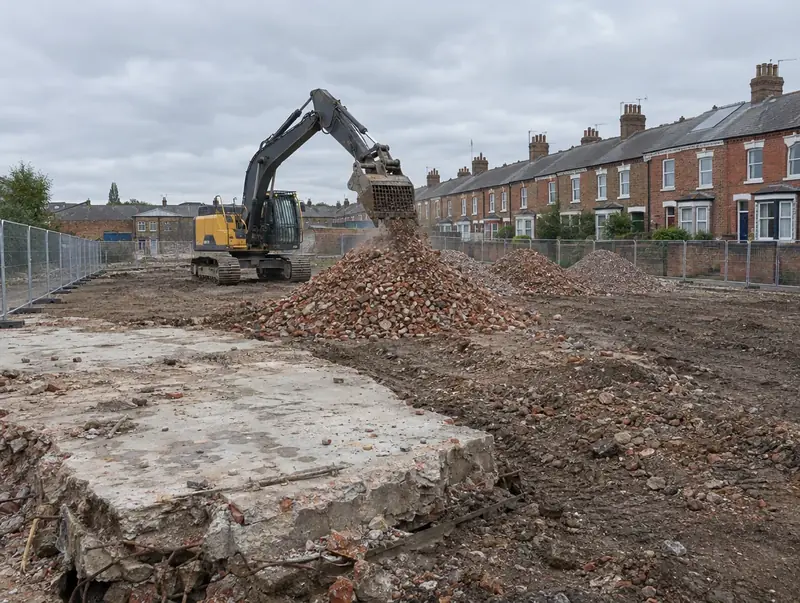
If you own a redundant commercial site in Buckinghamshire, selling it for housing can turn an ongoing cost into a sale. Buyers will ask about past uses, contamination reports, asbestos in buildings and drainage. Land to Homes can buy suitable sites directly, subject to survey, title and contract, and builds clearance and remediation into a clear offer.
 Buckinghamshire
Free site appraisal
Tell us about your land and we will call you back. No cost, no obligation.
Prefer to talk? Call 0800 088 6248.
- Free site appraisalNo cost, no obligation
- Legal fees coveredReasonable fees, on options and promotion
- Nothing to pay upfrontOn promotion: we fund planning
- Direct purchaseSuitable sites, with or without planning
- UK-wideEngland, Wales, Scotland and NI
Our coverage in Buckinghamshire
Across Buckinghamshire, we cover Milton Keynes and 7 other towns, among them Chalfont St Peter, Bletchley and Aylesbury. Neighbouring areas we also cover include Bedfordshire, Hertfordshire and Berkshire.
Around Buckinghamshire we look at land behind street frontages, farmland next to the settlement boundary and land that already has planning permission. In England, where Buckinghamshire sits, planning decisions are made by the local planning authority, usually the district, borough, city or unitary council (or a national park authority).
Send us a postcode in or near MK6 and we will start with a free desktop appraisal.
What you get in Buckinghamshire
Flood risk and drainage
Some brownfield sites sit in flood zones or rely on old drainage. Flood policy may require a sequential test, showing that no suitable sites at lower risk are reasonably available.
Contamination assessed in stages
Ground investigation is usually staged: a desk study of past uses, intrusive sampling if needed, then a remediation strategy and verification. Existing reports save time and cost, so share any you hold.
Loss of employment land
Councils may resist losing business land to housing. Policies vary, so we check whether marketing evidence or a viability case is likely to be needed before any application is made.
VAT on commercial sites
If you have opted to tax the property, VAT may be chargeable on the sale, which affects what a buyer pays. Your accountant should confirm the position before a price is agreed.
How the rules work in Buckinghamshire
Land with no planning permission can still be sold. Around Buckinghamshire, the usual routes in England are a direct sale, an option agreement or a promotion agreement, where the planning work is funded for you and the land is sold once consent is granted. Outline planning permission settles the principle, with reserved matters approved later. Section 106 obligations, the Community Infrastructure Levy where charged and biodiversity net gain all affect what a site is worth, so independent advice matters.
In England, councils keep brownfield land registers, and sites on Part 2 of a register can be granted Permission in Principle. The NPPF gives substantial weight to using suitable brownfield land for homes. Contamination is normally handled through planning conditions, following the Environment Agency's land contamination risk management guidance, with Part 2A of the Environmental Protection Act 1990 as a backstop.
| National planning policy | National Planning Policy Framework (NPPF), revised August 2026, with national planning practice guidance |
|---|---|
| Local planning document | Local Plan |
| Who decides applications | The local planning authority, usually the district, borough, city or unitary council (or a national park authority) |
| In-principle consent | Outline planning permission, with reserved matters approved later |
| Land transaction tax (paid by the buyer) | Stamp Duty Land Tax (SDLT) |
| Land registration | HM Land Registry |
| How a sale becomes binding | A land sale becomes legally binding on exchange of contracts and finishes on completion, after which the buyer registers the title with HM Land Registry. |
| Developer contributions | Section 106 planning obligations, plus the Community Infrastructure Levy (CIL) where the council charges it |
Your questions answered for Buckinghamshire
Is it easier to get planning permission on brownfield land?
Usually it has stronger policy support than greenfield land, because national policy in each UK nation encourages the reuse of previously developed land. Permission is still not automatic: loss of employment land, heritage, flood risk, neighbours and design all matter, and a site in an area protected for business use may still struggle.
Can I sell a commercial site that still has tenants?
Yes. Many sites sell with tenants in place, and the buyer manages the leases coming to an end. Business tenants can have statutory rights to stay in some cases, so the lease terms and any notices matter. We review the leases and agree timing that works for you and, where possible, for the tenants.
Will VAT apply when I sell my brownfield site?
It may. If you have opted to tax the land or buildings, VAT can apply to the sale price. Whether the option can be disapplied depends on what the buyer intends to do with the property, and the rules are technical. Ask your accountant before agreeing a price, because it affects what the buyer pays.
Do I need a contamination report before selling?
Not necessarily, but it helps. A desk study of past uses is relatively inexpensive and gives buyers confidence. If you hold older reports, share them. Buyers will usually carry out their own investigations anyway, both as part of their due diligence and because planning conditions often require them.
Do you work with landowners in Buckinghamshire?
We do. We work with landowners across Buckinghamshire, including Milton Keynes, Amersham and Aylesbury. Send us a postcode and we will start with a free, no-obligation appraisal of what the land could take.
Read more: Sell Brownfield Land · Guide: Green Belt and grey belt land explained